NTSA Instant Fines
Let’s Dive into Understanding the NTSA Instant Traffic Fines System in Kenya, a major step in Kenya’s efforts to improve road safety?
The introduction of the ntsa instant traffic fines system marks a major step in Kenya’s efforts to improve road safety and enforce traffic laws more efficiently. The system was launched by the National Transport and Safety Authority (NTSA) to streamline the way traffic offences are detected, recorded, and penalized. By combining digital monitoring tools, automated data systems, and real-time enforcement, the new system is designed to reduce accidents and ensure that drivers follow traffic rules more consistently.
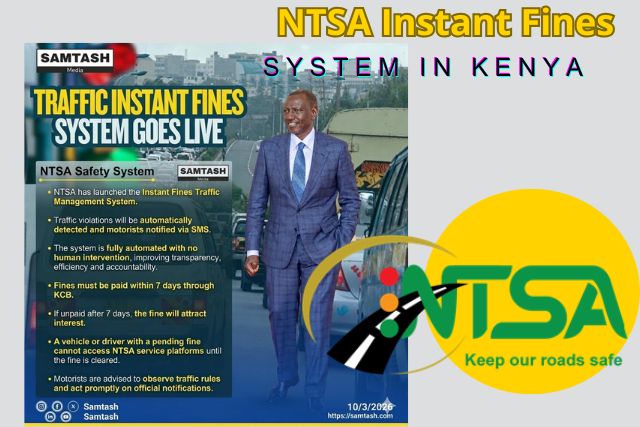
A public notice from NTSA confirms that the instant fines traffic management system is now operational. The system operates with minimal human intervention and automatically identifies traffic violations committed by motorists across the country. Once a violation is recorded, the offence is processed digitally and the relevant fine is issued almost immediately.
This digital approach reflects the government’s broader push toward modern transport management and aligns with Kenya’s growing use of digital government services through the eCitizen platform.
What the NTSA Instant Traffic Fines System Is
The ntsa instant traffic fines system is a technology-driven traffic enforcement platform that detects violations and issues penalties automatically. The system relies on smart cameras, digital monitoring infrastructure, and integrated vehicle databases to identify traffic offences in real time.
Instead of relying solely on police officers to manually stop drivers and issue tickets, the system records violations electronically and links them directly to the vehicle registration information. This information is retrieved from the NTSA vehicle database and driver licensing system.
The technology also connects with the Transport Integrated Management System (TIMS), which stores vehicle registration data, driving licence details, and other transport records.
Once a violation is captured, the system automatically generates a fine that is linked to the driver or vehicle owner. Drivers are then notified and required to pay the penalty within a specified time.
This digital model reduces delays, minimizes corruption risks, and ensures consistent enforcement of traffic regulations.
Key Traffic Violations Captured by the System

The NTSA system focuses on traffic offences that are commonly associated with road accidents and unsafe driving behaviour. Automated cameras and monitoring tools capture several violations including:
- Speeding on highways and urban roads
- Lane violations and illegal overtaking
- Driving on pavements or pedestrian pathways
- Failure to wear seatbelts
- Ignoring traffic signals
- Dangerous driving behaviour
These violations are detected automatically and transmitted to NTSA databases for processing.
Because the system operates continuously, drivers can be fined even when traffic officers are not physically present at the location. This makes enforcement more consistent across major highways and busy urban roads.
Range of Fines Under the NTSA Instant Fines System
Under the new enforcement framework, fines vary depending on the seriousness of the offence. The ntsa instant traffic fines system introduces penalties ranging from KSh500 to KSh10,000.
Minor offences such as failing to wear a seatbelt may attract lower penalties, while serious violations such as excessive speeding or dangerous driving can result in higher fines.
The goal is to encourage compliance with traffic rules rather than relying solely on roadside enforcement. When drivers know that violations are automatically detected, they are more likely to obey road safety regulations.
According to the notice issued by the National Transport and Safety Authority, motorists who fail to settle their fines may face additional enforcement measures if the penalties remain unpaid.
How to Pay NTSA Instant Traffic Fines System Penalties
Motorists who receive a fine through the ntsa instant traffic fines system can pay the penalty online using government digital platforms.
NTSA instant traffic fines are paid within 7 days via KCB bank channels, mobile money, or USSD, following SMS notification of the violation.
The payment process is straightforward and accessible to most drivers through Kenya’s integrated digital services.
First, the driver logs into their account on the eCitizen platform using their registered email and password. After logging in, they can navigate to NTSA services and check whether any fines have been issued under their vehicle registration or driving licence.
Hence, Once the violation is confirmed, the driver can proceed to pay the fine through mobile money services, debit cards, or other available digital payment options.
Payments made through the system are recorded instantly, allowing drivers to clear their penalties without visiting NTSA offices.
This online payment method supports Kenya’s wider digital government initiative and reduces congestion at transport offices.
Integration with Vehicle and Driving Licence Records
One of the most important features of the ntsa instant traffic fines system is its integration with national driver and vehicle databases.
The system uses data stored within NTSA platforms to match violations with the correct vehicle owner. These databases include:
Vehicle registration records
Driving licence information
Second generation driving licence data
Transport compliance records
Thus, Because the system is integrated with the Transport Integrated Management System, authorities can track repeat offenders and enforce penalties more effectively.
Drivers with multiple violations may face stricter monitoring or additional legal consequences if they fail to comply with traffic laws.
Role of the NTSA Director General
The rollout of the system has been overseen by leadership within the National Transport and Safety Authority, including the office of the NTSA Director General.
The director general has emphasized that the system is designed to improve road discipline and reduce accidents caused by reckless driving. By automating traffic enforcement, NTSA aims to create a safer environment for motorists, passengers, and pedestrians.
Authorities also encourage motorists to comply with traffic regulations and settle fines promptly once they are issued.
Failure to respond to violation notices may result in further enforcement actions or restrictions on vehicle services.
Benefits of the Instant Traffic Fines System
The introduction of the ntsa instant traffic fines system brings several important benefits to Kenya’s transport sector.
First, the system improves road safety by ensuring that violations are detected quickly and consistently. Drivers are less likely to ignore traffic rules when enforcement is automated.
Second, the technology reduces opportunities for corruption because fines are issued digitally rather than through manual roadside interactions.
Third, it improves efficiency within government services by linking enforcement directly to digital platforms such as the eCitizen portal.
Finally, the system allows authorities to gather accurate traffic data that can help guide future road safety policies and infrastructure improvements.
Public Awareness and Compliance
For the ntsa instant traffic fines system to succeed, public awareness is essential. Drivers must understand how the system works and the consequences of violating traffic regulations.
Motorists are encouraged to regularly check their accounts on the eCitizen platform and ensure their vehicle registration and licence information are accurate.
Maintaining compliance with traffic laws will help drivers avoid fines and contribute to safer roads for everyone.

The Future of Digital Traffic Enforcement in Kenya
The launch of the ntsa instant traffic fines system signals the beginning of a more technology-driven approach to traffic management in Kenya. As digital monitoring infrastructure expands, enforcement is expected to become faster, more transparent, and more reliable.
With continued investment in smart transport technology and digital platforms such as the Transport Integrated Management System, Kenya is moving toward a modern traffic management model similar to those used in many developed countries.
Ultimately, the success of the system will depend on driver cooperation, public awareness, and consistent enforcement.
For motorists across Kenya, the message is clear: obey traffic rules, drive responsibly, and use official digital platforms to manage any penalties issued through the ntsa instant traffic fines system.