Looking to see Europe UK solar eclipse 2026? Find the August 12 solar eclipse time, where to see totality, UK viewing details, eclipse types and how to watch safely.
The Europe UK solar eclipse is taking place on Wednesday, August 12, 2026. It is one of the biggest astronomical events of the year.
Parts of Europe will experience a total solar eclipse. The UK will see a spectacular partial eclipse.
The 2026 solar eclipse will cross Greenland, Iceland, Spain and a small part of Portugal. NASA confirms that totality will also pass through northern Russia. In the UK, the Moon will cover about 90% to 96% of the Sun.
When is the solar eclipse?
So, solar eclipse when? The main event is on August 12, 2026.
The solar eclipse August 2026 will occur during the late afternoon and evening across Britain. In London, the eclipse begins at about 6:17pm BST.
Maximum coverage occurs at about 7:12pm. The eclipse ends at around 8:06pm. Times vary by location.
The 12 August solar eclipse will be particularly impressive in south-western Britain. Cornwall can experience about 95% coverage. Pembrokeshire can reach about 94%. London will see about 90%.
Where can Europe see totality?
The solar eclipse 2026 becomes total only along a narrower path.
The path crosses parts of Greenland, western Iceland and northern Spain. A small area of Portugal is also included.
Reykjavík is among the European locations where totality can be seen. Some Spanish cities also fall within the path.
Totality can last for up to about two minutes and 18 seconds. Iceland offers the longest totality in this event.
This makes the eclipse 2026 especially significant for European skywatchers. It is the first total eclipse visible from central or western Europe since 1999.
On August 12, 2026, a rare total solar eclipse darkens parts of the Northern Hemisphere. The path of totality crosses Greenland, Iceland, and northern Spain, offering millions a view of the fully blocked Sun, while a partial eclipse extends across Europe, parts of North Africa, and North America.
What about the solar eclipse Kenya?
The solar eclipse Kenya question has a simple answer. Kenya is outside the main visibility zone for the August 12 event. Nairobi will not experience the August 12 solar eclipse as a visible solar event.
However, Kenya has another major sky event later in August. A partial lunar eclipse will be visible on August 28, 2026.
What are the types of solar eclipse?
There are four main types of solar eclipse.
A total solar eclipse happens when the Moon completely covers the Sun. Observers inside the path of totality can briefly see the solar corona.
A partial solar eclipse occurs when the Moon covers only part of the Sun. This is what observers in the UK will experience on August 12.
An annular solar eclipse happens when the Moon appears slightly smaller than the Sun. A bright ring remains visible around the Moon.
A hybrid solar eclipse can appear total from some locations and annular from others.
How to see the solar eclipse safely
Never look directly at the Sun without proper protection. Regular sunglasses are not sufficient.
Use certified eclipse glasses marked ISO 12312-2. A properly filtered solar telescope is another safe option. A simple pinhole projector can also show the eclipse without looking directly at the Sun.
People unable to observe the event outdoors can also watch official live coverage. The European Space Agency will provide online coverage of the total eclipse.
For visitors travelling to eclipse locations, transport planning is important. Travellers heading from Kenya to Europe would normally use international air travel, followed by local trains, buses or other public transport.
For the best experience, choose a location with a clear western or southwestern horizon. Weather conditions can affect visibility. The UK eclipse will occur while the Sun is relatively low in the sky.
The solar eclipse 2026 offers Europe a remarkable astronomical spectacle. Whether viewed from the UK as a deep partial eclipse or from the path of totality in Spain and Iceland, August 12 promises a memorable moment in the sky.
Discover Kenya’s top funded startups in 2026, from Sistema.bio and Zeno to Apollo Agriculture, and the 16 deals shaping East Africa’s innovation scene.
Kenya’s startup ecosystem keeps proving its strength. In the first half of 2026 alone, local ventures pulled in $157 million across 16 publicly reported funding deals. Climate tech, clean energy, and agritech sectors led the charge.
Here’s a look at Kenya’s top funded startups, what they build, and who drives them forward.
Kenya’s Top Funded Startups in 2026
Sistema.bio ➠ $53M
Sistema.bio topped the list, raising $53 million in the first half of 2026. That single round made up roughly a third of all capital raised by Kenyan startups this period.
Co-founded and led by CEO Alex Eaton, a former sustainability director at charity: water, the company designs and sells modular biodigesters that turn animal waste into biogas and organic fertilizer.
Farmers across Kenya and beyond use Sistema.bio systems to cut fuel costs and boost crop yields. The startup operates from Nairobi and reaches farmers in multiple countries, including India.
CrossBoundary Energy ➠ $40M
CrossBoundary Energy secured $40 million to expand its distributed renewable energy business. The company sits under CrossBoundary Group, co-founded by Matt Tilleard and Jake Cusack, and builds, owns, and operates solar, wind, and battery storage projects for commercial and industrial clients across Africa.
Its portfolio already covers hundreds of millions of dollars in solar assets, giving businesses cleaner and cheaper power without upfront capital costs.
Zeno ➠ $25M
Zeno, a Nairobi-based e-mobility startup, raised $25 million in Series A funding. Founded in 2022 by CEO Michael Spencer, a former Tesla executive who led Model 3 production ramp-up, the round combined equity and debt, backed by investors including Congruent Ventures and Lowercarbon Capital.
Zeno builds the Emara electric motorcycle and runs a battery-swapping network across East Africa. The new capital will help the company clear a waitlist of over 25,000 retail and fleet customers while expanding its charging infrastructure.
Victory Farms ➠ $15M
Victory Farms raised $15 million to grow its tilapia farming operations on Lake Victoria. Co-founded in 2015 by CEO Joseph Rehmann and Steve Moran, the company has grown into sub-Saharan Africa’s fastest-growing fish farm.
It supplies fresh, affordable tilapia to households and retailers through its Victory Fresh brand, aiming to deliver accessible protein to millions of Kenyans.
Mogo ➠ $6.2M
Asset financier Mogo Kenya, part of the international Eleving Group, secured Ksh 800 million, about $6.2 million, in local-currency debt from a syndicate led by I&M Bank and Ecobank.
The funding supports Mogo’s asset financing for motorcycles, vehicles, and smartphones. Shifting toward domestic funding also helps the company reduce foreign exchange risk while scaling mobility lending for Kenya’s informal sector.
ARC Ride ➠ $5M
ARC Ride raised $5 million to grow its Battery-as-a-Service model for electric motorcycles. Founded in 2019 by CEO Joseph Hurst-Croft alongside co-founder Karl Boyce.
The Nairobi-based company designs and assembles electric bikes, including the Bidii Boda and Corbett models, while running swap stations that let riders exchange batteries quickly. ARC Ride positions itself as a leading provider of clean, affordable urban mobility in Africa.
Sanivation ➠ $3.3M
Sanivation picked up $3.3 million to expand its sanitation and waste management work. Co-founded by CEO Andrew Foote and COO Emily Woods, the company partners with local governments in African secondary cities to treat fecal sludge and convert it into non-carbonized fuel briquettes.
Its Naivasha plant demonstrates how waste can become a resource rather than a public health hazard.
MyCredit ➠ $3M
MyCredit Limited raised $3 million to grow its lending and insurance services. Licensed as a Digital Credit Provider by the Central Bank of Kenya, the company offers quick loans and business financing to individuals and small enterprises.
Its management team includes experienced banking professionals guiding the firm’s growth across Nairobi and beyond.
Apollo Agriculture ➠ $2.1M
Apollo Agriculture secured $2.1 million to continue supporting small-scale farmers. Co-founded by Eli Pollak, the company uses agronomic machine learning, remote sensing, and mobile technology to help farmers access quality inputs, financing, and insurance.
Apollo Agriculture serves farmers across Kenya and Zambia, aiming to make commercial farming more profitable for smallholders.
4G Capital ➠ $2M
4G Capital raised $2 million to expand its financial services for micro and small enterprises. Founded in 2013 by Wayne Hennessy-Barrett, now the company’s Executive Chairman.
The business has supported enterprises across Africa with working capital loans and financial literacy training. Julian Mitchell took over as CEO in 2024, and the company now employs close to 1,500 people across Kenya and other African markets.
Electric Africa ➠ $698K
Electric Africa secured $698,000 in fresh funding, joining the wave of climate-tech and energy startups drawing investor attention this year.
The deal reflects growing interest in Kenya’s clean energy sector as more capital flows toward electrification projects across the region.
Jacaranda Maternity and Family Hospital ➠ $600K
Jacaranda Maternity and Family Hospital raised $600,000 to expand maternal healthcare services. The hospital chain grew out of Jacaranda Health, founded by Nick Pearson, and later spun off its hospital operations as a standalone social venture.
It now runs multiple branches across Nairobi, including Ngong Road, Umoja, and Kahawa West, offering NHIF-accredited maternity and gynecological care focused on affordability and dignity for mothers and newborns.
SokoFresh ➠ $500K
SokoFresh raised $500,000 to expand its solar-powered cold storage network. Co-founded by Denis Karema and Andrew Thinguri.
The award-winning company connects smallholder farmers, particularly avocado growers, to high-value markets. SokoFresh’s cold-storage-as-a-service model has already earned it an Ashden Award for climate innovation.
Cherehani Labs ➠ $300K
Cherehani Labs secured $300,000 to grow its network of solar-powered veterinary labs. The company delivers AI-powered animal health diagnostics to rural livestock farmers, helping extension officers and veterinary doctors collect samples and protect farmers from livestock losses.
Hakimu ➠ $200K
Hakimu, a Kenyan legal-tech startup, raised $200,000 in pre-seed funding from Madica. Co-founded by Rawan Dareer, Ahmed Ahmed, and Ahmed Elbashir.
The company builds AI-powered legal infrastructure and search tools for African judiciaries. The investment includes an 18-month growth program with executive coaching and mentorship.
SafeRide ➠ $100K
SafeRide rounded out the list with $100,000 in funding, one of several notable deals tracked in the State of Tech in Africa Report. The Kenyan startup continues building its presence in the local tech ecosystem.
The Bigger Picture
Kenya’s top funded startups this period show a clear pattern: climate, energy, and agritech dominate investor interest. From biodigesters to battery-swapping motorcycles, Kenyan founders are building solutions that tackle real problems in energy access, food security, and healthcare.
As Kenya’s startup festival season approaches and new companies continue entering the market, expect small startups in Kenya to keep pushing into these same high-growth sectors.
For job seekers, startups in Kenya hiring right now span fintech, agritech, and clean energy, offering fresh opportunities in one of Africa’s most dynamic innovation hubs.
Social Security distributions explained, July 22 payment date, how benefits are calculated by age, and tips to estimate your monthly amount. (147 chars)
Social Security remains one of America’s most dependable financial lifelines. Nearly 79 million people rely on it every month.
The program pays retirement, disability, and survivor benefits on a fixed, predictable calendar. Understanding that calendar and how your payment amount is calculated. Puts you in control of your finances.
The July 22 Social Security Distribution
July 22, 2026 marks the final payment date of the month. It falls on the fourth Wednesday, the date reserved for beneficiaries born between the 21st and 31st.
This date is not shifted by any holiday or weekend, so payments arrive exactly as scheduled.
Three other dates complete July’s calendar. SSI recipients were paid July 1. Beneficiaries who started Social Security before May 1997, along with those receiving both SSI and Social Security, were paid July 2.
Birthdays from the 1st through the 10th were paid July 8, and the 11th through the 20th were paid July 15.
A quirk follows quickly behind. Because August 1 falls on a Saturday, the August SSI payment arrives early, on July 31.
That means SSI recipients see two deposits in July and none in August, the same 12 annual payments, simply shifted by the calendar.
How Social Security Distributions Are Calculated
Your monthly benefit is not a flat number. The Social Security Administration builds it from your own earnings record. Here is how the process works, step by step:
Work history is tallied. You need roughly 10 years, or 40 credits, of Social Security-taxed earnings to qualify.
Your highest 35 years are indexed. The SSA adjusts past earnings for wage growth, producing your Average Indexed Monthly Earnings (AIME).
A formula converts AIME into a benefit. The Primary Insurance Amount applies set percentages to different portions of your AIME.
Your claiming age adjusts the final figure. Claiming at 62 reduces the amount. Waiting until Full Retirement Age, 67 for most workers today, delivers the standard benefit. Delaying to 70 increases it further.
Cost-of-living adjustments are added yearly. In 2026, benefits rose 2.8 percent, lifting the average payment by about $56 a month.
A worker earning around $25,000 a year receives a modest but meaningful benefit, since the formula weights lower earnings more generously than higher ones.
Higher lifetime earners see larger checks, up to the program’s maximum, which is reserved for those who worked at least 35 years at or above the taxable maximum and delayed claiming until 70.
Distributions by Age Quick Reference
Age 62: Earliest eligibility, reduced monthly benefit.
Age 67: Full Retirement Age for most current beneficiaries, standard benefit.
Age 70: Maximum monthly benefit, no further increase after this age.
Anyone estimating their own figure can create a personal projection using their birth year, average lifetime earnings, and planned claiming age. Those three inputs alone map out a realistic monthly benefit range.
Working While Receiving Benefits
Beneficiaries who claim before Full Retirement Age and continue working face an annual earnings limit, $24,480 in 2026.
Earnings above that threshold trigger a temporary, partial withholding, not a permanent loss. Full benefits resume once Full Retirement Age is reached.
Taxes on Distributions
Up to 85 percent of Social Security income can be subject to federal tax, depending on total provisional income. Many retirees with modest additional income owe little or nothing extra, so it pays to check your specific bracket each year.
Spain beat Argentina 1-0 after extra time to win the 2026 World Cup. Ferran Torres scored the winner as Lamine Yamal starred in New Jersey.
Spain are world champions again. La Roja beat Argentina 1-0 after extra time in the World Cup final on July 19, 2026, at New York New Jersey Stadium.
Ferran Torres struck the decisive goal in the 106th minute, sending Spanish fans into wild celebration. The win gives Spain their second World Cup title, sixteen years after their first triumph in South Africa in 2010.
A Final Worthy of the Occasion
The 2026 World Cup final delivered drama from start to finish. Spain and Argentina played out a tense, goalless first half. Neither side blinked through normal time, setting up a nervy finish.
Argentina’s Enzo Fernández was sent off in stoppage time, leaving his side to play extra time a man down. Spain made the numerical advantage count. Ferran Torres pounced in the 106th minute to break the deadlock and settle the contest.
Image Courtesy
Argentina goalkeeper Emiliano Martínez was a standout performer throughout the match, setting a new record for the most saves in a World Cup final.
His heroics kept Argentina in the game deep into extra time, but they could not prevent Spain from lifting the trophy.
Lamine Yamal’s Rise Continues
Photo: Ghetty images
Spain’s triumph carried extra significance for teenage star Lamine Yamal. He became one of the youngest players ever to start a World Cup final, adding a world title to a career already defined by rapid rises.
Yamal came through Barcelona’s academy from age seven and signed a new contract worth a reported $1.05 billion buyout clause at just sixteen. At nineteen, he now holds a World Cup winner’s medal.
Spain captain Rodri lifted the trophy on behalf of a squad built on composure and control. Manager Luis de la Fuente guided the team through the tournament with a defense that conceded only one goal across the entire competition. A statistic that underlines Spain’s dominance on the road to the final.
Messi’s Emotional Farewell
For Argentina and Lionel Messi, the final brought heartbreak rather than a fairytale ending. Messi, chasing another World Cup crown after Argentina’s 2022 triumph, could not inspire his side to a second consecutive title.
Reports from the stadium described an emotional Messi after the final whistle, grateful for his long international career even in defeat.
Many observers believe this World Cup marked his last appearance on football’s biggest stage.
Cristiano Ronaldo, too, is widely expected to have played his final World Cup match this tournament, closing a chapter that has defined international football for two decades.
The Justin Bieber “Hallelujah” Effect
Justin Bieber took the stage at the 2026 FIFA World Cup Final halftime show to perform an acoustic version of his devotional track “Everything Hallelujah.” He did far more than captivate a global audience of billions, he sent the internet into an absolute frenzy.
The Justin Bieber “Hallelujah” Effect
Within hours of the performance, global search interest for “hallelujah meaning” skyrocketed by over 5,000% on Google, driving millions to discover the Hebrew origin meaning “praise the Lord.”
Branded as a viral media sensation, the singer’s intimate performance transformed the world’s biggest sporting stage into a massive moment of global curiosity. Proving once again the unprecedented cultural power of music on the international stage.
Spain’s Second World Cup Crown
Spain’s 2026 victory adds a new milestone to a proud football history. The team first lifted the World Cup in 2010, becoming the first European side to win the tournament outside Europe.
Sixteen years later, Spain returns to the summit of world football, proving their golden generation was no accident.
The tournament as a whole delivered high standards, spanning stadiums across the United States, Mexico, and Canada. Fans and pundits alike praised the quality and entertainment value of the 2026 edition, calling it one of the best World Cups in years.
What This Means for Spanish Football
Spain’s second star cements their status among football’s elite nations. With a young core led by Yamal and a settled system under de la Fuente, Spanish football looks well placed to remain competitive for years to come.
The victory in New Jersey caps a remarkable run through the knockout stages, including a hard-fought win over England in the semi-final.
As celebrations continue across Spain, the achievement stands as a reminder of the depth and discipline built into the national program.
Sixteen years after their first World Cup, Spain has once again reached the pinnacle of the global game.
Samtash Media brings you timely coverage of major global sporting moments and their impact.
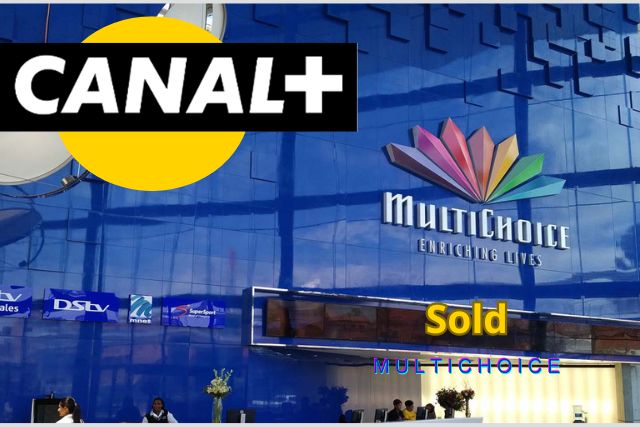
MultiChoice has officially been sold to French media giant Canal+ in a $3 billion deal. Learn what the takeover means, and future plans for Showmax and African content.
French media giant Canal+ has officially completed its acquisition of MultiChoice Group in a landmark transaction valued at approximately $3 billion (R55 billion) about KSh 438.4 billion.
The deal marks the successful conclusion of a multi-year takeover process that has made MultiChoice, the parent company of DStv, GOtv, Showmax, and SuperSport, a wholly owned subsidiary of Canal+.
The acquisition is one of the largest media transactions in Africa in recent years. It positions the combined business to expand its presence across the continent while strengthening investment in local entertainment, sports broadcasting, and streaming services.
For many consumers asking has MultiChoice been sold, the answer is now yes. Following the completion of all regulatory approvals and equity transitions, Canal+ has officially assumed full ownership of MultiChoice.
Canal+ Completes MultiChoice Acquisition
The Canal+ MultiChoice transaction follows years of strategic investment by the French broadcaster.
Canal+ had gradually increased its shareholding in MultiChoice before launching a mandatory offer of R125 per share to public investors.
The company had already acquired about 45 percent of MultiChoice before finalizing the buyout.
With the transaction complete, MultiChoice joins Canal+, an international media company operating in more than 70 countries.
Canal+ is listed on both the London Stock Exchange and the Johannesburg Stock Exchange, giving the combined group a stronger international footprint.
The integration creates new opportunities for collaboration across television, streaming, sports, and film production while maintaining MultiChoice’s established brands throughout Africa.
Who Owns MultiChoice Now?
Many people have been asking who bought MultiChoice, who is the current owner of MultiChoice, and who is the new owner of DStv.
The answer is straightforward. Canal+ is now the owner of MultiChoice Group. Since DStv, GOtv, Showmax, SuperSport, and M-Net operate under MultiChoice, these platforms are now part of the Canal+ Group.
This means anyone wondering has DStv been sold can now confirm that its parent company is officially owned by Canal+.
What the MultiChoice Sale Means for DStv and GOtv Subscribers
The ownership change does not immediately alter how customers access DStv, GOtv, or Showmax services. Subscribers will continue using their existing packages, customer support channels, and payment systems.
Instead, the acquisition focuses on long-term growth and content development. Canal+ has outlined plans to strengthen Showmax, improve streaming capabilities, and expand investment in African storytelling.
The company also intends to increase the production of local television shows, films, documentaries, and sports programming.
These investments are expected to provide more opportunities for African creators while delivering diverse entertainment to viewers.
Why the Canal+ MultiChoice Deal Matters
The MultiChoice sold to Canal+ transaction reflects the growing importance of African media within the global entertainment industry.
By combining Canal+’s international experience with MultiChoice’s strong African presence, the new group aims to compete more effectively in the evolving streaming and broadcasting market.
The acquisition also supports greater collaboration across Europe, Africa, and Asia. This could help accelerate technology innovation, expand premium content offerings, and create new partnerships across the entertainment sector.
A New Chapter for MultiChoice
The completion of the Canal+ acquires MultiChoice deal represents a significant milestone for one of Africa’s largest entertainment companies.
The transaction provides MultiChoice with additional financial strength, international expertise, and broader market access.
While ownership has changed, the company’s commitment to African audiences remains central to its strategy. With continued investment in DStv, GOtv, Showmax, and local productions, MultiChoice enters a new phase focused on innovation, sustainable growth, and delivering high-quality entertainment across the continent.
Dive into everything about Meta Muse Spark 1.1, including its features, API, coding capabilities, multimodal AI, pricing, availability, and how it works.
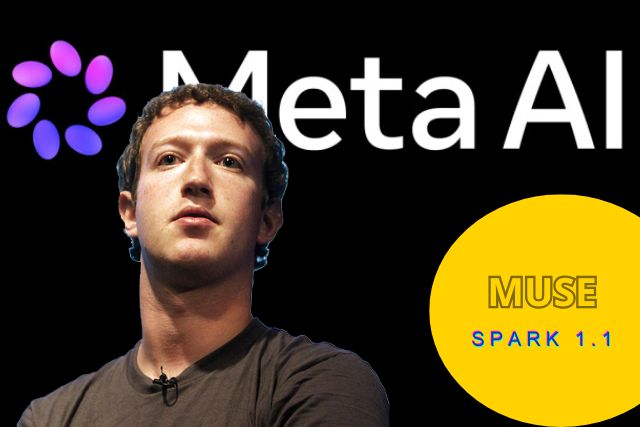
Meta has officially introduced Muse Spark 1.1, the latest version of its advanced artificial intelligence model designed for coding, reasoning, computer use, and multimodal tasks.
The new release builds on the original Muse Spark and delivers significant improvements in speed, accuracy, efficiency, and developer experience.
Muse Spark 1.1 is now available in public preview through the Meta Model API, allowing developers to test its capabilities and build AI-powered applications.
What is Muse Spark 1.1?
Muse Spark 1.1
Muse Spark 1.1 is Meta’s newest multimodal reasoning AI model. It is designed to understand and work with different types of information, including text, images, and software tools.
Unlike traditional AI assistants that mainly answer questions, Muse Spark 1.1 focuses on agentic AI workflows.
This means it can plan tasks, use tools, write code, review software, and complete multi-step objectives with minimal human guidance.
The model represents a major milestone in Meta’s growing AI ecosystem and supports businesses, developers, researchers, and enterprises building intelligent applications.
Key Features of Muse Spark 1.1
Meta has introduced several important upgrades in Muse Spark 1.1.
Some of the biggest improvements include:
Better coding performance across multiple programming languages.
Stronger multimodal reasoning using both text and visual inputs.
Improved computer and tool use for complex workflows.
Faster response times with lower latency.
Higher accuracy during multi-step reasoning tasks.
Enhanced planning and task orchestration.
Optimized cost for developers using the Meta Model API.
These improvements make Muse Spark 1.1 suitable for software development, automation, productivity tools, research assistants, and enterprise AI systems.
Muse Spark AI for Developers
One of the biggest highlights of the release is its focus on developers.
The Muse Spark API enables developers to integrate the model into their own products and services. It can generate code, review existing software, explain technical concepts, and assist with debugging.
Meta says the updated model requires fewer interaction steps to complete coding tasks, helping developers work more efficiently while reducing development time.
The API is currently available in public preview for eligible developers through Meta’s developer platform.
Developers can access Muse Spark through the Meta Model API after joining the public preview.
Once connected, the model can power:
AI coding assistants
Software review bots
Research tools
Business automation platforms
Enterprise productivity solutions
Intelligent customer support systems
Meta also plans broader integration across its AI products, expanding the model’s reach to more users over time.
Is Muse Spark Open Source?
At present, Muse Spark 1.1 is not open source.
Meta is offering access through its Model API rather than releasing the model weights publicly. While discussions continue within the AI community about future open-source versions, Meta has not announced plans to fully open-source Muse Spark 1.1.
Is Muse Spark Free?
Muse Spark 1.1 is available through the Meta Model API with pricing designed to remain competitive for developers and businesses.
Developers can access the public preview and evaluate the model before deploying it into production environments.
Muse Spark Download
There is no standalone Muse Spark download.
Instead, developers access the model through Meta’s cloud-based API. This approach ensures users always receive the latest version without installing software locally.
Muse Spark AI Chat and Apps
Muse Spark also powers Meta’s broader AI strategy. Its technology is expected to enhance AI experiences across Meta services and future intelligent applications.
Developers can build their own Muse Spark AI chat experiences, productivity assistants, and business tools using the available API.
Muse Spark 1.1 marks another significant step in Meta’s AI development strategy. With stronger reasoning, improved coding capabilities, advanced multimodal understanding, and efficient agentic workflows, the model offers developers a powerful platform for building next-generation AI applications.
As Meta continues expanding its AI ecosystem, Muse Spark 1.1 is positioned to play an important role in software development, enterprise automation, and intelligent digital assistants, making it one of the company’s most capable AI models to date.
Tony Elumelu to step down as UBA chairman in August 2026 after 12 years. See his net worth, family, foundation, and Seplat Energy role.
Tony Elumelu will step down as chairman of United Bank for Africa in August 2026. The move comes after twelve years at the helm of the pan-African lender.
Nigeria’s Central Bank sets a twelve-year tenure limit for non-executive bank directors, and Elumelu’s exit aligns with that rule. His departure closes a defining chapter in African banking history.
Emmanuel Nnorom has been named as the incoming Group Chairman of UBA. He takes over on August 21, 2026, the same day Elumelu formally exits the board.
UBA now operates in 20 African countries, plus the United Kingdom, France, the United States, and the United Arab Emirates. Elumelu built that footprint from a single struggling Lagos bank.
Who Is Tony Elumelu?
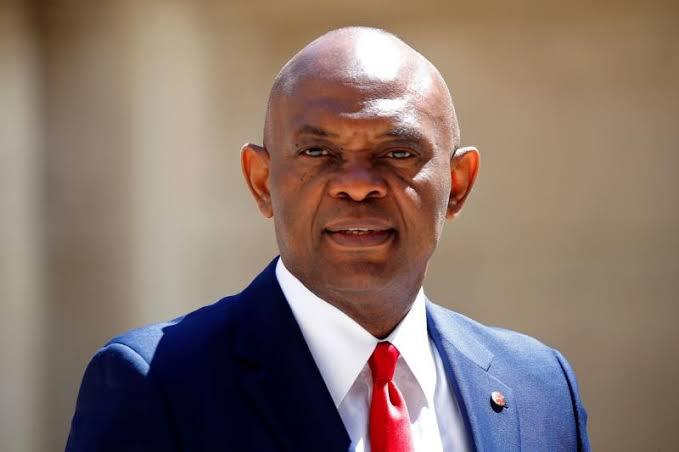
Tony O. Elumelu
Tony O. Elumelu is a Nigerian economist, banker, investor, and philanthropist. Full name: Anthony Onyemaechi Elumelu.
He was born on March 22, 1963, in Jos, Plateau State, Nigeria, making him 63 years old. His parents, Suzanne and Dominic Elumelu, raised him among five siblings, including Ndudi Elumelu, a minority leader in Nigeria’s House of Representatives.
The Elumelu family traces its roots to Onicha-Ukwu in Delta State, and Tony Elumelu is of Igbo heritage.
He studied Economics at Ambrose Alli University, earned a Master’s degree from the University of Lagos, and later completed an advanced management program at Harvard Business School.
His biography reads like a classic entrepreneurship story. He started out selling copiers before joining the banking sector.
The UBA Story
UBA
In 1997, Elumelu led a group of investors to acquire a small, ailing commercial bank in Lagos. Within a few years, he turned it profitable. In 2005, he merged it with United Bank for Africa in one of the largest banking mergers in Sub-Saharan Africa’s history.
That deal transformed him into one of the continent’s most respected financial minds. While Elumelu chaired UBA’s board, he was not its sole owner.
UBA is a publicly listed company with thousands of shareholders across Nigeria and beyond.
Tony Elumelu Family Life
Elumelu is married to Awele Vivien Elumelu, his wife since 1993. Together, they have five children: Oge, Onyinye, Ogor, Ugo, and Nneka Elumelu.
Tony O. Elumelu Family
Oge Elumelu recently made headlines of her own, convening the first edition of the Africa Everywhere Festival, an event connecting young Africans to job opportunities.
Family remains central to Elumelu’s public image, and he often shares glimpses of his home life on social media.
Net Worth on the Rise
Tony Elumelu’s net worth has climbed sharply in recent months. Estimates now place his wealth between $2.1 billion and $3.2 billion, according to recent financial analysis.
The surge comes largely from strong performance at Heirs Energies, an integrated energy company that has become the standout asset in his broader portfolio. Beyond energy, his long-standing stakes in banking and conglomerate businesses continue to add steady value.
Beyond UBA Growing Empire
Elumelu founded Heirs Holdings in 2010, his family-owned investment company spanning finance, energy, hospitality, real estate, and technology.
Through Heirs Holdings, he controls Transcorp, a major Nigerian conglomerate listed on the stock exchange, with interests in power generation and hospitality. He also owns Transcorp Hotels, a well-known hospitality brand in Nigeria.
His business reach recently expanded into oil and gas. Seplat Energy appointed Elumelu as its incoming chairman, effective January 2027, following a landmark acquisition in which Heirs Energies became Seplat’s largest shareholder through a $500 million deal.
This appointment cements his growing influence in Africa’s energy sector, alongside his banking legacy.
The Tony Elumelu Foundation
Beyond business, Elumelu is widely known for his philanthropy. He founded the Tony Elumelu Foundation in 2010, an organization dedicated to empowering African entrepreneurs.
Through the foundation, he has committed more than $100 million to support African entrepreneurs, funding over 27,000 businesses across the continent.
Many young business owners across Nigeria and other African nations have benefited from foundation grants and mentorship programs. The foundation continues to open new grant application cycles for aspiring entrepreneurs each year.
Elumelu is also known as the architect of Africapitalism, an economic philosophy that champions private sector investment as a driver of Africa’s long-term development.
In 2020, Time magazine included him among the 100 most influential people in the world. His recognition extends across banking, entrepreneurship, and philanthropy circles globally.
As Elumelu steps back from UBA’s boardroom, his influence across African business is far from fading.
With Seplat Energy on the horizon and his foundation’s work expanding, Tony Elumelu’s next chapter looks set to build on a legacy already firmly established in African finance and entrepreneurship.
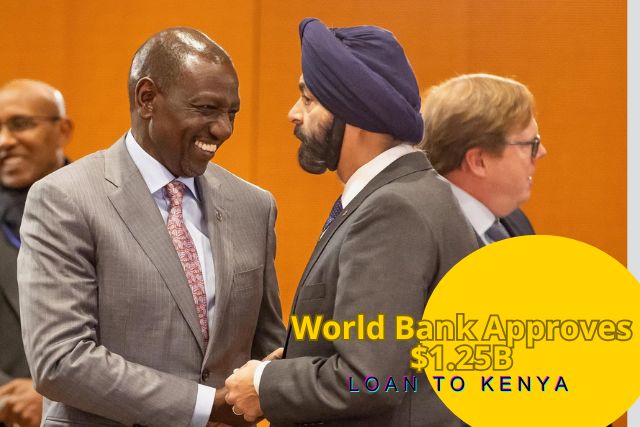
World Bank Approves $1.25 Billion Loan to Kenya, Ties Funding to Governance and Anti-Corruption Reforms that most Kenyans find skeptical.
The World Bank has approved a fresh financing package worth Ksh.161.8 billion (USD 1.25 billion) for Kenya, marking one of the most significant multilateral funding decisions for the country in recent years.
The latest round of World Bank loans to Kenya is structured to ease fiscal pressure, strengthen public financial management, and push forward reforms targeting corruption, governance, and environmental sustainability.
Breaking Down the Financing Package
The approved package is split across three distinct facilities, each with its own purpose and lender within the World Bank Group.
The largest single component is a $410 million concessional facility from the International Development Association (IDA), the World Bank’s arm that lends to lower-income economies on favourable terms.
This tranche includes targeted support for refugees and host communities, reflecting Kenya’s role in hosting displaced populations from the wider East African region.
A further $340 million comes from the International Bank for Reconstruction and Development (IBRD), aimed squarely at budget support and helping the Kenyan government manage fiscal strain amid rising debt-servicing obligations.
The third and most closely watched component is a $500 million Sustainability Linked Loan (SLL). Unlike conventional budget support, this facility is tied directly to measurable green and governance targets, including efforts to curb deforestation.
Disbursement of funds under this loan depends on Kenya meeting agreed milestones, a structure the World Bank has increasingly favoured to ensure accountability in how borrowed funds are used.
The Corruption and Governance Angle
A central feature of this approval is its explicit link to anti-corruption and governance reform. The World Bank has framed the package as a tool to strengthen public financial management systems, improve transparency in how public funds are tracked, and reinforce institutional safeguards against misuse of state resources.
This positions the loan not merely as budget relief but as a conditional instrument designed to push Kenya toward stronger fiscal discipline and cleaner public administration. However, most Kenyans are skeptical of this claiming it a double edged sword.
For a country that has faced repeated public scrutiny over procurement scandals and weak expenditure oversight. Tying financing to governance benchmarks signals that future World Bank loans to Kenya will likely continue carrying similar conditions.
What This Means for Kenya’s Broader Debt Picture
According to the World Bank Group’s own financial disclosures, Kenya’s outstanding loan exposure to the institution already runs into the billions of dollars, placing it among the larger borrowers on the continent.
President Ruto with World bank President
The institution has indicated it envisions financing Kenya up to $12 billion over a multi-year strategic period, suggesting this latest approval is one instalment in a longer-term lending relationship rather than a standalone transaction.
Clearing Up Common Misconceptions
Search interest around this story has surfaced a number of related but distinct questions worth addressing directly.
World Bank loans to Kenya, including this one, are sovereign loans extended to the national government, not personal loans available to individual Kenyans.
There is currently no World Bank loan application form for individuals, no online portal where citizens can apply for a World Bank loan for individuals, and no mechanism linking World Bank financing directly to Mpesa accounts.
Claims suggesting international loans to Mpesa or instant personal lending tied to the World Bank are not accurate and should be treated with caution.
Kenyans seeking personal credit should instead look to licensed banks, savings and credit cooperatives (SACCOs), or regulated digital lending platforms, all of which operate under Central Bank of Kenya oversight and updated KYC procedures rather than World Bank channels.
Ellen Kawila, Kenya Debt Clock
Looking Ahead
With the latest tranche approved, attention now turns to implementation. Analysts will be watching how quickly Kenya’s National Treasury disburses and reports on the funds.
Whether the governance milestones tied to the Sustainability Linked Loan are met on schedule.
Given the World Bank’s stated multi-year financing outlook for Kenya, this approval is unlikely to be the last major lending decision shaping the country’s fiscal trajectory in the period ahead.
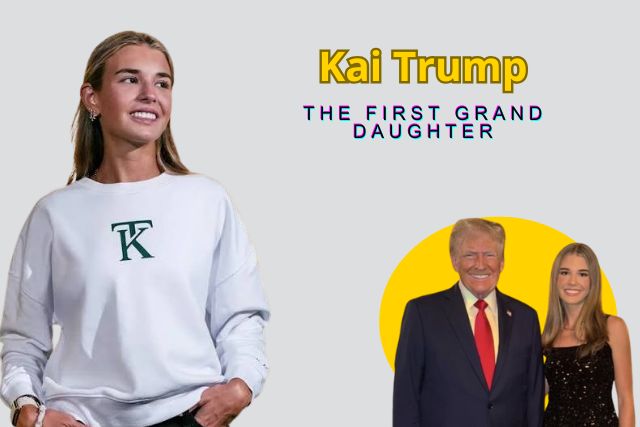
Kai Trump is Donald Trump’s 19-year-old granddaughter making headlines in 2026, from a viral Knicks NBA Finals night to a rare White House Oval Office tour. Here is everything to know.
Kai Madison Trump is no longer just a name in the background of a famous family. At just 19 years old, she has emerged as one of America’s most-watched young personalities. A golfer, content creator, entrepreneur, and now, an unlikely face of a viral NBA Finals moment. Here is everything you need to know about Donald Trump’s eldest grandchild.
Who Is Kai Trump?
President Trump & Kai Trump
Kai Madison Trump was born on May 12, 2007, in New York City. She is the eldest child of Donald Trump Jr. and his former wife, Vanessa Haydon Trump. That also makes her the eldest grandchild of the 45th and 47th U.S. President, Donald Trump.
Kai Trump’s age is 19 years old as of 2026. A detail that surprises many who still picture her as a teenager on the sidelines of campaign rallies. She stands at 1.75 metres tall and attended The Benjamin School in Florida before committing to the University of Miami’s women’s golf programme for the 2026–27 season.
Kai Trump’s White House Tour Rare Look Inside
Few people ever set foot inside the rooms that shape history. Kai Trump gave the world a glimpse.
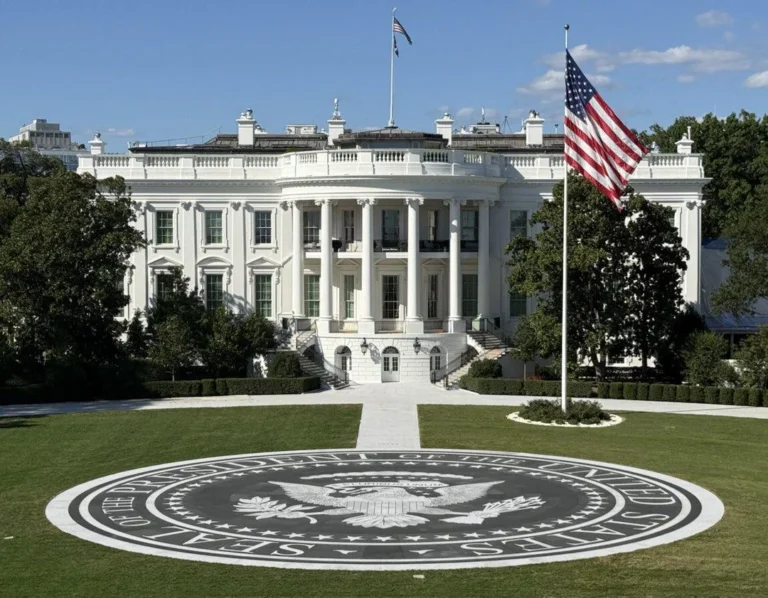
During the UFC Freedom 250 event held on the White House South Lawn. A historic first for the sport! Kai took her YouTube followers on an informal behind-the-scenes tour of America’s most iconic residence. The vlog captured spaces the general public rarely, if ever, gets to see.
Kai Trump's rare look inside the White House The Oval Office. The Diet Coke button. The gold accents. All caught on camera by Donald Trump's 19-year-old granddaughter Most of the White House is off-limits to the public.https://t.co/FbOoQ8LZxupic.twitter.com/gy9E9pz8GI
The standout moment came inside the Oval Office. Kai pointed out the room’s sweeping gold accents, joking that her grandfather’s love for the colour was impossible to miss. She then revealed the now-legendary Diet Coke button sitting on the presidential desk. A small red button that, when pressed, summons a chilled Diet Coke for President Trump. The detail, equal parts quirky and fascinating, instantly went viral.
Most of the White House remains strictly off-limits to the public. That is what made Kai’s footage so compelling. Her camera went where television crews and official tours simply do not go. Hence, offering an unusually personal and unfiltered window into the home of the most powerful office on earth.
The vlog drew massive attention online, with viewers captivated as much by the intimate family atmosphere as by the historic surroundings.
Kai Family and the Trump Dynasty
Kai Trump’s Family
Kai Trump’s parents are Donald Trump Jr. and Vanessa Trump, who divorced in 2018. Despite the split, the family has maintained a close bond. Vanessa regularly joins Kai for White House events and family trips, a dynamic that fans across social media have openly praised.
Kai has four younger siblings: Donald John III, Tristan Milos, Spencer Frederick, and Chloe Sophia. On her grandfather’s side, she is the oldest of 11 Trump grandchildren. Notably with cousins including Ivanka Trump’s children, Arabella, Joseph, and Theodore.
Her extended family includes aunts and uncles Ivanka Trump, Eric Trump, Tiffany Trump, and Barron Trump, the latter now a notable figure in his own right at 20 years old.
Kai Trump at the Knicks Game
The Kai Trump Knicks story became one of the most talked-about moments of June 2026. Kai attended Game 3 of the NBA Finals on June 8, sitting courtside at Madison Square Garden alongside her grandfather, President Donald Trump, and Knicks owner James Dolan.
The Trump Knicks visit made history. It marked the first time a sitting U.S. president attended an NBA Finals game. When the family appeared on the Jumbotron during the national anthem, a loud crowd reaction followed. Kai, ever composed, took it in stride.
She posted a smiling selfie wearing a Knicks cap, writing simply: “The atmosphere was amazing.”
A brief controversy arose when critics claimed Kai had altered audio in an Instagram clip from the game. The video technology company responsible for the content publicly cleared her. Thus, confirming the audio change was part of an automated broadcast and licensing process, not anything she requested or approved.
Kai later released a full behind-the-scenes YouTube vlog titled I Went to the Knicks Game with My Grandpa (POTUS), which attracted hundreds of thousands of views within days.
Kai Trump’s Net Worth in 2026
Kai Trump’s net worth is estimated at between $20 million and $21 million in 2026. A significant portion, approximately $16 million is held in a family trust managed by JPMorgan Chase. Beyond that, she earns an estimated $2.5 million annually through name, image, and likeness deals with brands like TaylorMade and Leaf Trading Cards, alongside modeling contracts and social media sponsorships.
Kai Trump
Her own energy drink, Accelerator, has also generated considerable buzz, adding a business dimension to her already diversified profile.
A Rising Force in Her Own Right
From the White House UFC event to the NBA Finals, Kai Trump is carving out a public identity that goes well beyond her surname. She is a committed collegiate golfer, a savvy entrepreneur, and a content creator with over 3 million followers across platforms.
At 19, Kai Madison Trump is only getting started, and the world is paying close attention.
Dive into how natural gas and smart cooling technologies are helping AI data centres scale fast, and why Microsoft’s Project Kilby in Texas is leading the way.
The global data centre industry is undergoing one of its most decisive infrastructure shifts in decades. As artificial intelligence workloads demand unprecedented volumes of round-the-clock electricity.
Hence, the combination of natural gas power generation and advanced cooling technologies is emerging as the backbone of the next generation of digital infrastructure.
Nowhere is this transformation more visible than in West Texas, where a landmark agreement between two American giants is redefining how the world’s most powerful AI systems get their power.
Project Kilby Biggest Co-Located Data Centre Deal in US History
Chevron Corporation announced that its wholly owned subsidiary, Energy Forge One LLC, has signed an agreement with Microsoft to develop a co-located power facility. In West Texas that will provide dedicated electricity to a Microsoft-operated data centre under a 20-year power purchase agreement. The project, known as Project Kilby, is being developed in collaboration with investment firm Engine No. 1. It is set to become one of the largest natural gas-powered data centre developments ever undertaken.
Project Kilby is expected to consume nearly 2.7 gigawatts of electricity. Equivalent to the power needed to run about 2 million homes, with the majority of electricity coming from large gas turbines supplied by Chevron’s partner, GE Vernova. Caterpillar will also provide turbines.
At launch, the datacenter campus will operate with a co-located natural gas power facility in an arrangement known as “behind the meter.” Serving the campus directly and independently of the public grid, so this demand does not take from local electricity consumers. That design choice is significant. The power is dedicated to the data centre and will not be connected to the electric grid.
Jeff Gustavson, photo courtesy
“There’s really no competition with local electricity consumers,” Jeff Gustavson, president of Chevron New Energies, told CNBC.
For Microsoft, the investment is firmly grounded in customer demand. Noelle Walsh, President of Cloud Operations and Innovation at Microsoft, described the scale of the development:
“In Pecos, Texas, we will build a new data centre campus. Expanding our global data centre capacity by approximately 2 gigawatts to meet strong and sustained customer demand for AI and cloud services across industries and regions.”
Why Natural Gas Is the Engine Behind AI Data Centre Power
The AI data centre power challenge is fundamentally one of speed and reliability. By the end of 2025, ERCOT, the Texas grid operator, had roughly 226 GW of large loads stacked up in its interconnection queue. Nearly quadruple the figure a year earlier, with about three-quarters of that coming from data centres.
Getting to the front of that queue takes years, so developers increasingly skip it.
Natural gas fills that gap precisely because it is deployable, scalable, and dispatchable on demand. The plant will draw on natural gas from Chevron’s existing Permian Basin production.
Natural gas volumes in the Permian routinely outrun what regional pipelines can carry, forcing operators to flare the excess. A dynamic that depresses local gas prices. Chevron says that dynamic gives Project Kilby a competitive cost advantage.
“AI is reshaping the global economy, and abundant, affordable, reliable energy is essential to fuelling that transformation,” said Jeff Gustavson, Chevron president of New Energies.
“Chevron is uniquely positioned to deliver power to customers with certainty, speed, and at a competitive cost, leveraging Permian natural gas and our proven execution capabilities.”
Across the United States, natural gas is now the dominant source of electricity for the data centre sector. The majority of generation at Project Kilby will come from large GE Vernova turbines and associated electrical infrastructure, with additional capacity provided by Solar Turbines. A wholly owned subsidiary of Caterpillar.
The infrastructure will be co-located directly with Microsoft’s data centre, designed to deliver reliable, dispatchable electricity while aiming to mitigate impacts on the regional grid.
Closed-Loop Cooling Smarter Way to Manage Heat at Scale
Beyond power generation, the Pecos facility is pioneering a data centre cooling system that sets a new benchmark for water efficiency.
As AI chips push rack densities beyond 100 kW, traditional air cooling methods are no longer sufficient. The industry is moving rapidly toward advanced liquid and closed-loop data centre cooling solutions. Microsoft’s Pecos campus exemplifies this evolution in data centre cooling technology.
Microsoft said the Pecos campus will use closed-loop cooling systems designed to sharply reduce water demand. Thus requiring an initial charge of water but no additional water consumption during steady-state operation.
It also said it will seek to use nonpotable water where possible.
This approach is expected to limit water usage so that the total lifecycle water use of this datacenter is only a fraction of that consumed annually by a typical fast-food restaurant.
For a region like Reeves County, prone to drought and limited freshwater access. This data centre cooling method addresses one of the most pressing community concerns around large-scale digital infrastructure.
Closed-loop data centre cooling works by circulating a fixed volume of coolant through the system in a sealed circuit. Transferring heat away from servers without continuous water consumption. Combined with direct-to-chip liquid cooling on high-density AI processors, this approach dramatically improves the facility’s Power Usage Effectiveness (PUE). The standard measure of data centre energy efficiency.
The design will also incorporate Selective Catalytic Reduction systems designed to reduce nitrogen oxide emissions, as well as measures to minimise noise and light impacts on surrounding communities.
Economic Impact and the Long-Term Picture
Project Kilby is far more than a power deal, it is a regional economic catalyst. The site spans over 2,000 acres, and the massive complex will be built in Reeves County, West Texas, near the city of Pecos.
The project is expected to generate more than $10 billion in state and local tax revenue and support nearly 2,000 regional jobs. Microsoft’s data centre campus itself is projected to support over 6,000 construction jobs at peak build-out, along with hundreds of permanent operational roles.
The project is expected to reach its final investment decision by the end of 2026, with initial power delivery targeted for 2028. Natural gas remains the bridge energy source enabling the AI revolution to scale.
The innovations in data centre cooling systems ensure that growth comes with greater responsibility toward communities and natural resources. For the data centre industry, the future is being built in the West Texas desert, one turbine and one closed-loop at a time.
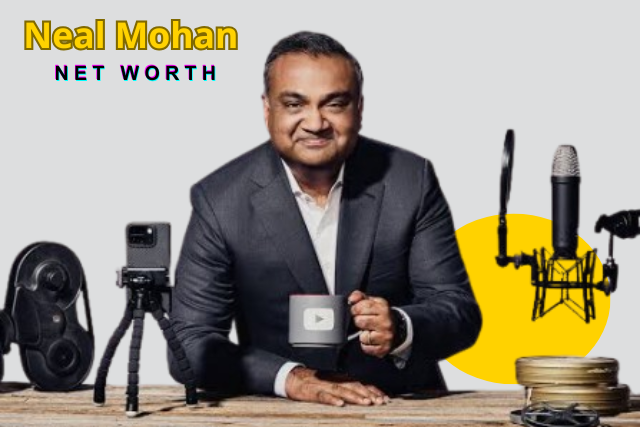
Neal Mohan net worth 2026 is estimated at $100M–$275M. Discover his salary, wife, religion, ethnicity, YouTube milestones & CEO journey.
Neal Mohan, the Indian-American executive leading the world’s largest video platform, has become one of the most influential figures in global digital media. Also his story is as compelling as the platform he runs.
Who Is Neal Mohan?
Neal Mohan is the Chief Executive Officer of YouTube, the Google-owned video streaming giant that serves billions of users worldwide. Born on July 14, 1973, in Lafayette, Indiana, Mohan is 52 years old and has spent the better part of three decades building one of the most remarkable careers in Silicon Valley history.
Neal Mohan YouTube CEO
His educational foundation is equally impressive. Mohan holds a degree from Stanford University and later earned his MBA from the Stanford Graduate School of Business, graduating in 2005. The same institution that has produced some of tech’s most transformative leaders.
Is Neal Mohan Indian?
Yes, Neal Mohan is of Indian descent, making him one of the most prominent Indian-origin executives leading a global technology brand. His parents, Aditya Mohan and Deepa Mohan, raised him in the United States after emigrating from India. He has two siblings, Anuj Mohan and Kapil Mohan. Mohan is part of a growing wave of Indian-origin executives reshaping Silicon Valley’s leadership landscape alongside figures such as Sundar Pichai and Satya Nadella.
Neal Mohan’s Religion and Ethnicity
Neal Mohan’s ethnicity is Indian-American, with deep South Asian roots through his family heritage. While Mohan has not publicly discussed his personal religious beliefs in detail, his family background is rooted in Indian cultural traditions. His professional conduct and public persona reflect the values of discipline, innovation, and inclusive leadership.
Neal Mohan Net Worth 2026
Neal Mohan’s net worth in 2026 is estimated to fall between $100 million and $275 million, according to multiple financial and media sources. The wide range reflects the challenge of pinning down exact figures for a private individual whose compensation is tied heavily to equity and stock-based packages.
Neal Mohan net worth
A pivotal chapter in his wealth-building story came in the early 2010s, when Google reportedly offered Mohan a retention bonus worth approximately $100 million in stock options to prevent him from departing for a senior role at Twitter. That single strategic decision staying at Google, proved to be one of the most financially rewarding in modern tech executive history.
SEC filings further confirm Mohan holds insider ownership stakes in several publicly traded companies, including Starbucks Corp and Stitch Fix Inc, signaling a diversified personal investment portfolio beyond his YouTube compensation.
Neal Mohan Salary
Neal Mohan’s annual salary as YouTube CEO has not been publicly disclosed in precise figures but estimated monthly income of around $400,000. However, consistent with compensation packages for executives at Google’s parent company Alphabet, industry estimates place his total annual compensation. This includs base salary, bonuses, and stock-based awards in the multimillion-dollar range. His estimated net worth trajectory of over $150 million by 2025 reflects the compounding effect of nearly two decades of equity accumulation at one of the world’s most valuable technology companies.
Neal Mohan Wife and Family
Neal Mohan is married to Hema Sareen Mohan, and the couple maintains a largely private family life away from public scrutiny. The Mohans are known to be deeply family-oriented, and Neal has occasionally referenced the importance of personal values alongside professional ambition. YouTube CEO Neal Mohan and his wife, Hema Sareen Mohan, have three children together: two sons and one daughter. Details about his children, including his son, have been kept intentionally out of the public eye. A deliberate choice that reflects the family’s preference for privacy despite the high-profile nature of his role.
Neal Mohan’s YouTube Milestones and Leadership
Neal Mohan at 100K Subscribers
Since taking over as YouTube’s fourth CEO in February 2023, succeeding Susan Wojcicki, Neal Mohan has steered the platform through an era of extraordinary growth and cultural influence.
In a landmark moment in June 2026, Mohan personally crossed 100,000 subscribers on his own YouTube channel, earning the coveted Silver Creator Award. In a post marking the milestone, he reflected on the experience of personally receiving what he had long celebrated handing to others:
“For years, I’ve had the privilege of celebrating creator milestones across YouTube, but there is a big difference between presenting a Creator Award and actually earning one.”
Under his leadership, YouTube has also celebrated MrBeast real name Jimmy Donaldson becoming the first creator in history to reach 500 million subscribers. Hence, a watershed moment for the platform’s creator economy.
In December 2025, TIME Magazine named Neal Mohan its 2025 CEO of the Year, recognizing his role in transforming YouTube from a video site into a dominant force in television, music, sports, and culture.
The Bigger Picture
Neal Mohan’s journey from Indiana to the top of YouTube is a testament to sustained excellence, strategic vision, and cultural fluency. With a net worth estimated between $100 million and $275 million in 2026, a platform generating billions in revenue under his stewardship, and a growing public profile that extends to his own creator journey, Mohan stands as one of the defining business leaders of the digital age.
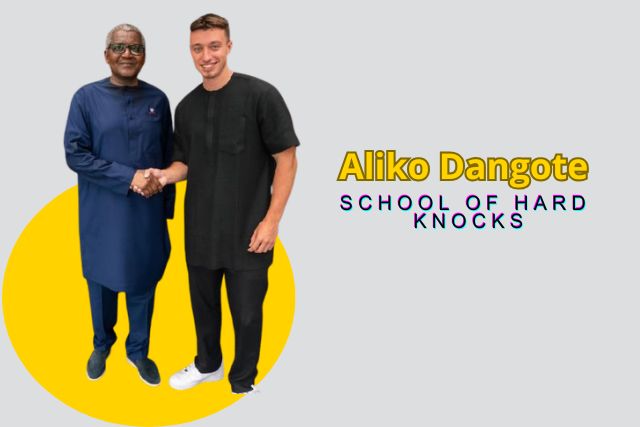
School of Hard Knocks founder James Dumoulin interviews Africa’s richest man Aliko Dangote in Nigeria on wealth, legacy, humility, and why Africa is the future.
How School of Hard Knocks Founder James Dumoulin Got Africa’s Richest Man Aliko Dangote to Share His Secrets
James Dumoulin, the 23-year-old co-founder of School of Hard Knocks, traveled to Nigeria and sat down with Aliko Dangote. A conversation about legacy, humility, and why Africa is the world’s next great frontier
When James Dumoulin walks up to a stranger in a G-Wagon or spotting a Rolex on a wrist, most people would hesitate. Dumoulin does not. The School of Hard Knocks founder has built an entire media empire on that exact audacity. And his most compelling interview to date may be the one he pulled off in Nigeria, where he sat face to face with Aliko Dangote, the richest man in Africa.
Who Is James Dumoulin?
James Dumoulin was born on May 10, 2002, making him 23 years old as of 2026. A Texas native and University of Texas at Austin alumnus, Dumoulin co-founded The School of Hard Knocks LLC in Austin in 2021 alongside his brother Jack Dumoulin and a third co-founder.
The premise was deceptively simple: walk up to visibly wealthy strangers, ask them how they got rich, and share those lessons with the world.
What followed was anything but simple. By 2026, @theschoolofhardknockz has grown into a social media powerhouse with 21 million followers, over 200 million views per month, 70 employees, and revenue reported to exceed $1 million monthly.
Dumoulin is now a verified content creator on TikTok and one of the most recognized young faces in entrepreneurship media globally. His School of Hard Knocks biography reads like the very stories he chases. A young man with a big idea who backed it with relentless execution.
James Dumoulin’s Business Model and Net Worth
While an exact James Dumoulin net worth figure in 2026 has not been independently verified, his business metrics speak clearly. An eight-figure company before the age of 25, combined with brand deals, speaking engagements, and a growing podcast presence.
Thus, positions Dumoulin well into the self-made millionaire category, which multiple credible media outlets have confirmed. His income is driven by advertising revenue, sponsorships, and the sheer scale of content production his team sustains across YouTube, TikTok, Instagram, and other platforms.
His religion has come up organically in interviews, where Dumoulin has expressed Christian faith. A thread that runs through many of his conversations with high-net-worth individuals, including the Dangote exchange.
The Dangote InterviewAfrica’s Richest Man
Aliko Dangote, the founder and chairman of Dangote Group, currently holds a net worth estimated at $34 billion according to the Bloomberg Billionaires Index, making him Africa’s wealthiest individual and the 69th richest person on the planet.
When Dumoulin arrived in Nigeria and secured a sit-down with Dangote, he brought his signature street-interview energy to a figure of truly continental consequence.
James Dumoulin with Aliko Dangote
Dumoulin opened with the questions his audience always wants answered. He asked Dangote about the most money he had earned in a single year.
He pressed him on humility, noting that everyone who had met Dangote described him as remarkably grounded. Dangote’s response was telling: he said he had moved beyond building wealth simply for profit, and that his real focus now is legacy.
“I want to be remembered as somebody who has industrialized Africa,” he said.
Why Dangote Says Africa Is the World’s Next Big Investment Opportunity
One of the most striking moments in the Dumoulin-Dangote exchange was the industrialist’s argument for why Americans and the world, should be paying close attention to Africa right now.
Dangote noted that 70 percent of Africa’s population is under 30, and projected that by 2050, the continent’s population will reach 2.5 billion people. His conclusion was direct: “The real future is Africa.”
This aligns with the broader expansion strategy Dangote is currently executing. During the Africa We Build summit in Nairobi, Dangote disclosed plans to extend his refinery operations into East Africa.
Proposing a major facility modeled on his flagship 650,000-barrel-per-day refinery in Lagos. An effort he discussed alongside Kenyan President William Ruto and Ugandan President Yoweri Museveni.
The Candy Seller Who Built a Continent’s Economy
Dumoulin did not miss the origin story. Dangote famously began his commercial instincts by selling candy to classmates as a child. When asked for his best sales and negotiation advice, Dangote pointed to patience and customer respect as non-negotiables.
He advised people to treat every customer like royalty, because without the customer, no business grows.
Dangote also explained the industrial logic behind his conglomerate. Rather than chasing trends, he identified goods that Africa was importing and built domestic production capacity around them.
A strategy he called backward integration. Today, Dangote Group has announced a $400 million deal with a Chinese machinery company to accelerate plans to double the refinery’s full capacity by 2029, with his cement company’s shares surging nearly 69 percent since last March.
Faith, Legacy, and the Final Question
Dumoulin closed the interview the way he closes many conversations with billionaires. He asked about God. Dangote answered without hesitation: “One hundred percent.” When pressed on how he knows God is real, Dangote simply said, “If I look at myself, I know that God is real.”
It was a moment that encapsulates what The School of Hard Knocks does best. Behind the net worth figures, the G-Wagons, and the Forbes rankings, James Dumoulin is chasing something deeper.
The human story inside extraordinary success. In Aliko Dangote, he found one of the most powerful versions of that story on earth: a man who started with candy, built a continent, and still makes time for a 23-year-old with a camera.
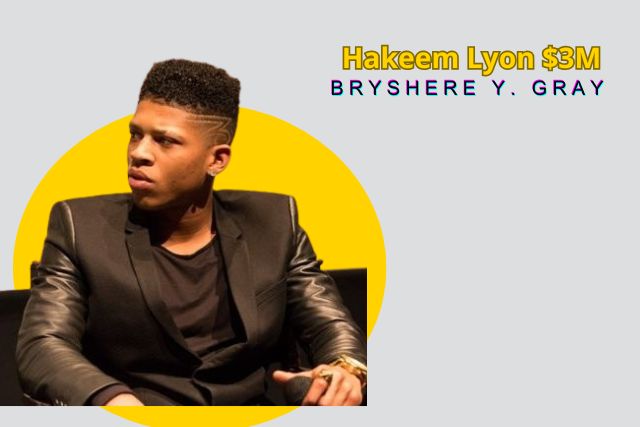
Hakeem Lyon actor Bryshere Y. Gray earned $3 million from Empire on FOX. Here is how he spent it, and why he is now in Nairobi, Kenya starting over.
When Empire first aired on FOX in 2015, Bryshere Y. Gray became an overnight sensation. His portrayal of Hakeem Lyon, the youngest, most flamboyant son of hip-hop mogul Lucious Lyon. Captivated millions across six electrifying seasons.
But while the character Hakeem Lyon was busy building a rap empire on screen, the real-life actor behind the role was navigating a very different financial story off it.
Now 32 years old, Bryshere Y. Gray is in Nairobi, Kenya! In a candid sit-down with media personality Oga Obinna, he opened up about how he earned, spent, and ultimately outlived a $3 million payday that many entertainers would have turned into generational wealth.
Who Is Hakeem Lyon in Real Life?
For anyone wondering who Hakeem Lyon is in real life, the answer is Bryshere Yazuan Gray, born November 28, 1993, in Philadelphia, Pennsylvania. Professionally known by his stage name Yazz the Greatest, Gray landed the role of Hakeem Lyon on Empire at just 22 years old, starring alongside Taraji P. Henson and Terrence Howard.
It remains his most defining role. Hakeem Lyon’s real name in the series was simply Hakeem Lyon, the youngest of three brothers including Andre and Jamal, and the favorite son of Cookie Lyon.
Gray has since appeared in The New Edition Story (2017), Canal Street (2019), and Honey: Rise Up and Dance (2018), making those among the notable Hakeem Lyon movies and television credits beyond Empire. His Instagram handle @yazzthegreatest, where he commands over 5.5 million followers, remains his most active public platform alongside his presence on X (formerly Twitter).
Breaking Down the $3 Million
Gray confirmed in the Oga Obinna interview that his earnings from Empire totaled $3 million. His breakdown was direct and disarming.
The single largest expenditure was a home in Arizona, purchased for $1 million in cash. Next came a Rolls-Royce at $200,000 also cash, followed by a Mercedes-AMG at $60,000, a used Corvette at $20,000, and a Camaro at roughly $20,000. Vehicle spending alone reached approximately $300,000.
He also took care of his family in meaningful ways. His mother used his financial support to purchase a five-bedroom house in Delaware, where she recently settled. His grandmother relocated to a new mansion with a pool in Tampa, Florida. A move she had long delayed despite Gray’s earlier support. His sister, he noted, was still next on the list.
By his own account, Gray saved close to half of the $3 million, roughly $600,000. An achievement many entertainment earners never reach.
The Financial Lessons Nobody Told Him
What Gray’s story illustrates with uncomfortable clarity is how fast entertainment money moves when there is no structured investment strategy behind it.
A $1 million primary residence in Arizona generates no income. Three cars depreciating simultaneously consume capital silently. Living costs in the United States, as Gray himself acknowledged, are relentless. Legal challenges that followed his post-Empire years, including multiple arrests and probation issues between 2019 and 2025. The most recent assault charge in Chesapeake, Virginia in 2025, which was ultimately dismissed. Almost certainly drained the remaining savings through legal fees and lost earning opportunities.
The wealth was real. The plan to grow it was not.
Had Gray invested even $500,000 across instruments like Nasdaq-listed ETFs, income-generating rental property, or even Kenya’s tax-free infrastructure bonds offering 14 to 15 percent annual returns, his financial position today would look dramatically different.
Hakeem Lyon Is Now in Kenya and Staying
Here is where the story takes a genuinely compelling turn. Bryshere Y. Gray is currently in Nairobi, Kenya, and in the Oga Obinna interview he declared he is staying “forever.” He has been spotted at venues including Garden Square by Ashaki and has embraced the city’s nightlife and creative scene with visible enthusiasm.
He has also been active in the studio. His Instagram recently showed him working at Canvass Records on a Swahili remix of Siaska, captioning it: “Jiandaeni kwa Remix ya Siaska! Big up mwenyewe, nguvu zote! Twendeee!” His new single Bad Guy dropped across major streaming platforms, signaling a genuine musical push, not merely a publicity appearance.
Gray also revealed he is a father of five children, all reportedly around the same age, adding to the personal weight he carries as he rebuilds.
Kenya represents something real for him. A market where his name still carries weight, where the entertainment industry is growing. Especially, where the cost of living allows him to breathe and create without the financial suffocation of American city life.
The Bigger Picture
Bryshere Y. Gray is 32. Hakeem Lyon will always be part of his identity, the character who introduced him to the world. But the man behind the role is now writing a second chapter, far from Hollywood, in a country that is receiving him with open arms.
Whether Kenya becomes a genuine fresh start or a temporary refuge depends entirely on what he builds here. The financial lessons from Empire’s $3 million are already written. The next chapter is still being recorded.
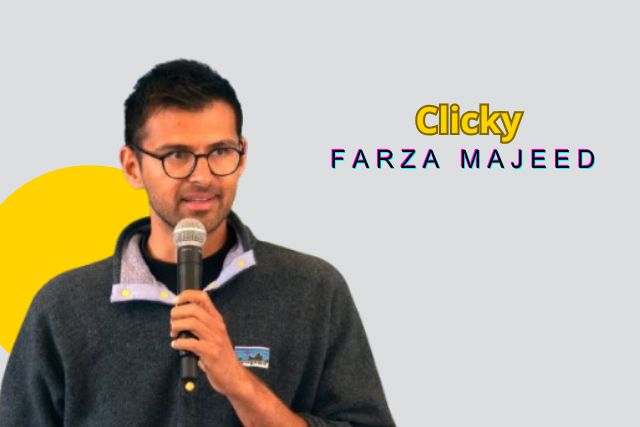
Farza Majeed Builds AI That Draws on Your Screen, Meet the World’s Most Personal Tutor
What if your computer could pause whatever you were doing, draw directly on your screen! Point to exactly what you need to see, and walk you through it live, in any app, in seconds? That is no longer a concept. It is a product. And Farza Majeed just shipped it.
Majeed, the Pakistani-American founder best known for building Buildspace, once described as the world’s biggest school for people working on their own ideas.
Backed by Y Combinator and Andreessen Horowitz, has returned with something far more ambitious. Through his new venture, Clicky, he and his team have built an AI that can draw on your screen in real time, functioning as a true personal tutor for anything you want to learn, in any program you are already using.
“We’ve built a system that can draw directly on your screen,” Majeed announced to his growing audience. “It can draw polygons, arrows, curved lines, and a lot more. It can teach you literally anything, no matter what app you’re in.”
How Clicky’s AI Screen Drawing Works
At the core of the technology is Claude Opus, Anthropic’s most capable AI model. Using Claude Opus, Clicky is able to draw polygons, point with pixel-perfect accuracy, and visually walk users through complex steps on their screen. All without requiring the user to switch tabs, open a tutorial, or pause their workflow.
The mechanics are straightforward but remarkable. When a user asks Clicky a question, the AI takes a screenshot of the active screen, computes precise coordinates, and then paints visual annotations.
Also arrows, highlighted regions, labelled shapes directly onto the display. It is contextual, reactive, and deeply visual in a way that text-based AI assistants simply cannot replicate.
Learning Pythagorean Theorem Live, on YouTube
In a demonstration that has captured widespread attention, Majeed showed himself watching a Khan Academy video on the Pythagorean Theorem. Midway through, instead of pausing and Googling an explanation, he simply asked: “Hey Clicky, I don’t understand how A squared plus B squared equals C squared. Can you draw on my screen directly and show me?”
Farza Majeed built an AI that draws on your screen, using Claude Opus to point with pixel-perfect accuracy and walk you through anything in any app, in real time. Learn Maths on YouTube. Make music in FL Studio. No switching. No tutorials. All this on Just your screen. This shows what a true personal tutor looks like in 2026.
Within moments, Clicky took a screenshot, identified the relevant elements on screen, and began drawing. A small square appeared at the right angle of the triangle.
Labels identified each side — A, B, and the hypotenuse C. Squares were drawn on each leg to illustrate area, walking Majeed through the proof visually, step by step, directly on top of the YouTube video he was already watching.
“The magic,” the AI explained on screen, “is that the square on the hypotenuse holds exactly 16 plus 9, which equals 25.” No switching between apps. No rewinding. Just real-time visual instruction layered onto existing content.
FL Studio in 10 Seconds Flat
The Pythagorean Theorem demo is charming. The FL Studio demo is genuinely jaw-dropping.
FL Studio is a professional music production program that beginners routinely find overwhelming. Learning it traditionally means toggling between lengthy YouTube tutorials and the program itself. A tedious back-and-forth that can stretch a simple lesson into an hour-long ordeal.
Majeed asked Clicky to show him how to make his first beat as a complete beginner. The AI responded by drawing directly inside FL Studio, pointing to the Channel Rack and highlighting specific grid squares in sequence.
Step one for the kick on beat one, step five for beat two, step nine for beat three, and step thirteen for beat four. It then identified the snare row, highlighted the correct steps, and instructed him to press spacebar.
Ten seconds later, Majeed had his first beat.
“I feel like I can keep going at it,” he said. “I can keep asking more questions about how to add loops, bass, whatever. And this is just a brand new interface for you to actually talk to your computer.”
A New Interface Paradigm
What Majeed and the Clicky team have built is not simply a smarter chatbot. It is a rethinking of how humans interact with their computers altogether.
Traditional AI assistants answer in text. They describe where to click, what to type, what to look for. The burden of translation from instruction to action, rests entirely on the user.
Clicky eliminates that gap. It sees your screen, understands context, and communicates visually, the same way a skilled human tutor sitting beside you would.
The system works across any application browsers, creative tools, productivity software, design platforms. There is no setup specific to each program. Clicky reads the screen and adapts.
Farza Majeed’s Track Record
Farza Majeed is not a first-time builder taking a swing in the dark. His career spans computer vision research at the University of Central Florida, deep learning engineering at Visor.gg.
later acquired by Niantic, the company behind Pokémon Go, and a CTO role at Kanga.gg, which was acquired by Riot Games. He founded Buildspace in 2021, growing it to over 125,000 participants before closing it in 2024 to pursue his next chapter.
Clicky, now backed by Y Combinator’s latest cohort, represents the convergence of everything. Majeed has learned community building, consumer product design, and frontier AI capability.
Try It Yourself
Clicky is live and available at heyclicky.com. Majeed has extended a direct challenge to anyone curious enough to test it: “Try it out, try to break it. I dare you.”
For anyone who has ever struggled to learn something new on a computer, the dare may be the most compelling product pitch of the year.
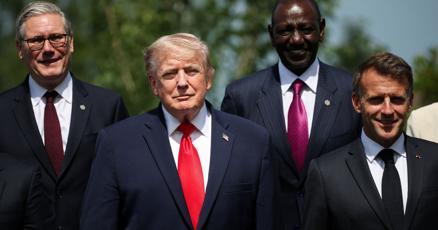
The G7 Summit 2026 is underway in Évian-les-Bains, France. Take a look at the full G7 countries list, the meaning of the G7, Kenya’s historic role as the sole invited African nation, and the summit’s top agenda items.
World leaders have converged on the picturesque Alpine town of Évian-les-Bains, France, for the 52nd G7 Summit. A gathering that carries enormous weight for global trade, artificial intelligence, geopolitics, and the economies of billions of people across the developing world.
What is the G7? The meaning behind the name
The G7, or Group of Seven, is an intergovernmental political and economic forum representing the world’s seven largest advanced economies. Founded in 1975 in response to the global oil crisis, the bloc has evolved into one of the most consequential multilateral platforms on earth, shaping policies on trade, climate, security, and now artificial intelligence.
G7 member countries full list
The G7 member countries are a coalition of democratic, high-income nations that collectively represent roughly 40% of global GDP. The European Union participates as a “non-enumerated member,” bringing additional weight to the group’s deliberations. The seven permanent members are Canada, France, Germany, Italy, Japan, the United Kingdom, and the United States.
Africa at the G7 Summit 2026, Kenya takes centre stage
While no African country holds permanent G7 membership, the 2026 summit marks a significant milestone for the continent. Kenya has been invited as the sole African nation to the Évian summit, with President William Ruto representing Africa’s voice on issues ranging from financial reform to economic development.
Other African leaders attending include the presidents of Algeria, Egypt, South Africa, and Tunisia. Thus, underscoring the growing importance of African perspectives within global governance forums.
Kenya’s inclusion reflects a broader push for greater African representation in global decision-making. A theme central to the Africa Forward Nairobi Declaration signed earlier in 2026, which called for African countries to be fully included in global governance and standard-setting processes.
President Ruto at G7 2026
Kenya’s President William Ruto arrived at the G7 Summit 2026 in Évian-les-Bains with a mandate that went far beyond diplomacy. Speaking ahead of the summit sessions, he outlined four clear demands for the world’s most powerful economies: that Africa’s position be understood, that the continent gain concrete access to concessional financial resources.
That African nations have a genuine say on energy transition, food security, labour mobility, and market expansion and that Africa be recognised as an equal contributor to global growth, not a passive beneficiary of it.
Africa is not going to be merely a consumer, Africa is going to write the rules and is going to be co-creators on how artificial intelligence drives the next industrial and global revolution Says President William Ruto, G7 Summit 2026, Évian-les-Bains, France
On artificial intelligence, Ruto delivered what may be the summit’s most defining statement from an African leader. He made clear that the era of Africa receiving technology built by others is over, declaring that Africa would write the rules and stand as a co-creator in how artificial intelligence drives the next industrial and global revolution.
At a summit where G7 nations are themselves wrestling with AI dependence and supply chain vulnerabilities, his words reframed the entire conversation, Hence. placing Africa not at the margins of the debate, but at the centre of its future.
Key agenda items at G7 2026
The Évian summit agenda is dominated by three interlocking themes. First, artificial intelligence governance with G7 leaders debating the implications of U.S. export controls on frontier AI models and the growing divide between American and Chinese AI capabilities.
Second, reducing global trade imbalances, widely understood as a diplomatic reference to China’s industrial overcapacity and its dominance in critical mineral supply chains powering clean energy.
Third, pressing geopolitical flashpoints including the war in Ukraine and the evolving situation in the Middle East, including a landmark agreement between the United States and Iran.
The G7’s purpose and its impact on developing economies
Beyond the headline debates, the G7 carries a mandate to support low-income nations. The group’s “Compact with Africa” initiative aims to unlock private investment across the continent, while a broader commitment to invest $600 billion in developing economies over five years signals the bloc’s ambition to shape sustainable growth well beyond its own borders.
For countries like Kenya, G7 summits represent not just diplomatic recognition, but a vital opportunity to influence policies that directly affect African trade, debt relief, and climate financing.
In an era of multipolar rivalry, the G7 remains one of the few forums where democratic leaders can align on shared values and coordinate economic responses to global disruptions.
Whether the Évian summit delivers binding commitments or broad declarations, its outcomes will ripple through financial markets, technology policy, and international diplomacy for months to come.
For Kenya and the African continent, a seat, even a guest seat at this table is an opportunity not to be overlooked.
Want to watch the 2026 FIFA World Cup in Kenya? Get the full guide for DStv, Azam TV, KBC, YouTube free streams, and every option by price.
The wait is finally over. The 2026 FIFA World Cup, co-hosted by the United States, Canada, and Mexico is here, and Kenyan fans have more viewing options than ever before.
Whether you are looking to catch every single kick from the comfort of your living room or stream matches on the go, this guide breaks down exactly how to watch the World Cup in Kenya, including free options that will not cost you a shilling.
The Big Picture, Who Has the Rights?
Before diving into specific platforms, it helps to know who is actually broadcasting the tournament. As of 2026, Azam TV, New World TV, and SuperSport International (via DStv and GOtv) are the only broadcasters that have acquired the official rights to air all 104 matches in Kenya.
That means not all local free-to-air channels are carrying the full tournament, but free options still exist, and we will walk you through them.
How to Watch World Cup in Kenya on TV
1. DStv / SuperSport
The Premium Option
DStv remains the most comprehensive way to watch the FIFA World Cup 2026 in Kenya on TV. SuperSport’s dedicated channels carry every single match in HD, and in a move that has excited fans across income levels.
All 104 matches are available on every DStv package, starting from the Access package at KES 1,450 per month. Decoder hardware bundles are available from as low as KES 1,799, making it accessible to a wider audience than in previous tournaments.
If you already have a DStv decoder, simply activate or renew your subscription and navigate to the SuperSport channels to catch all the action live.
2. Azam TV
Affordable and Comprehensive
Azam TV is broadcasting all 104 FIFA World Cup 2026 matches in Kenya. Live coverage airs on Azam Sports 2 HD and Azam Sports 4 HD channels.
Azam TV is widely regarded as one of the more affordable pay-TV options on the market, and its HD broadcast quality has improved significantly in recent years, making it a strong choice for households across the country.
3. TV47
Free-to-Air on GOtv and DStv
TV47, Kenya’s homegrown broadcaster, is also carrying live World Cup matches. You can find TV47 on GOtv channel 102 and DStv channel 268.
For viewers who already have a GOtv or DStv package, this is a solid bonus. No extra subscription needed.
4. Will KBC Air World Cup 2026?
Many Kenyans have been asking: will KBC air World Cup 2026? The answer, as of early June 2026, is yes, with a crucial caveat.
The government approved funding to support World Cup broadcast on KBC, meaning KBC channel 1 is positioned to carry select tournament matches for free-to-air audiences.
Keep an eye on KBC live streaming platforms and the official KBC schedule for confirmed match slots. The KBC World Cup schedule and KBC World Cup live listings are expected to be published on the broadcaster’s official platforms and social media pages as the tournament progresses.
How to Watch World Cup in Kenya Online (Free and Paid)
5. YouTube
Free Matches and the First 10 Minutes of Every Game
Here is the biggest free win for Kenyan fans in 2026: YouTube is streaming selected full matches for free, and for the first time in FIFA World Cup history. The first 10 minutes of every single game will be available to watch live on the platform.
This means even without a paid subscription, you can tune in to the opening moments of any match anywhere in the world.
Additionally, FIFA’s official YouTube channel and local partner channels like Sporty TV on YouTube are streaming up to 34 matches in full. Follow FIFA’s official channels and check Kenya-specific listings to confirm which matches are available in your region.
6. FIFA+
The Official Streaming App
FIFA+ is the official streaming platform of the governing body, and it offers live match streaming and full match replays depending on your regional rights.
Head to the FIFA+ website or download the app to check what is available for Kenyan viewers. The platform is free to register and is optimised for mobile streaming, which matters in a country where a large share of internet access happens on smartphones.
7. DStv Stream App Watch on Mobile
If you are a DStv subscriber, the DStv Stream app lets you watch your SuperSport channels live on your phone or tablet. This is one of the most reliable ways to watch the World Cup in Kenya online, especially if you are away from home during match time. The app is available on both Android and iOS.
How Much Does It Cost to Watch the World Cup?
Here is a quick breakdown of your options and approximate costs:
DStv Access package: From KES 1,450/month — includes all 104 matches on SuperSport
DStv decoder bundle: From KES 1,799 (one-time hardware cost)
Azam TV: Affordable monthly subscription — check Azam Kenya for current pricing
GOtv (TV47 channel): Budget-friendly package — access to TV47’s live match coverage
YouTube / FIFA+: Free — selected matches and first 10 minutes of every game
KBC Channel 1: Free-to-air — select matches covered following government funding approval
Tips for the Best Viewing Experience in Kenya
Getting the most out of your World Cup experience in Kenya means preparing ahead of match time.
For pay-TV viewers, ensure your decoder dish is properly aligned and your subscription is active before kickoff. DStv and Azam both have customer service lines to assist with signal issues.
For online streaming, a stable data connection will make a significant difference; Wi-Fi is preferable for HD streams, though many matches are also watchable on 4G connections.
If you want to watch Kenyan TV online, both the DStv Stream app and the Azam TV digital platforms offer that option. For those following the KBC live stream specifically, KBC has been expanding its digital presence, and live streams are accessible through its website and YouTube channel when matches are scheduled.
The 2026 FIFA World Cup is arguably the most accessible tournament in history for Kenyan fans. Between DStv, Azam TV, GOtv, KBC, YouTube, and FIFA+, there is a viable viewing option at nearly every price point, including free.
Whether you are gathering with friends around a big screen or following the action alone on your phone during your commute, you have everything you need to enjoy all 104 matches of the greatest football show on earth.
Mark your match schedules, charge your devices, and get ready. The World Cup is here.
Elon Musk has become the world’s first trillionaire after SpaceX’s record IPO pushed his net worth past $1.1 trillion. Get the full breakdown here.
Elon Musk has become the world’s first trillionaire, marking a historic milestone in global finance after SpaceX completed a record-breaking initial public offering.
The achievement instantly reshapes conversations about wealth, innovation, and the future of space and technology industries. Hence, placing Musk in a category that no individual has ever occupied before.
Is Elon Musk a trillionaire? The answer is now a definitive yes. Following SpaceX’s Nasdaq debut under the ticker SPCX. Musk’s combined holdings across his ventures pushed his fortune past the trillion-dollar threshold for the first time, cementing his place in financial history.
The Numbers Behind the Milestone
Elon Musk net worth figures released following the listing show his total assets now exceed $1.1 trillion. Thus, dwarfing the fortunes of other prominent billionaires, most of whom remain clustered around the $300 billion mark.
This staggering gap highlights just how transformative the SpaceX IPO has been for Musk’s personal balance sheet.
A SpaceX Falcon 9 rocket with the Dragon capsule launches from Pad-39A on the Crew 5 mission carrying crew members commander Nicole Mann, pilot Josh Cassada, Roscosmos cosmonaut Anna Kikina and Mission Specialist Koichi Wakata from the Japan Aerospace Exploration Agency (JAXA) to the International Space Station from NASA’s Kennedy Space Center in Cape Canaveral, Florida, U.S. October 5, 2022. REUTERS/Joe Skipper
Much of the surge can be attributed to elon musk net worth after spacex ipo calculations, which show his stake in the aerospace company alone is worth hundreds of billions of dollars.
Combined with his substantial holdings in Tesla, the electric vehicle pioneer he has led for years. Musk’s wealth portfolio has reached unprecedented territory.
When discussing elon musk net worth in trillion terms, analysts note that this figure represents paper wealth tied directly to publicly traded shares. While such valuations can fluctuate with market conditions, the scale of Musk’s current holdings places him in a financial stratosphere previously unseen in modern economic history.
Inside the Nasdaq Opening Bell Ceremony
The moment SpaceX shares began trading on Nasdaq under the ticker SPCX was marked by a celebratory opening bell ceremony, with company president and chief operating officer Gwynne Shotwell leading remarks on the trading floor.
Shotwell also used the occasion to reflect on SpaceX’s 24-year journey, recalling how early skeptics doubted the company could reach orbit, fly astronauts to the space station, or build a rocket capable of carrying humans toward the moon and Mars.
Each of those milestones, she noted, had since been achieved, with the company completing over 165 launches in a single year and successfully reflying recovered rocket stages.
Speaking remotely from Starbase, Texas, where he celebrated alongside thousands of employees, Musk addressed the moment with characteristic candor.
He admitted that in the company’s earliest days, he gave SpaceX less than a ten percent chance of succeeding, and acknowledged that even close associates doubted the venture would survive.
Despite those odds, he said the goal had always been to ensure humanity could become a spacefaring civilization, framing SpaceX’s mission as an effort to bring ambitious, science-fiction-inspired futures within reach.
Musk emphasized that the company’s long-term vision extends beyond a small group of astronauts, expressing his hope that SpaceX’s technology will eventually make travel to the moon, Mars, and potentially destinations beyond the solar system accessible to a much broader range of people.
He also spoke about balancing optimism for the future with ongoing efforts to address challenges here on Earth, describing both as essential parts of what motivates the team.
The ceremony underscored that, for Musk and his colleagues, the trillion-dollar milestone represents not just a financial achievement but a marker along a much longer journey.
One that began in a small warehouse in El Segundo and has now culminated in the largest public offering in capital markets history.
When Will Elon Musk Become a Trillionaire Questions Finally Answered
For years, financial commentators speculated about when will elon musk become a trillionaire. Notably, watching closely as Tesla’s stock price climbed and his other ventures expanded.
That speculation has now concluded with the SpaceX IPO serving as the final catalyst that pushed his combined wealth over the trillion-dollar line.
Musk’s journey to this point has been remarkable. He first appeared on wealth rankings just over a decade ago with a comparatively modest fortune in the billions.
Since then, rapid growth across his companies, particularly during periods of soaring Tesla valuations. Thus, propelled him steadily upward until SpaceX’s public offering delivered the final boost needed to reach trillionaire status.
Forbes Elon Musk Coverage Highlights the Scale of the Achievement
Forbes Elon Musk reporting has consistently tracked his rise, and the publication’s analysis of the SpaceX listing confirms the historic nature of this moment.
According to industry observers, the gap between Musk and the second-wealthiest person on the planet is now so vast that it represents nearly a threefold difference in total assets.
Before discussing elon musk net worth in billion figures becomes almost a formality, given that his fortune now operates on an entirely different scale. Where most ultra-wealthy individuals are measured in the hundreds of billions, Musk now stands alone in trillion-dollar territory.
SpaceX’s Historic Market Debut
The SpaceX IPO itself made headlines as one of the largest public offerings ever recorded, raising tens of billions of dollars.
Hence, giving the company a valuation in the high hundreds of billions on a fully diluted basis. The successful listing reflects strong investor confidence in the company’s ambitions across satellite technology, launch services, and space exploration.
This achievement also speaks to broader trends in how markets are valuing companies positioned at the intersection of aerospace, artificial intelligence, and emerging technology. SpaceX’s debut on the Nasdaq represents a significant moment not just for Musk personally, but for the space industry as a whole.
Thus, signaling growing mainstream investor appetite for ventures once considered niche or speculative.
Public Reaction and Elon Musk Twitter Buzz
Unsurprisingly, elon musk twitter activity and broader social media reaction have been intense, with users across platforms celebrating the milestone and discussing its implications.
Many commentators highlighted the sheer scale of the achievement, noting that Musk’s wealth now exceeds the economic output of numerous countries combined.
The reaction underscores how closely the public follows Musk’s financial journey. Especially, viewing it as emblematic of broader shifts in technology, innovation, and entrepreneurial ambition. His ventures in electric vehicles, space exploration, and artificial intelligence continue to capture global attention.
While paper wealth tied to share prices can shift with market movements, Musk’s position as the first trillionaire marks a genuine inflection point.
It reflects the culmination of years of building companies that have reshaped industries, from sustainable transportation to private spaceflight.
As markets digest the implications of SpaceX’s debut, attention will likely turn to how this milestone influences future investment trends, entrepreneurial ambitions, and public perceptions of wealth at the highest possible scale.
For now, the achievement stands as a landmark moment in economic history. One that will be referenced for years to come as a benchmark for what’s possible when innovation, ambition, and market timing align.
Dive into the top 15 African startups to watch in 2026 from Bloomberg’s list, including how much each has raised and the problems they’re solving across Africa.
Africa’s startup ecosystem is entering a defining chapter, and the numbers prove it.
Bloomberg’s second annual Bloomberg Africa Startups to Watch list, published on May 28, 2026, identifies 25 privately held companies racing to solve the continent’s most pressing challenges.
From healthcare access in Chad to drone-based border security in Nigeria. Selected by Bloomberg editors and Bloomberg Intelligence analysts based on problem scale, originality, and investor traction.
The list is a snapshot of where Africa startup news is heading.
What makes this year’s list especially significant is a structural shift in how these companies are funded: nearly half of the capital raised by companies on the list came from African investors.
A sharp departure from the era when international venture capital dominated early rounds. Startups Africa is no longer just a story for outside observers; local capital is now a leading actor.
Here are the Top 15 top startups in Africa from Bloomberg’s 2026 list, ranked by confirmed funding raised.
Top 15 top startups in Africa
1. Terra Industries ~$34 Million (Nigeria 🇳🇬)
Sector: Defence Technology / SecureTech
No startup on this year’s list has raised more or attracted more eyebrows. Founded in 2024 by Nathan Nwachuku and Maxwell Maduka, Terra Industries builds mid-range unmanned aerial systems and defence technologies to counter the growing threat of jihadist drone attacks across West Africa’s Sahel region.
The Lagos-based company has raised $34 million across two rounds, backed by 8VC, The venture firm tied to Palantir co-founder Joe Lonsdale, and is currently expanding its manufacturing footprint with a second factory in Ghana.
Terra Industries is a vivid example of how Disrupt Africa’s most urgent problems are creating entirely new investment categories.
2. AURA ~$21 Million+ (South Africa 🇿🇦)
Sector: Emergency Response / Security Technology
Founded in 2017 by Warren Myers and Ryan Green, AURA connects users to vetted private security and medical emergency responders through a single mobile platform.
With over 1.2 million users across South Africa, Kenya, the UK, and the US, the company has raised over $21 million in total, including a €13.5 million (~$14.5M) Series B co-led by Partech and Cathay AfricInvest Innovation Fund in 2025.
AURA now targets expansion into 50 countries within two years, filling a gap left by overburdened public emergency services globally.
3. Remedial Health ~$17.4 Million (Nigeria 🇳🇬)
Sector: Healthtech / Pharmaceutical Supply Chain
Founded in 2021 by Samuel Okwuada and Victor Benjamin, Remedial Health digitises Nigeria’s pharmaceutical supply chain, helping over 14,000 pharmacies and hospitals manage inventory, verify suppliers, and access financing.
To date, the YC-backed company has helped finance over $40 million worth of medicine. Its total funding of ~$17.4 million spans a pre-seed (2022), a $4.4M seed, and a $12M Series A co-led by QED Investors.
Also with backing from Tencent, Y Combinator, and Ventures Platform. It is among the most compelling Africa Tech Startup Forum conversations of the decade.
4. WorkPay ~$13.9 Million (Kenya 🇰🇪)
Sector: HR Technology / Payroll
Founded in 2019 by Paul Kimani and Jackson Kungu, WorkPay started as a payroll tool and has evolved into a full HR, compliance, and financial services platform now operating across more than 30 African countries.
The company has raised $13.9 million across six rounds, most recently an $8.82M Series A led by Norrsken22, with participation from Visa, Y Combinator, and Verod-Kepple Africa Ventures.
For investors asking how to invest in African startups, WorkPay is a model case: infrastructure-first, revenue-driven, and built for African market realities.
5. Omnisient ~$12.5 Million (South Africa 🇿🇦)
Sector: Fintech / AI Credit Scoring
Founded in 2019 by Jon Jacobson and Anton Grutzmacher, Omnisient uses AI and alternative data, from retailers, telecoms, and everyday transactions to help banks and insurers make credit decisions for people outside formal financial systems.
The company raised a $12.5 million Series A co-led by TransUnion in November 2025, and is accelerating its expansion into the US market where demand for privacy-safe alternative credit data is surging. It appears on both the Bloomberg and Financial Times fastest-growing companies lists.
6. HUB2 ~$11.7 Million (Ivory Coast 🇨🇮)
Sector: Fintech / Payment Infrastructure
Founded in 2017 by Ashley Gauzere and Jean-Rémi Kouchakji, HUB2 is building the “Stripe of Francophone Africa”. A unified payment infrastructure connecting mobile money, bank transfers, cards, and digital wallets across the fragmented CFA franc zone.
The company has raised $11.7 million across four rounds, including an $8.5M Series A led by TLcom Capital, and now processes over €1 billion in annual transaction volume for 55+ fintech clients.
In a region where payments have long been complex and siloed, HUB2 is quietly becoming foundational infrastructure.
7. PawaPay ~€6 Million / ~$6.5 Million (UK/Pan-Africa)
Sector: Fintech / Mobile Payments
Founded in 2020 by Nikolai Barnwell, PawaPay helps businesses navigate Africa’s fragmented mobile money landscape through a single API, operating across 20 countries and processing millions of transactions daily.
The company raised approximately €6 million in seed funding and has been profitable since 2023. A rare distinction for a TechCrunch Africa-tracked startup at this stage.
Rather than chasing aggressive fundraising, PawaPay has prioritised unit economics and sustainability.
8. Leta ~$5 Million (Kenya 🇰🇪)
Sector: Logistics Technology
Founded in 2021 by Nick Joshi, Leta helps businesses plan, assign, and track deliveries in real time, cutting the high costs and inefficiencies of last-mile logistics across Africa.
The company closed a $5 million seed round in July 2025 and is backed by Google’s Africa Investment Fund. After establishing itself in Kenya, Leta expanded into Ghana following the funding close, signalling an intent to become a pan-African logistics intelligence layer.
9. BuuPass ~$2.94 Million (Kenya 🇰🇪)
Sector: Transport Technology
Founded in 2016 by Sonia Kabra and Wyclife Omondi, BuuPass digitises bus, train, and flight ticket bookings across Africa’s largely informal travel industry.
With over $70 million in bookings in 2024 and 25 million tickets sold. The company has punched well above its funding weight of $2.94 million across four rounds, backed by Founders Factory Africa and the Google Black Founders Fund.
BuuPass recently acquired Quickbus to deepen its Nigeria footprint, and received new backing from Yango Ventures in 2025.
10. WideBot ~$3.1 Million (Egypt 🇪🇬)
Sector: Artificial Intelligence / Arabic NLP
Founded in 2016 by Mohamed Nabil and Mohamed Mostafa, WideBot builds Arabic-first conversational AI solutions that address real weaknesses in large language model performance across non-English and regional dialect contexts.
The company raised a $3 million pre-Series A in early 2025, led by Keheilan Asset Management and backed by Saudi firm Wafra to develop its Arabic LLM “AQL Mind.”
With over 350 enterprise clients across 12 countries, WideBot’s total confirmed funding stands at ~$3.1 million. The company is targeting hundreds of millions of monthly AI interactions across MENA.
11. Sycamore (Nigeria 🇳🇬)
Sector: Fintech / Digital Lending
Founded in 2019 by Babatunde Akin-Moses, Sycamore offers fast, accessible digital loans and investment products to individuals and businesses in Nigeria.
In 2026, the company secured an MFB (Microfinance Bank) licence through an acquisition. A significant regulatory milestone that deepens its financial services offering. Bloomberg highlighted Sycamore’s careful navigation of the tension between growth and underwriting discipline.
While no specific funding total has been publicly confirmed, the company is expanding internationally to serve African diaspora communities in the UK.
12. 10mg Health (Nigeria 🇳🇬)
Sector: Healthcare Finance
Founded in 2022 by pharmacist Christian Nwachukwu, 10mg Health sits at the intersection of fintech and healthcare.
Its flagship product, 10mgCredit, provides working capital to hospitals and pharmacies, using medical and behavioural data to underwrite risk in environments where upfront costs routinely delay treatment.
The startup has not yet disclosed a public funding figure, but its approach is considered one of the most innovative healthcare financing models on the continent.
13. Oye (Kenya 🇰🇪)
Sector: Insurtech / Fintech
Founded in 2022 by Kevin Mutiso, Oye bundles accident insurance, credit, and financial services with everyday fuel purchases for motorcycle taxi (boda boda) drivers.
One of the largest informal workforce groups in East Africa. Backed by Britam Holdings, the company is targeting one million driver enrolments.
Oye’s model is a clear example of embedded finance meeting the informal economy, and represents a growing class of African startups building financial products around existing behaviours rather than demanding new ones.
14. Black Swan (Tanzania 🇹🇿)
Sector: Fintech / Alternative Credit
Founded in 2022 by Derick Kazimoto and Rwebu Mutahaba, Black Swan uses AI and non-traditional data, electricity bills, digital transaction histories to assess creditworthiness for individuals and small businesses that lack formal credit records.
The company is backed by Germany’s develoPPP Ventures programme. Black Swan is part of a growing wave of African fintechs proving that credit scoring can be rebuilt from the ground up using locally available data signals.
15. Complete Farmer (Ghana 🇬🇭)
Sector: Agritech / Supply Chain
Founded in 2017 by mechanical engineer Desmond Koney, Complete Farmer uses supply-chain technology and traceability tools to connect Ghanaian and Togolese farmers with global export buyers.
The company has raised Series A funding with backing from Alitheia Capital, and is expanding into Côte d’Ivoire.
In an era where food security is a geopolitical priority, Complete Farmer is building the commercial rails that allow African smallholder farmers to participate in international markets.
More African Startups Shaping 2026
The Bloomberg 2026 list extends beyond the top funded names, and startups 16 through 25 are no less significant:
16. Nkwa (Cameroon)
A savings platform built for informal economies, digitising the habit of setting money aside for workers with low financial literacy. Uniquely backed by Cameroon’s own Ministry of Finance and local angel investors.
17. Waspito (Cameroon)
A social-media-style telemedicine platform letting patients connect instantly with available doctors, no appointment needed. Founded after a personal family health emergency exposed the true cost of inaccessible healthcare across francophone Africa.
18. Telemedan (Chad)
Deploys solar-powered telemedicine stations in one of the world’s most physician-scarce countries, built entirely around the reality that reliable electricity and physical clinics cannot be assumed.
19. SafeSip (Tanzania)
Develops AI-monitored, solar-powered water purification systems that make contaminated water safe while reducing dependence on single-use plastic. Thus, addressing public health and climate in a single product.
20. Deaftronics (Botswana)
Manufactures solar-powered hearing aids designed for African markets where electricity is unreliable and conventional devices remain unaffordable. Supported by Johnson & Johnson.
21. Amesect (South Africa)
Converts organic waste into fertiliser and animal feed through insect-based processing, tackling urban waste management and agricultural productivity simultaneously. Backed by Dean Wetton Advisory.
22. Bôndy (Madagascar)
Focuses on forest restoration and regenerative agriculture to combat food insecurity and land degradation. Notably, the company has grown to this point entirely without external equity funding.
23. Ecosom (Somalia)
Converts invasive mesquite trees and agricultural waste into biochar, biofuel briquettes, and charcoal, restoring soil health and improving food security in drought-prone regions of the Horn of Africa.
24. AzamPay (Mauritius/Tanzania)
Builds digital payment infrastructure for East Africa’s largely cash-driven economy, inspired by Bangladesh’s transformative bKash model. Founded by Firas Ahmad and Abubakar Bakhresa.
25. Jem (South Africa)
Delivers payslips, employment documents, and salary-linked financial services entirely through WhatsApp, no app download required. Serving over 200,000 workers across 200+ businesses including McDonald’s franchise operators.
The Bloomberg 2026 Africa Startups to Watch list is more than a ranking, it is a map of the continent’s most critical infrastructure gaps and the entrepreneurs closing them.
From defence drones to savings apps, from telemedicine to cold-chain logistics, these companies are building where governments, banks, and traditional institutions have struggled.
What ties them together is a shift in how African innovation is being funded. As global venture capital becomes more selective and equity financing declines, African startups have nearly doubled their debt fundraising.
Notably, almost half of all capital on this year’s list came from African investors. That is not a footnote; it is a structural change in how the continent finances its own future.
For founders, investors, and policymakers tracking Africa startup news, the message is clear: the infrastructure era of African tech is here, and the companies building it are worth watching closely.