Safaricom USSD infringement ruling
High Court Orders Safaricom to Pay Sh1.4 Billion Over USSD Infringement Ruling, A Landmark Win for African Innovators
Innovation in mobile payments receives powerful judicial backing as Kenya’s High Court delivers a historic verdict protecting intellectual property rights.
In a landmark judgment that is reverberating across Africa’s fintech landscape, Kenya’s High Court has ordered Safaricom PLC to pay a Kenyan businessman Ksh. 1.4 billion, approximately $10.8 million. This is after ruling that the telecommunications giant infringed upon the MTIN Mobile Wallet USSD application. The court held that the substantial award was designed to compensate for Safaricom’s negligence and its continued unauthorised use of the proprietary product, sending a clear and resounding message: innovation must be protected.
The Innovator Behind the Ruling
The entrepreneur at the centre of this historic Ksh.1.4 billion victory is reported to be Peter Nthei Muoki, operating through his company Beluga Ltd, though this has not yet been officially confirmed by all parties. According to court reportage, Muoki allegedly pitched his M-Teen Mobile Wallet USSD concept to Safaricom, only to later discover a near-identical product launched under a different name. Filing suit in 2022, his four-year legal battle ultimately secured not only landmark damages but ongoing M-Pesa royalties. A powerful testament to African entrepreneurial resilience and innovation.
A Ruling That Champions the African Innovator
The judgment marks one of the most significant intellectual property decisions in East African fintech history. The MTIN Mobile Wallet USSD application, developed by the Kenyan entrepreneur, laid foundational groundwork in mobile wallet architecture. A technology that closely mirrors functionalities embedded within M-Pesa, Safaricom’s globally celebrated mobile money platform. The court’s decision affirms that homegrown innovators possess the same intellectual property rights as any multinational corporation, and that those rights carry real, enforceable weight.
For developers and entrepreneurs across the continent, the ruling delivers an empowering precedent: bring an idea to life, document it properly, and the law will stand behind you.
USSD Technology The Backbone of Financial Inclusion
At the heart of this case is USSD. Unstructured Supplementary Service Data the simple dial-code technology that has unlocked financial services for hundreds of millions of unbanked Africans. Unlike smartphone apps that require data connectivity, USSD operates on basic feature phones using codes such as *134# or *100#, making it the infrastructure backbone of mobile money across the continent.
SARS mobile USSD systems, regional banking integrations, and cross-border payment platforms all rely on this architecture. The MTIN Mobile Wallet built upon this framework to create a child wallet solution. A product designed to offer structured, supervised financial access to younger users linked to M-Pesa. The court’s recognition of the innovation embedded in this product underscores how profoundly impactful USSD-based solutions continue to be in driving financial inclusion.
Implications for the Safaricom–Vodacom Ecosystem
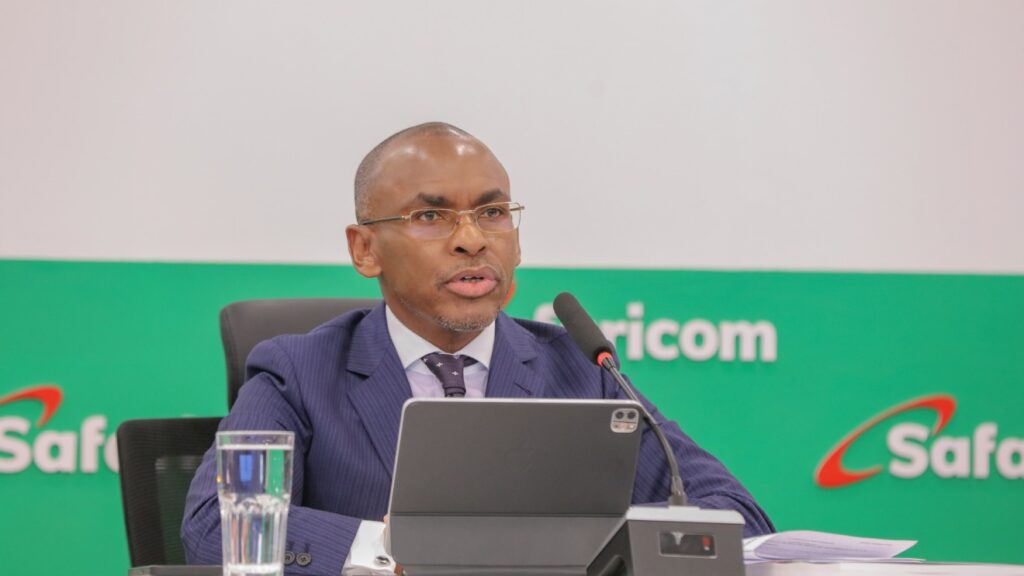
The ruling arrives at a pivotal moment for Safaricom, which continues to deepen its regional footprint through its relationship with Vodacom and its expanding operations in markets such as Ethiopia. The Safaricom–Vodacom deal structure has long been a vehicle for rolling out M-Pesa capabilities across Southern and East Africa. Especially, with Safaricom South Africa and roaming integrations forming part of a broader pan-African digital payments strategy.
As Safaricom extends its reach, including through Safaricom roaming SA partnerships and cross-border USSD frameworks, Thus, the intellectual property landscape will become increasingly complex. This ruling signals that innovation claims will not be brushed aside, regardless of a company’s size or market dominance.
A Catalyst for Fintech Innovation Protection
Legal experts and fintech advocates are already hailing the judgment as a catalyst for stronger intellectual property culture in African technology ecosystems. For too long, individual developers and small enterprises have faced an uphill battle asserting rights against well-resourced corporations. The Sh1.4 billion award among the largest of its kind in Kenyan fintech jurisprudence, changes that narrative decisively.
Investors, incubators, and startup founders across Nairobi, Lagos, Johannesburg, and Kigali are taking note. When courts affirm that a USSD infringement ruling carries billion-shilling consequences, the entire innovation ecosystem benefits. Intellectual property filings are likely to increase, licensing negotiations will carry greater weight, and corporations will be incentivised to engage fairly with independent developers from the outset.
The Road Ahead
Safaricom has not yet publicly disclosed whether it intends to appeal the ruling. What is clear, however, is that this judgment has already altered the conversation around mobile payment innovation, creator rights, and corporate accountability in Africa’s dynamic digital economy.
For the innovator at the centre of this case, the court’s decision is more than a financial award. it is validation that bold ideas, built with purpose, deserve protection. And in a continent brimming with mobile-first ingenuity, that protection has never mattered more.