










Kenya Fuel Price Increase 2026 As EPRA Announces Sharp Rise in Petrol, Diesel and Kerosene Prices
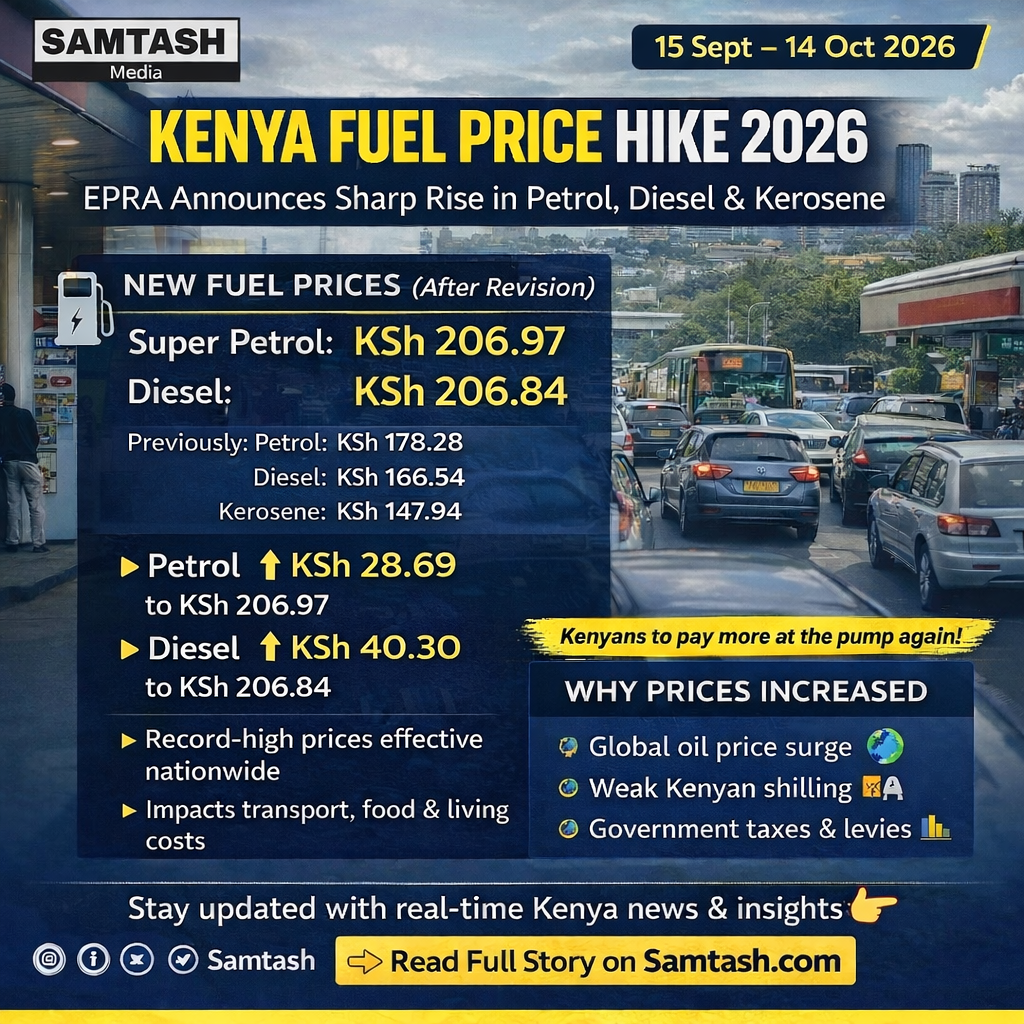
The Energy and Petroleum Regulatory Authority (EPRA) has announced a significant increase in fuel prices in Kenya, with new maximum retail petroleum prices taking effect from September 15 to October 14. The latest EPRA fuel prices today confirm that Kenyan motorists, businesses, and households will pay considerably more at the pump in what represents one of the most impactful fuel price adjustments in recent months.
Latest Fuel Updates Effective Thursday, April 16
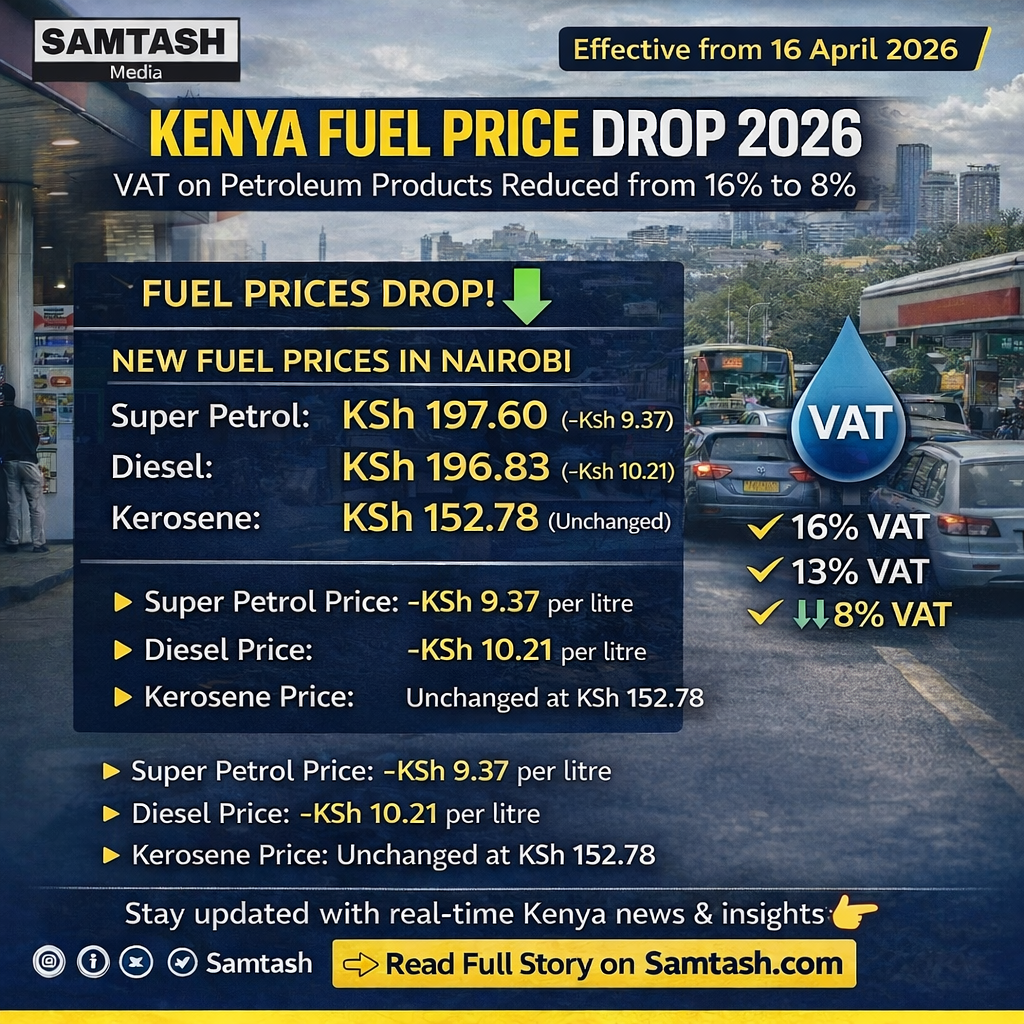
A reduction in Value Added Tax (VAT) on petroleum products from 16% to 13% and eventually to 8%, has led to a drop in fuel prices in Kenya. Following this adjustment, EPRA announced that pump prices in Nairobi have decreased by KSh 9.37 per litre for super petrol and KSh 10.21 per litre for diesel.
As a result, super petrol will now retail at KSh 197.60, while diesel will cost KSh 196.83. The price of kerosene remains unchanged at KSh 152.78. These new rates take effect from Thursday, April 16.
Previous Fuel Prices in Kenya Today 2026
The EPRA fuel prices announcement confirms the following new maximum retail pump prices:
Before the revision:
- Super Petrol: KSh 159.12 per litre
- Diesel: KSh 140.00 per litre
- Kerosene: KSh 127.94 per litre
After the EPRA new fuel prices revision:
- Super Petrol: KSh 206.97 per litre
- Diesel: KSh 206.84 per litre
- Kerosene: KSh 147.94 per litre
The increases translate to a KSh 28.69 rise on Super Petrol, a KSh 40.30 jump on Diesel, and a KSh 20.00 increase on Kerosene. Hence, making this a broad-based upward revision that will be felt across virtually every sector of the Kenyan economy.
Kenya Fuel Price Increase: What Is Driving the Rise?
The fuel price increase announced by EPRA Kenya does not occur in isolation. Several converging factors have driven the upward revision in the new fuel prices Kenya is now contending with.
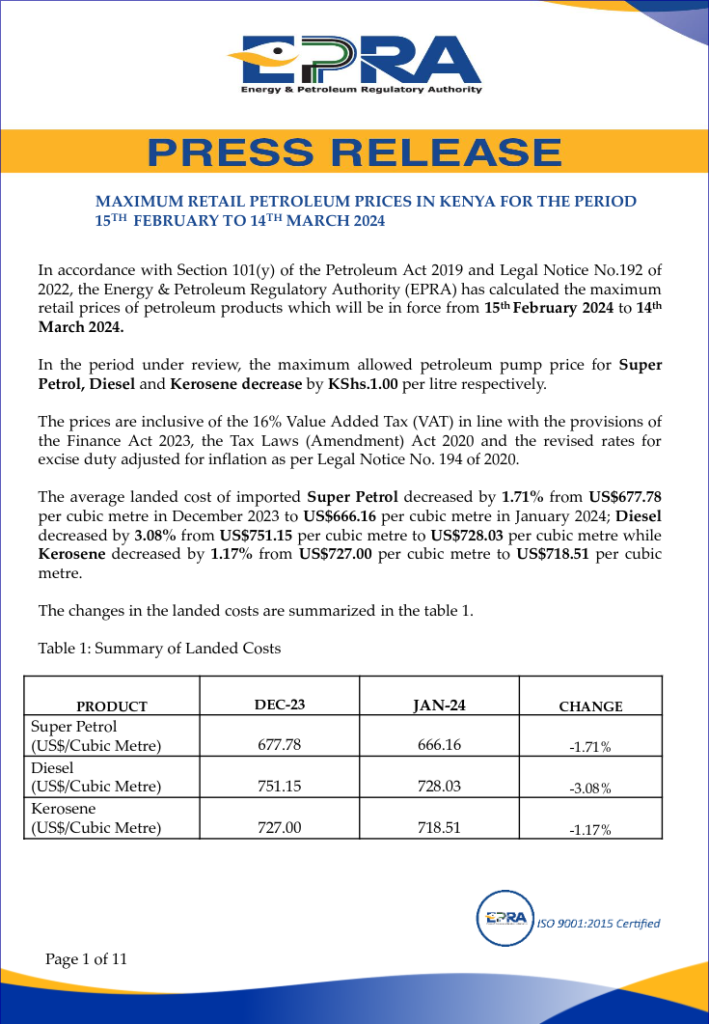
Global crude oil prices remain the single largest determinant of the fuel price in Kenya. When international oil markets tighten, driven by production cuts from OPEC+ member nations, geopolitical tensions in major oil-producing regions, or surging global demand. The landed cost of imported petroleum products rises sharply, and Kenyan consumers absorb that impact through higher pump prices.
The performance of the Kenyan shilling against the US dollar plays an equally critical role. Since petroleum products are traded internationally in US dollars, any depreciation of the shilling directly inflates the cost of importation. A weaker local currency means that Kenya pays more in shilling terms for every barrel of crude oil or refined product that arrives at the Port of Mombasa.
Government levies and statutory charges including excise duty, the Road Maintenance Levy, the Petroleum Development Levy, and import declaration fees form a significant portion of the fuel price breakdown. These components remain constant regardless of global market movements, meaning they amplify the impact of any upward shift in landed costs.
Kenya Fuel Price Breakdown: Understanding What You Pay
Every litre of petrol or diesel purchased at a Kenyan fuel station carries a layered cost structure. The EPRA fuel price breakdown includes the ex-refinery price, transportation and storage costs from Mombasa to inland distribution centres, the Kenya Pipeline Company tariff, a dealer margin, and multiple government-imposed levies.
Understanding this structure is essential context for interpreting fuel prices today. The petrol price in Kenya is not purely a reflection of crude oil markets. It is the cumulative result of an entire supply chain, a regulatory pricing formula, and fiscal policy decisions made at the national level.
EPRA Kenya publishes this breakdown transparently each month in the Kenya Gazette, enabling businesses and consumers to track exactly which components are shifting and why. This level of disclosure distinguishes Kenya’s fuel pricing regime from many other markets on the continent.
The Economic Impact of Higher Fuel Prices in Kenya Today
The consequences of this fuel price increase will ripple through the Kenyan economy with immediate effect.
Transport and logistics will feel the impact first.
Matatu operators, bus companies, and long-distance freight carriers face higher diesel costs, and historically these increases are passed on to passengers and clients within days of an EPRA announcement. The cost of moving goods from Mombasa to Nairobi, or from distribution hubs to rural markets, rises in direct proportion to the new diesel price.
Agriculture
Kenya’s largest employment sector, faces heightened pressure. Diesel-powered irrigation systems, tractors, and cold storage facilities all become more expensive to run. This cost burden often flows downstream into higher prices for fresh produce, grains, and processed food items at the retail level.
The manufacturing sector relies heavily on diesel generators during power interruptions.
Higher fuel prices today mean elevated production costs, squeezing margins for small and medium enterprises that cannot easily absorb sudden input cost increases.
Households using kerosene for cooking and lighting
Particularly in rural and low-income urban areas. Will face a direct hit to their daily budgets, with the new KSh 147.94 per litre price representing a significant adjustment from the previous rate.
Kenya Fuel Price News: Staying Informed Through EPRA Kenya
As Kenya navigates this period of elevated fuel prices, staying informed through official EPRA Kenya communications remains essential. The authority reviews and publishes maximum retail petroleum prices every month, and those revisions are gazetted and publicly accessible.
The new fuel prices in Kenya today 2026 serve as a reminder of how deeply interconnected global energy markets are with everyday Kenyan life. Especially, from the matatu fare paid by a Nairobi commuter to the cost of transporting maize to a rural market in western Kenya.