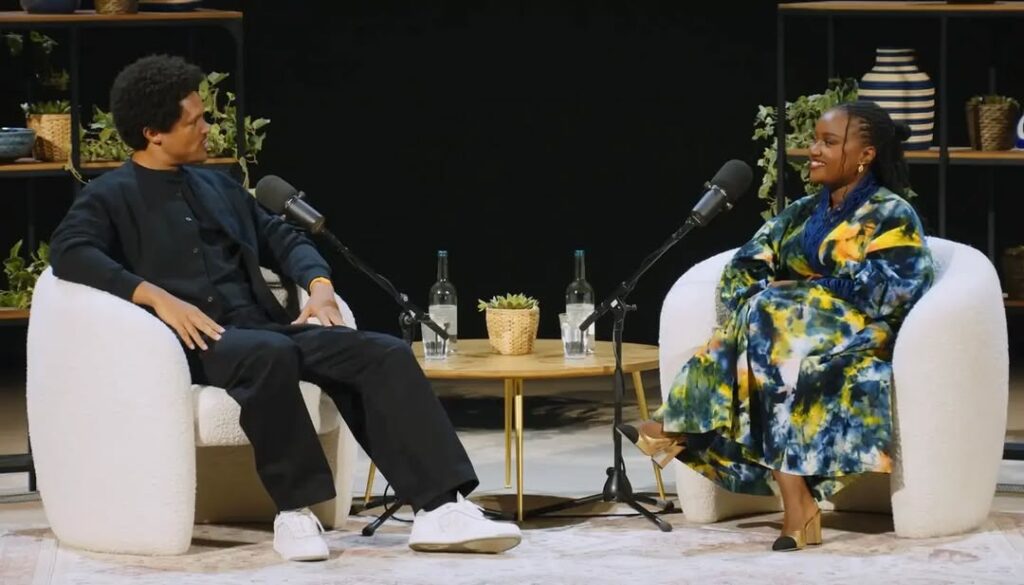
Wawira Njiru and Trevor Noah
Wawira Njiru and Trevor Noah! Two African Visionaries on Feeding Futures and Building Change from the Ground Up
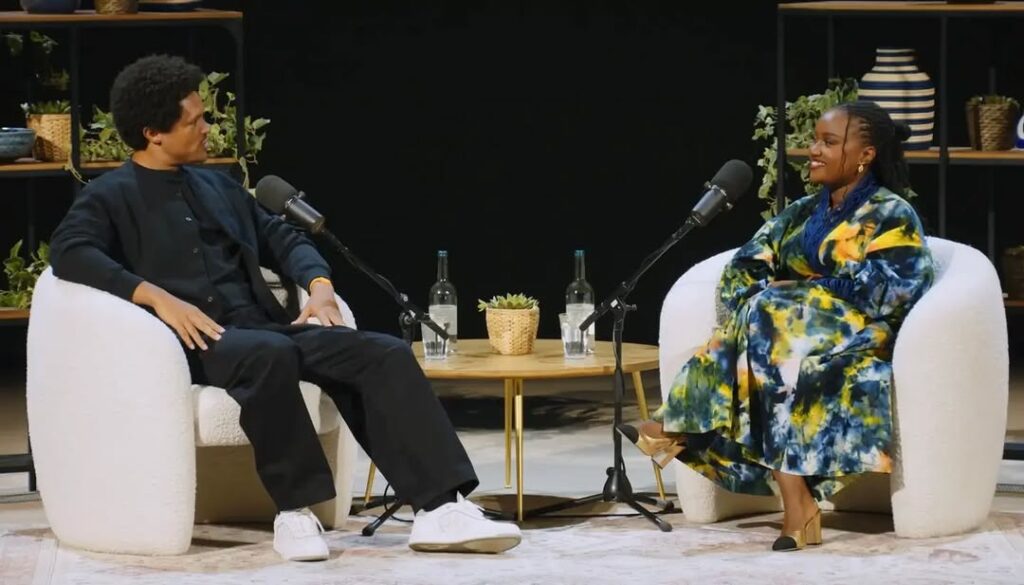
Wawira Njiru and Trevor Noah Foundation founder Trevor Noah for a candid conversation at the Skoll World Forum, Oxford. Two African Visionaries on scaling homegrown solutions, feeding Africa’s future, and why investing in young people remains the continent’s most powerful act of hope. Co-hosted by the Skoll Foundation and the Trevor Noah Foundation. The evening brought together two African visionaries whose work, from 625,000 daily school meals in Kenya to education programs transforming youth across South Africa.
From 25 Children to 625,000 Meals a Day
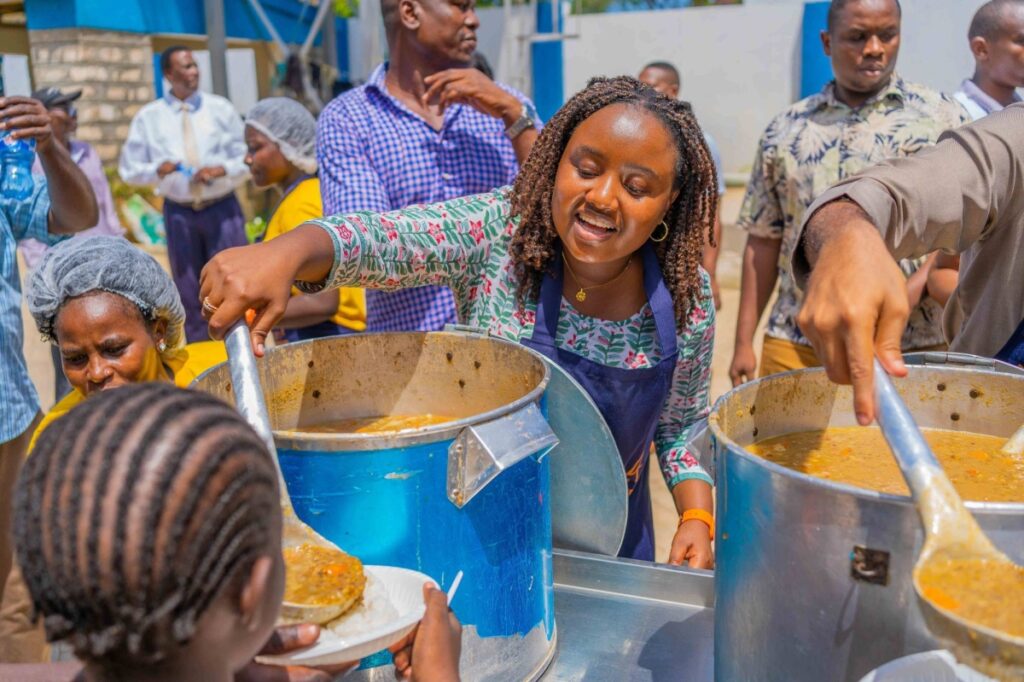
Wawira Njiru’s origin story is as grounding as it is extraordinary. Growing up outside Nairobi, Kenya, she began sharing her lunch with classmates who had none. That simple act of generosity eventually became Food4Education, an organization now serving 625,000 hot meals every single day across 15 Kenyan counties. Powered by Africa’s largest green kitchen network, 180 kitchens, nearly 100 trucks, over 150 motorbikes, and a team of 5,500 staff. Especially, the majority of whom are women.
Wawira Njiru’s age and background gave her an unconventional path to this impact. After completing high school in Kenya, she relocated to Australia for university, working in elderly care and disability services for four years to fund her own education. Notably, a reality very different from the café barista jobs the study-abroad brochures had promised. Those years of service, she reflected, gave her an intimate understanding of human dignity, mortality, and the quiet power of caring for others without recognition.
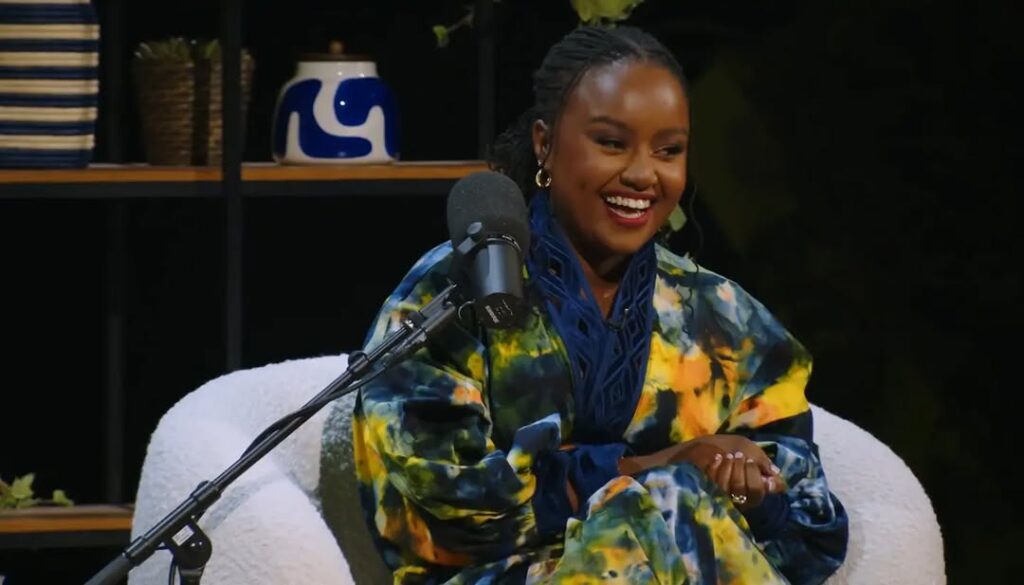
“Mortality became so real for me,” Wawira shared, noting how that experience now infuses every decision at Food4Education. “It gave me a lot of perspective about this one precious life and what you must spend it on.”
The Mechanics of a Meal: Precision at Scale
What makes Wawira Njiru’s work remarkable isn’t just its heart, it’s the operational genius behind it. Each meal is scientifically designed to deliver 20 to 40 percent of a child’s recommended daily allowance of macro and micronutrients, served in portions of 550 to 650 grams. All meals are plant-based, sourced locally across Kenya, Ethiopia, and Tanzania, and cooked overnight in central kitchens to reach schools by 7 a.m. in alignment with Ministry of Education lunch schedules.
Food4Education tracks cost per meal monthly across every kitchen, uses mobile payment data to predict daily attendance, and measures food yield to minimize waste. At just 30 cents per meal, the program operates with a precision that rivals global logistics companies.
The organization’s iconic “Tap to Eat” wristband, inspired by metro cards. Allows parents to top up their child’s meal account via mobile money, processing close to a million transactions per day. For Wawira, this was never just about convenience. It was about dignity. Parents contribute what they can; the government and philanthropic partners subsidize the rest. Children tap their wristbands and receive their meals not as beneficiaries, but as young people whose families are providing for them.
Trevor Noah: Comedian, Philanthropist, Champion of African Youth
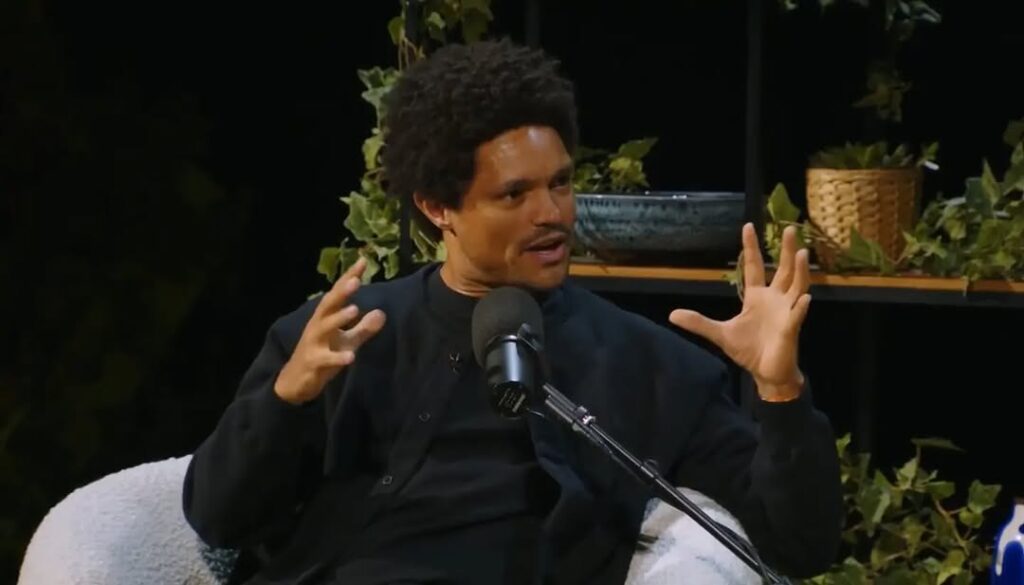
Trevor Noah needs little introduction as a global entertainer, but his philanthropic identity is equally compelling. The Trevor Noah Foundation, established in 2018 in Johannesburg, operates on the conviction that education is the seed from which everything grows. Its flagship programs reach thousands of students and educators across South Africa, and in 2024. Trevor announced a venture philanthropy fund to back local education innovators, grounded in the principle that people closest to the problem are best positioned to solve it.
Trevor Noah’s parents, particularly his mother, feature prominently in his personal philosophy. He credits much of his outlook, including his relationship with humor, resilience, and continuous growth. Thanks to her radical honesty and willingness to evolve. “Don’t be afraid of letting go of the idea you hold of yourself today,” he reflected during the conversation. “Find the next one.”
On stage with Wawira, Trevor drew on his own experience of aiming small to grow big. Every goal in comedy, philanthropy, and personal development, he argued. Started with something achievable, one gig, one push-up, one milestone at a time.
Homegrown Innovation as Africa’s Greatest Asset
Both leaders converged on a shared conviction: Africa’s solutions must be built from within. Wawira Njiru’s Food4Education succeeds precisely because its entire ecosystem: cooks, suppliers, distributors, community members, is local. Suppliers are parents of the children being fed. Community members are invested in quality because they know whose plates those meals end up on.
Trevor framed this beautifully: “Good business is not the extraction of wealth but the expansion of wealth.” What Food4Education has built isn’t just a feeding program, it’s a community economy, with concentric circles of impact radiating outward from every kitchen.
With Africa projected to have 2.5 billion people by 2050, one in four people on earth. Both Wawira and Trevor agree: the continent doesn’t just need good ideas. It needs ideas that scale, led by local leaders who think boldly, build practically, and never stop asking the children if they liked the food.