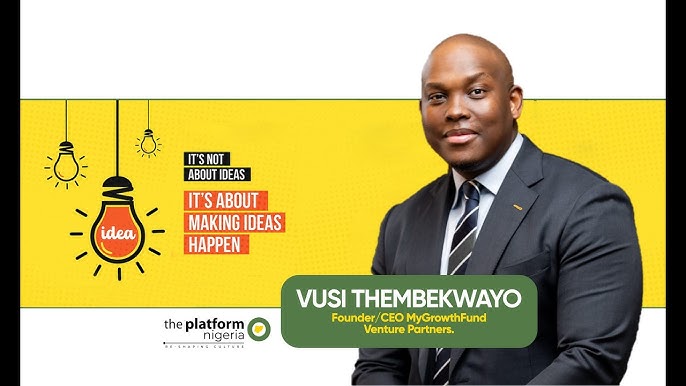
Vusi Thembekwayo at The Platform Nigeria
Vusi Thembekwayo took the Platform Nigeria 2026 stage with his Founder’s Mindset framework, the four pillars of scale, and his powerful call for African unity.
In a room charged with ambition and expectation, South African venture capitalist and serial entrepreneur Vusi Thembekwayo took the Platform Nigeria 2026 stage with a message stripped of sentiment and built entirely on structure: the world is drowning in capital, and the shortage has never been good founders.
Every edition of Platform Nigeria raises the stakes for what a business conference on the continent can look and feel like. But when Vusi Thembekwayo walks into a room, the atmosphere shifts. Africa’s most provocative business thinker, equal parts venture capitalist, author, and architect of scale. He arrived at Covenant Nation, Lagos, with slides, 30 minutes, and a stated intention to offend his audience into clarity. He delivered on all three.
Thembekwayo is the founder of My Growth Fund Venture Partners, now celebrating its tenth year in operation, and the founder of the School of Scale, a continent-spanning accelerator programme with offices in South Africa, Ghana, Kenya, Zambia, and Jamaica, and a head office in Delaware. He has sold more than one million copies of his books, chairs the Watermark Africa Fund private equity firm based out of the Dubai International Financial Centre, and is in the process of closing a first raise for 154. Apan-African fund, named for one continent and 54 countries, targeting family businesses in generational transition. His podcast, Ideas That Matter, was named among Apple’s top four global business podcasts in 2024, making it the only African podcast to feature in that category.
WHO IS VUSI THEMBEKWAYO?
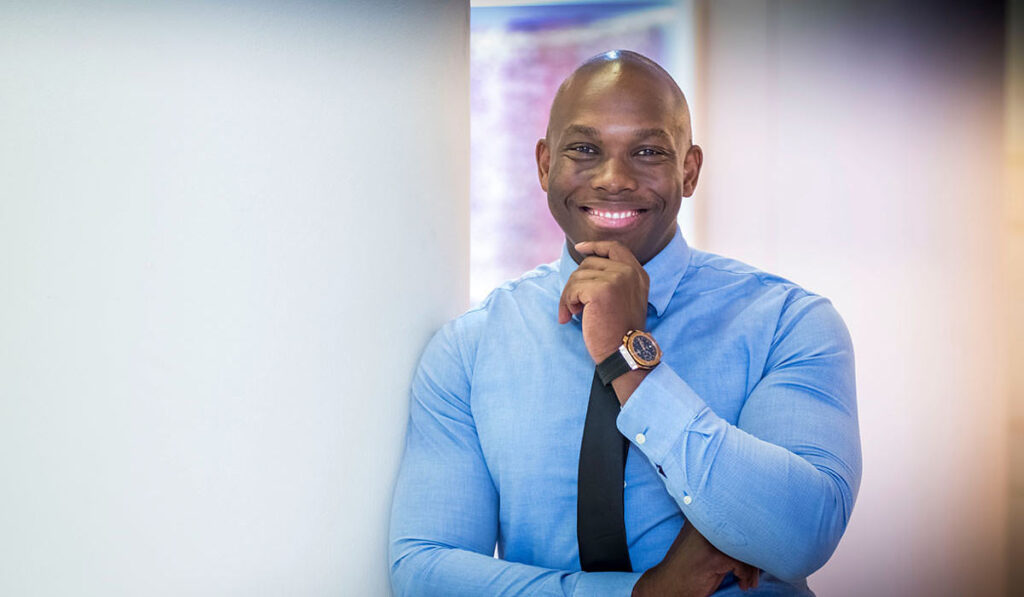
Vusi Thembekwayo is a Johannesburg-born entrepreneur who turned personal exits into institutional conviction. After selling his first business, he used his own capital to prove a venture thesis that larger institutional investors were slow to back. The idea that African founders, given the right capital, frameworks, and discipline, could build globally competitive enterprises. He was right, and My Growth Fund has spent a decade substantiating it.
What Thembekwayo does, at its core, is translate the invisible architecture of high-performing businesses into language that founders can act on. He advises governments and multinational corporations, but his most consistent audience is the entrepreneur who has outgrown their instinct and not yet built the systems that instinct cannot replace. That gap, between a good idea and a scalable business, is the territory he has made his life’s work.
At Platform Nigeria 2026, he framed this gap in a way that cut through the inspiration-heavy conference atmosphere with surgical precision. Not every business owner, he argued, is a founder. Not every entrepreneur is a founder. Founders are distinguished not by what they build, but by how intentionally they build it. And specifically, by whether they build it to outlast and outgrow themselves.
“There is more money today than there are good ideas and good founders. If you are not attracting the capital, the capital is not the problem. You are.”
Vusi Thembekwayo, Platform Nigeria 2026
THE NUMBERS BEHIND THE MESSAGE
Thembekwayo opened his data with a PitchBook analysis of global mergers and acquisitions activity tracking founder-led business transactions from 1985 to the present. By the year 2000, approximately 40,000 deals were transacted annually, roughly 200 businesses changing hands every single working day. By 2020, that figure had climbed to around 60,000 deals annually, and the trajectory continues upward.
He pointed to an extraordinary monetary reality: the United States has printed approximately 50 percent of all USD currency it has ever produced, across its entire history since 1776. In just the last five years. The implication for African entrepreneurs is direct. Capital is not scarce. Capable founders who can absorb and deploy it efficiently are.
He then mapped four anchor markets: Nigeria, Ghana, Kenya, and South Africa. And identified a combined economic opportunity of over one trillion US dollars. Nigeria, Africa’s most populous nation with over 50 percent of its population under the age of 18, presents what Thembekwayo described as a demographic dividend of extraordinary proportions: more than 100 million people not yet economically active. The question for African entrepreneurs is not whether the opportunity exists. It is whether they have the discipline to execute on it.
THE FOUNDER’S MINDSET: A FRAMEWORK, NOT A FEELING
Thembekwayo’s central thesis at Platform Nigeria 2026 was built around what he calls the Founder’s Mindset. A structured way of thinking about growth, accountability, and scale that separates founders from everyone else in the entrepreneurial ecosystem. He outlined four critical reasons why most African entrepreneurs fail to scale, each one a system failure rather than a talent failure.
THE FOUR PILLARS OF SCALE
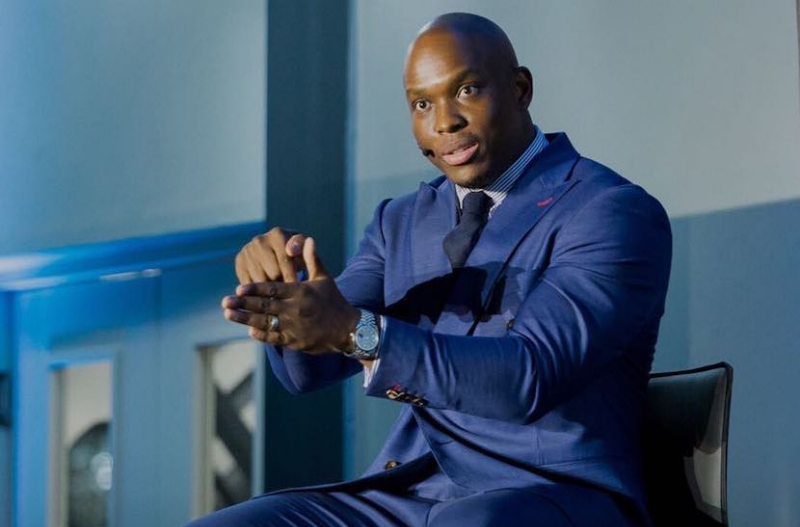
Synthesised Operations
Building processes so robust that the business functions whether or not the founder is physically present. Systems over personalities.
Growth Drivers, Not Noise
Every business has three core actions that, if executed consistently, double revenue. Everything else is distraction. Leaders must identify the signal and remove the noise.
Instinct to Insight
Early-stage businesses survive on a founder’s gut feel. Scalable businesses run on data. The transition from “what I feel” to “what I know” is where most businesses stall.
Aligned Incentives
People perform at the level their incentive structures demand. Founders who build teams without aligning compensation and recognition to business outcomes will manage mediocrity indefinitely.
He illustrated aligned incentives through his own operation. Speaking at Platform Nigeria was his fourth keynote of that week, with six more scheduled across three continents in the days that followed. He had not seen the final version of his presentation until the night before. Yet the deck was complete, polished, and precisely calibrated to the audience. Notably, because he had spent years building a team whose incentives are directly linked to client satisfaction scores gathered after every engagement.
His head of operations, head of protocol, head of marketing, and executive assistant had each attended the briefing call he could not join. Their notes were processed through an internal AI system to identify the most relevant ideas from his speaking portfolio. A design team spread across South Africa, India, Pakistan, and Sri Lanka produced the visual presentation. His quality control lead reviewed the output and delivered the final deck two nights before the event. That is not coincidence. That is architecture.
THE FIVE LEVELS FROM PROFESSIONAL TO FOUNDER
Perhaps the most instructive section of Thembekwayo’s address was his breakdown of the five evolutionary stages of entrepreneurship. He began with the Professional, a person with a specialised skill who executes the work themselves. This is where every entrepreneur begins, and there is no shame in it. The problem is staying there.
The second level, the Self-Employed individual, begins delegating non-value-adding tasks while retaining ownership of the core work. The third level, the Business Owner, writes down the rules and codes that govern how the business operates. Not implementing them: writing them. Most entrepreneurs never do this. The fourth level, the Entrepreneur, implements and scales those rules, pushing through what Thembekwayo called “implementation fatigue” the exhaustion that sets in when reality resists the projections on an Excel spreadsheet.
The fifth and final level is the Founder. Founders do not merely build businesses. They plant a vision and construct the human infrastructure to bring that vision to life without their constant presence. As Thembekwayo put it, the clearest historical model of this is the ministry of Jesus Christ: a three-year engagement, twelve trained people, one compelling idea, and an institution that has outlasted every empire, currency, and corporation in recorded history.
“Leadership is a mirror. Your ability to lead people is a consequence of your ability to lead yourself. Until you lead you, you have no business trying to lead other people.”
Vusi Thembekwayo, Platform Nigeria 2026
ON SOUTH AFRICA AND AFRICAN UNITY

Thembekwayo closed his address with a message that extended well beyond the mechanics of business. Speaking directly to the political tensions that have flared between South Africa and other African nations in recent months, he made three carefully considered statements.
First, he pushed back against the narrative that South Africans, as a people, are xenophobic. He acknowledged that xenophobic individuals exist, as they do in every society. But argued that characterising 65 million people, living across 11 official languages in one of the world’s most diverse nations, as uniformly hostile to other Africans is both inaccurate and counterproductive. South Africa’s largest companies, he noted, have boardrooms, C-suites, and executive teams populated by leaders from across the continent.
Second, he identified what he believes is an active agenda to divide African nations against one another. Feeding that agenda by amplifying conflict online, he argued, serves forces that benefit from African disunity. The antidote is direct conversation, ground-level understanding, and the deliberate choice to reach across divides rather than perform outrage for global audiences.
Third, he drew a sobering lesson from African political history. Kwame Nkrumah, the man who led Ghana to become the first liberated nation on the continent in 1957, was removed by his own people. Patrice Lumumba, the Congolese independence leader, met the same fate. The pattern of Africans undermining Africans, Thembekwayo argued, is not new. But it has to stop.
His hope, expressed with evident sincerity, is that platforms such as this one, convened by Pastor Poju Oyemade and the Covenant Nation community. Thus, can become the meeting ground where African leaders choose unity over theatre, and substance over spectacle.
WHY VUSI THEMBEKWAYO AT PLATFORM NIGERIA MATTERS
Thembekwayo’s presence at Platform Nigeria 2026 is significant for reasons that extend beyond the quality of any single address. He represents a generation of African business thinkers who are building the intellectual infrastructure of the continent’s economic future. Hence, not waiting for Western validation, not importing frameworks developed for different markets, but generating original thinking rooted in African realities and tested against African conditions.
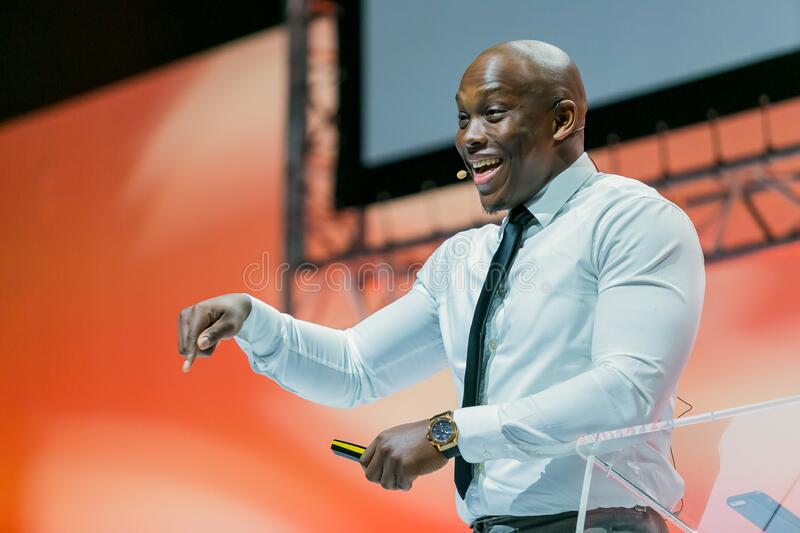
His School of Scale has trained entrepreneurs across five countries. As his venture capital work has proven that black African founders, given the right support structures, can build businesses that attract serious institutional capital. His podcast reaches a global audience. And his willingness to speak plainly about capital markets, about operational discipline, about continental politics. Thus, makes him one of the rare voices that business leaders across Africa actually listen to.
The message he brought to Lagos was not comfortable, and it was not meant to be. It was a challenge dressed as a keynote: stop hoping for your legacy. Start building it. The capital is there. The opportunity is there. The only question that remains is whether you are founder enough to reach it.