The best good news today for many Nigerians and international security watchers came during the Christmas period with a major counterterrorism development.
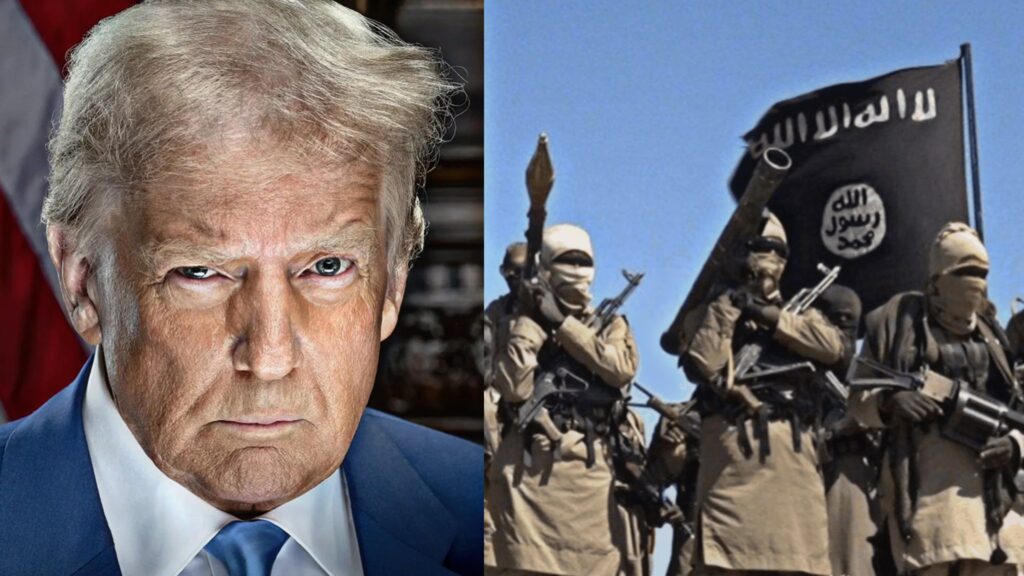
On December 25, 2025, former U.S. President Donald Trump announced that American forces conducted airstrikes against Islamic State (ISIS) militants in northwest Nigeria.
The operation marked a rare and significant instance of direct U.S. military action on Nigerian soil in recent years.
According to U.S. Africa Command (AFRICOM), the airstrikes targeted ISIS-affiliated fighters operating in Sokoto State, a region increasingly affected by extremist violence.
AFRICOM stated that the strikes were carried out at the request of Nigerian authorities, following intelligence sharing and joint security planning.
U.S. officials confirmed that multiple ISIS militants were killed, though exact casualty numbers were not publicly disclosed.
Why the Airstrikes Matter
Nigeria has battled extremist groups for more than a decade, particularly Boko Haram and ISIS-linked factions.
While Boko Haram remains active in the northeast, ISIS-affiliated groups have expanded into northwestern states such as Sokoto and Kebbi.
These groups have been linked to kidnappings, attacks on civilians, and assaults on security forces.
The Christmas Day strikes signaled increased international concern over the spread of terrorism beyond Nigeria’s traditional conflict zones.
Security analysts say the operation demonstrates renewed U.S. willingness to support African partners militarily when threats escalate.
Trump’s Statement and Global Attention

Donald Trump described the airstrikes as a decisive response to extremist violence against civilians.
In public remarks, he stated that the United States would not ignore terrorist groups targeting innocent people, including religious communities.
His comments immediately sparked widespread reactions across social media and international news platforms.
Many users described the strikes as a Christmas gift for Nigeria, praising decisive action against terrorism.
Others urged caution, emphasizing the importance of respecting Nigerian sovereignty and long-term stability.
Nigeria’s Official Position
Nigeria’s government confirmed ongoing security cooperation with international partners, including the United States.
Officials stressed that the operation was not unilateral, but conducted through coordinated military collaboration.
The Ministry of Foreign Affairs reiterated that Nigeria welcomes support that strengthens national counterterrorism capacity.
Nigerian authorities also emphasized that extremist violence affects both Christian and Muslim communities.
They cautioned against framing the conflict purely along religious lines.
Context: Violence and Insecurity in Nigeria
Nigeria faces one of Africa’s most complex security crises.
Insurgency, banditry, and terrorism have displaced millions and strained public resources.
In the northwest, armed groups exploit weak governance, vast terrain, and limited security presence.
Attacks on villages, schools, and places of worship have increased public fear and international concern.
Human rights organizations estimate that thousands of civilians have died from extremist-related violence over the past decade.
Kidnappings for ransom remain a major source of funding for armed groups.
Social Media Reactions and Public Sentiment
The U.S. airstrikes triggered strong reactions from religious leaders, activists, and commentators worldwide.
Some Christian leaders publicly thanked the United States for supporting Nigeria during a critical security moment.
Musicians and public figures also shared messages calling for an end to terrorism, banditry, and kidnappings.
At the same time, analysts urged balanced reporting and reliance on verified information.
They warned that misinformation can inflame tensions and undermine peacebuilding efforts.
Strategic Implications for West Africa
The airstrikes highlight growing concern over ISIS expansion in West Africa.
Extremist networks increasingly operate across borders, linking Nigeria to the wider Sahel region.
Security experts believe international partnerships will be crucial to containing these threats.
However, military action alone cannot solve Nigeria’s security challenges.
Long-term stability requires economic development, local policing, intelligence reform, and community engagement.
Sovereignty and International Law Considerations
Operations involving foreign militaries often raise questions about sovereignty and international law.
In this case, Nigerian consent was central to the legitimacy of the airstrikes.
Defense analysts note that such cooperation aligns with international counterterrorism frameworks.
Still, transparency and accountability remain essential to maintaining public trust.
What Happens Next
AFRICOM has not announced further strikes, but officials indicated continued monitoring of extremist activity.
Security observers expect closer U.S.–Nigeria intelligence collaboration in the coming months.
Nigeria is also strengthening regional partnerships through ECOWAS and other multilateral platforms.
Citizens continue to call for improved local security, justice for victims, and protection of vulnerable communities.
A Moment of Hope Amid Challenges
For many Nigerians, the airstrikes offered a sense of hope during a difficult period.
They demonstrated that extremist violence in Nigeria commands global attention.
While challenges remain immense, the operation underscored the value of international cooperation against terrorism.
As Nigeria moves forward, balancing security action with reconciliation and development will remain critical.
Conclusion
The U.S. airstrikes ordered by Donald Trump marked a notable moment in Nigeria’s fight against terrorism.
Conducted with Nigerian approval, the operation targeted ISIS militants in Sokoto State.
The development has reshaped discussions on security, sovereignty, and global responsibility.
For Nigeria, the path ahead requires unity, strategic partnerships, and sustained commitment to peace.
God bless Nigeria. 🇳🇬
God bless efforts toward lasting security and stability worldwide.