Njuguna Ndung'u in Sweden
Njuguna Ndung’u, ex-Finance Minister and ex-CBK Governor, tells a Sweden aid conference how targeted support built M-Pesa and reshaped Kenya’s economy.
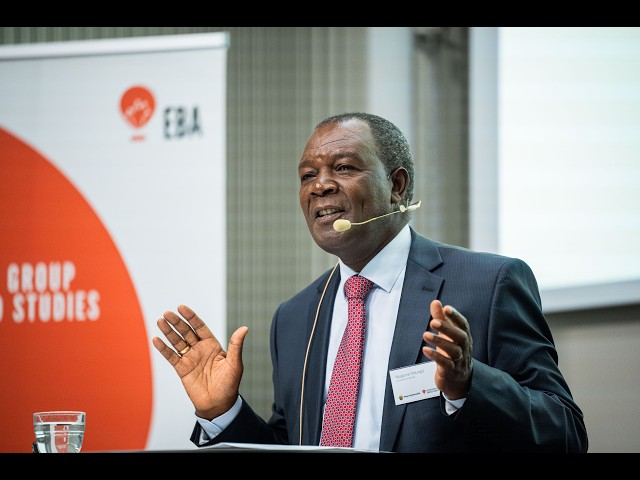
Njuguna Ndung’u has never shied away from a hard conversation. The former Minister of Finance and former Governor of the Central Bank of Kenya recently took his message abroad, addressing a Sweden conference on how foreign aid, when properly targeted, can reshape an entire economy.
The event was jointly organised by Sweden’s Ministry for Foreign Affairs and the Expert Group for Aid Studies (EBA).
It brought together decision-makers from Team Sweden, the network of government agencies and state-owned companies driving Swedish aid, alongside leading international experts in evaluation and aid effectiveness.
The central question on the table: how does evidence translate into real poverty reduction and prosperity at the country level?
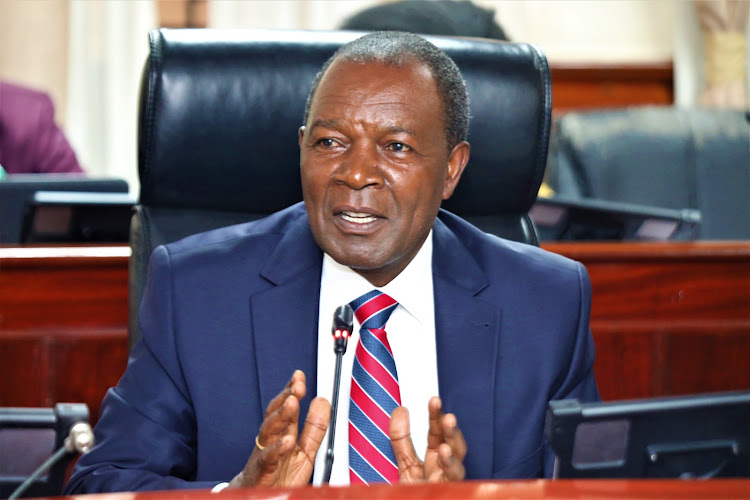
Ndung’u answered with Kenya’s own story.
Institutions Before Everything
For Ndung’u, weak institutions sit at the root of most development failures. He told delegates that regulatory bodies carry a dual mandate.
First, uphold the rules of the game, and design incentives that reward the right behaviour. When that balance breaks down, markets stall and capacity goes to waste.
He pointed to capacity building at two levels, individual and institutional, as the clearest path for aid to make a lasting difference. His first example was the African Economic Research Consortium (AERC), founded in 1984 and formalised in 1988.
Backed by donors including CIDA, USAID, DFID, and the World Bank, AERC was built to train African economists at graduate level.
Decades later, Ndung’u noted, many of the region’s finance ministers and central bank governors trace their training back to that single institution.
The FSD Network and the Rise of M-Pesa
Ndung’u also credited the Financial Sector Deepening (FSD) Network, active since 2005, with helping close what he called the “missing middle” in financial inclusion.
Opening a bank account, he explained, was once too expensive and too complicated for most Kenyans. FSD support helped build the regulatory groundwork needed to legitimise electronic payments across the region.
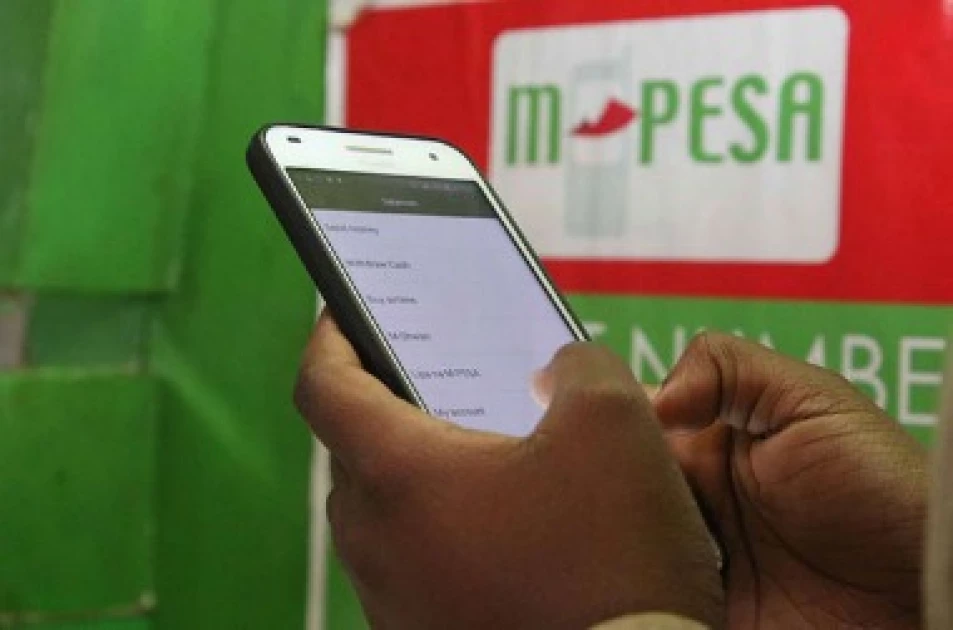
That groundwork paved the way for M-Pesa, the mobile money platform Ndung’u helped usher through the Central Bank of Kenya starting in 2007.
He recalled early resistance inside the bank itself, with some officials dismissing the idea as a money-laundering risk. Ndung’u pushed back, inviting the innovators in and eventually reframing M-Pesa as a real-time, accessible retail payment system rather than a threat.
The results reshaped Kenya’s financial sector. Banks began using the platform to manage micro-savings and micro-credit at scale. Savings behaviour shifted, particularly among women, who could now store money securely on their phones.
Ndung’u also credited M-Pesa data with helping Kenya design targeted social protection programmes during COVID-19, work later linked in an AERC paper to a measurable reduction in the pandemic’s spread.
Rewriting Monetary Policy
M-Pesa didn’t just change how Kenyans saved money. Ndung’u described a lengthy standoff with the International Monetary Fund over Kenya’s monetary policy framework, which he argued had become outdated once electronic money entered circulation.
The disagreement was eventually resolved with input from the US Treasury, which recognised M-Pesa’s model as a benchmark worth replicating.
Cross-border payment efforts followed. Since 2012, East African nations have worked toward a shared payment system.
One Ndung’u says finally works because it stays currency-neutral rather than forcing a single regional currency or floating exchange rate on reluctant governments.
Corruption and the Cost of Captured Institutions
The conversation didn’t stay purely technical. Pressed by delegates on how capacity building connects to corruption, Ndung’u was direct.
He described being at Kenya’s Central Bank under a leadership that stayed quiet on graft once loyalists were implicated, and said he refused to take part in similar deals during his time as Finance Minister.
He argued that being in government was, at times, treated as “a lootable resource,” with existing laws stretched or new ones written to direct public resources toward political networks.
Strong institutions, he said, are what eventually hold such abuses to account, particularly through the ballot box.
“We got very surprised by the Gen Zs… institutions must punish corruption… that is where the Gen Z message is coming through.”
He also pointed to Kenya’s Gen Z-led protests as a sign that public pressure is now driving institutional accountability in ways it hadn’t before, calling on regulators to punish past corruption cases as a deterrent for the future.
A Model Worth Studying
Ndung’u closed his address on an optimistic note. Aid works best, he said, when it targets capacity at both the individual and institutional level, and when local context shapes the design.
Kenya’s M-Pesa story, and the financial sector reforms that followed, now stand as a reference point studied well beyond East Africa.
For a continent still searching for scalable development models, Ndung’u’s message from Sweden was clear: build the right institutions, train the right people, and let proven success drive the next wave of reform.