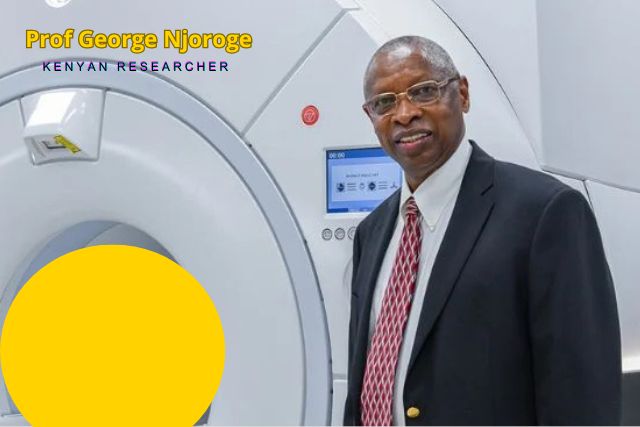
Prof George Njoroge
Kenyan Researcher Professor George Njoroge Wins Sh446 Million Award for Advancing Early Detection of Oesophageal Cancer
In a landmark recognition of scientific excellence bridging Africa and the United Kingdom. Kenyan researcher Professor George Njoroge has won a Sh446 million global award alongside UK scientist Professor Robert Bristow, for advancing early detection of oesophageal cancer.
A disease that claims thousands of Kenyan lives every year.
Kenya’s standing in global medical research has received a powerful boost. Professor George Njoroge, a co-lead researcher at Kenyatta University Teaching, Referral and Research Hospital (KUTRRH), has been honoured with the 2026 Greater Manchester Cancer Award.
Together with a UK-based team headed by Professor Robert Bristow from the University of Manchester and The Christie NHS Foundation Trust.
The funding, awarded by the UK’s National Institute for Health and Care Research (NIHR). It will support a collaborative project between KUTRRH, the University of Manchester, and The Christie NHS Foundation Trust to strengthen early cancer screening and improve patient outcomes in Kenya.
A Disease That Cannot Wait
The urgency behind this recognition is stark. In Kenya, the leading cancers are breast, cervical, oesophageal and prostate.
Oesophageal cancer, though the third most common cancer, has the highest mortality rate among all cancers, causing about 4,400 deaths annually.
The core problem has always been timing. Although surgery, chemotherapy, and radiotherapy can improve outcomes, the disease remains highly lethal due to delayed diagnosis and treatment.
It has a case fatality rate of 99.3 percent due to late recognition of symptoms by both patients and healthcare workers.
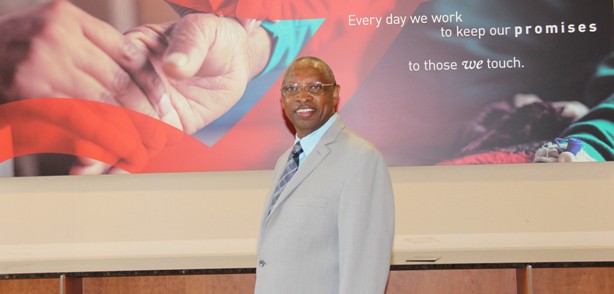
Professor Njoroge has been direct about what that statistic means in human terms.
“The unique collaboration between Kenya and the United Kingdom in this oesophageal cancer study will go a long way in establishing ways that would tilt the balance,” he said, adding that the research aims to detect oesophageal cancer at the potentially curative stages one and two, rather than the late stages three and four.
A development he described as “a game changer in diagnosis and management of that disease.”
A Pioneering Model of Care
Through a co-created hub-and-spoke model, the team combined community engagement, rapid pathology services, and new genomic capacity to tackle a cancer that is often diagnosed too late, significantly improving chances of timely treatment.
The model has already demonstrated real results on the ground. “When placed in Kenya, we were able to increase screening access, detect cancers earlier and really develop community trust with patients,” said Professor Bristow.
Professor Njoroge credited the success of the initiative to the support of KUTRRH leadership, including current CEO Zeinab Gura and former board chairperson Olive Mugenda.
A Career Built on Breakthrough Science
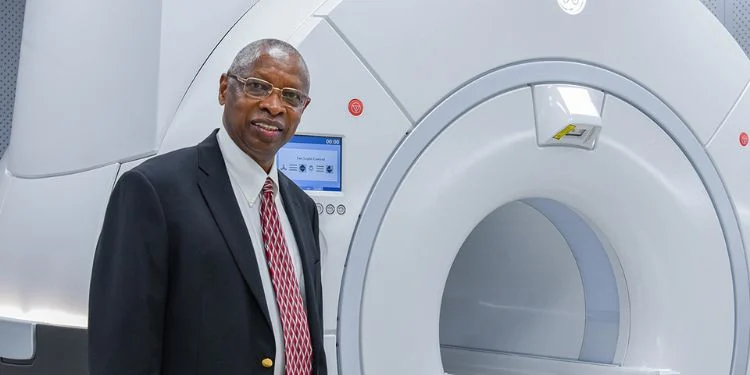
This award is only the latest chapter in a career that has consistently redefined what African scientists can achieve on the world stage.
Professor Njoroge is internationally recognised for discovering breakthrough drugs and becoming the first African to secure more than 100 United States patents. That milestone alone places him in rare scientific company globally.
In 1988, Njoroge joined the Schering-Plough Research Institute, focusing on the treatment of viral diseases and cancer, where he held positions including Senior Principal Scientist, Associate Director, and Director of Medicinal Chemistry.
It was during this period that he led what would become one of his defining contributions to medicine. The discovery of Victrelis, the first-in-class oral HCV protease inhibitor for hepatitis C, approved in May 2011.
The American Chemical Society later inducted him into its Hall of Fame as a 2012 Hero of Chemistry.
Beyond antivirals, his fingerprints are on cancer pharmacology too. He spearheaded the discovery of the anti-cancer compound lonafarnib, later approved in 2020 under the name Zokinvy for the treatment of progeria, a rare and devastating premature ageing disease in children.
He also holds an honorary professorship of medical education at the University of Manchester, making his current collaboration with that institution a reunion rooted in deep mutual respect.
Scaling Up and Looking Forward
The implications of this research extend well beyond oesophageal cancer. Researchers hope the findings will help shape Ministry of Health policies and support the expansion of early detection programmes for other cancers across Kenya.
“We think the findings that we’ve gotten will be very useful for scaling up diagnosis of oesophageal cancer and through the Ministry of Health in Kenya, as well as the National Cancer Institute; we’re going to scale it up and do even other types of cancer,” said Professor Njoroge.
His vision stretches further still. He says his long-term dream is to establish a biotechnology company in Africa that nurtures young scientists and drives groundbreaking medical research on the continent.
For a man who travelled from Kenya to build a career at the frontier of global medicine. Holding positions at Schering-Plough, Merck, and Eli Lilly, the journey has always pointed homeward.
Today, through the Sh446 million award and the lives it stands to save, Professor George Njoroge is delivering on that promise in the most meaningful way possible.


This is wonderful to hear.
I would love to meet him to learn of way to secure such for similar work involving other malignancies in my setting as an Oncology Dr in South Africa