
Data Centres Natural Gas and Smart Cooling
Dive into how natural gas and smart cooling technologies are helping AI data centres scale fast, and why Microsoft’s Project Kilby in Texas is leading the way.
The global data centre industry is undergoing one of its most decisive infrastructure shifts in decades. As artificial intelligence workloads demand unprecedented volumes of round-the-clock electricity.
Hence, the combination of natural gas power generation and advanced cooling technologies is emerging as the backbone of the next generation of digital infrastructure.
Nowhere is this transformation more visible than in West Texas, where a landmark agreement between two American giants is redefining how the world’s most powerful AI systems get their power.

Project Kilby Biggest Co-Located Data Centre Deal in US History
Chevron Corporation announced that its wholly owned subsidiary, Energy Forge One LLC, has signed an agreement with Microsoft to develop a co-located power facility. In West Texas that will provide dedicated electricity to a Microsoft-operated data centre under a 20-year power purchase agreement. The project, known as Project Kilby, is being developed in collaboration with investment firm Engine No. 1. It is set to become one of the largest natural gas-powered data centre developments ever undertaken.
Project Kilby is expected to consume nearly 2.7 gigawatts of electricity. Equivalent to the power needed to run about 2 million homes, with the majority of electricity coming from large gas turbines supplied by Chevron’s partner, GE Vernova. Caterpillar will also provide turbines.
At launch, the datacenter campus will operate with a co-located natural gas power facility in an arrangement known as “behind the meter.” Serving the campus directly and independently of the public grid, so this demand does not take from local electricity consumers. That design choice is significant. The power is dedicated to the data centre and will not be connected to the electric grid.

“There’s really no competition with local electricity consumers,” Jeff Gustavson, president of Chevron New Energies, told CNBC.
For Microsoft, the investment is firmly grounded in customer demand. Noelle Walsh, President of Cloud Operations and Innovation at Microsoft, described the scale of the development:
“In Pecos, Texas, we will build a new data centre campus. Expanding our global data centre capacity by approximately 2 gigawatts to meet strong and sustained customer demand for AI and cloud services across industries and regions.”
Why Natural Gas Is the Engine Behind AI Data Centre Power
The AI data centre power challenge is fundamentally one of speed and reliability. By the end of 2025, ERCOT, the Texas grid operator, had roughly 226 GW of large loads stacked up in its interconnection queue. Nearly quadruple the figure a year earlier, with about three-quarters of that coming from data centres.
Getting to the front of that queue takes years, so developers increasingly skip it.
Natural gas fills that gap precisely because it is deployable, scalable, and dispatchable on demand. The plant will draw on natural gas from Chevron’s existing Permian Basin production.
Natural gas volumes in the Permian routinely outrun what regional pipelines can carry, forcing operators to flare the excess. A dynamic that depresses local gas prices. Chevron says that dynamic gives Project Kilby a competitive cost advantage.
“AI is reshaping the global economy, and abundant, affordable, reliable energy is essential to fuelling that transformation,” said Jeff Gustavson, Chevron president of New Energies.
“Chevron is uniquely positioned to deliver power to customers with certainty, speed, and at a competitive cost, leveraging Permian natural gas and our proven execution capabilities.”
Across the United States, natural gas is now the dominant source of electricity for the data centre sector. The majority of generation at Project Kilby will come from large GE Vernova turbines and associated electrical infrastructure, with additional capacity provided by Solar Turbines. A wholly owned subsidiary of Caterpillar.
The infrastructure will be co-located directly with Microsoft’s data centre, designed to deliver reliable, dispatchable electricity while aiming to mitigate impacts on the regional grid.
Closed-Loop Cooling Smarter Way to Manage Heat at Scale
Beyond power generation, the Pecos facility is pioneering a data centre cooling system that sets a new benchmark for water efficiency.
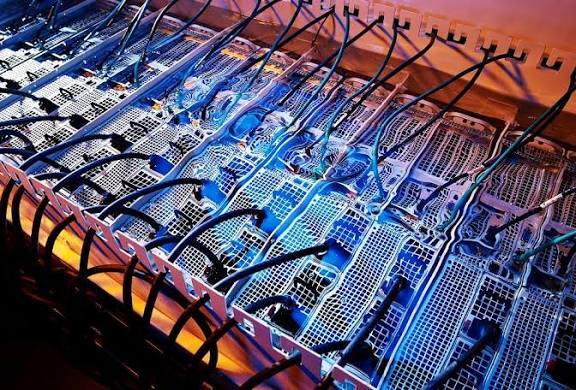
As AI chips push rack densities beyond 100 kW, traditional air cooling methods are no longer sufficient. The industry is moving rapidly toward advanced liquid and closed-loop data centre cooling solutions. Microsoft’s Pecos campus exemplifies this evolution in data centre cooling technology.
Microsoft said the Pecos campus will use closed-loop cooling systems designed to sharply reduce water demand. Thus requiring an initial charge of water but no additional water consumption during steady-state operation.
It also said it will seek to use nonpotable water where possible.
This approach is expected to limit water usage so that the total lifecycle water use of this datacenter is only a fraction of that consumed annually by a typical fast-food restaurant.
For a region like Reeves County, prone to drought and limited freshwater access. This data centre cooling method addresses one of the most pressing community concerns around large-scale digital infrastructure.
Closed-loop data centre cooling works by circulating a fixed volume of coolant through the system in a sealed circuit. Transferring heat away from servers without continuous water consumption. Combined with direct-to-chip liquid cooling on high-density AI processors, this approach dramatically improves the facility’s Power Usage Effectiveness (PUE). The standard measure of data centre energy efficiency.
The design will also incorporate Selective Catalytic Reduction systems designed to reduce nitrogen oxide emissions, as well as measures to minimise noise and light impacts on surrounding communities.
Economic Impact and the Long-Term Picture
Project Kilby is far more than a power deal, it is a regional economic catalyst. The site spans over 2,000 acres, and the massive complex will be built in Reeves County, West Texas, near the city of Pecos.
The project is expected to generate more than $10 billion in state and local tax revenue and support nearly 2,000 regional jobs. Microsoft’s data centre campus itself is projected to support over 6,000 construction jobs at peak build-out, along with hundreds of permanent operational roles.
The project is expected to reach its final investment decision by the end of 2026, with initial power delivery targeted for 2028. Natural gas remains the bridge energy source enabling the AI revolution to scale.
The innovations in data centre cooling systems ensure that growth comes with greater responsibility toward communities and natural resources. For the data centre industry, the future is being built in the West Texas desert, one turbine and one closed-loop at a time.