Category: World

  • NVIDIA Just Changed the Laptop after 30 years with RTX Spark

    NVIDIA Just Changed the Laptop after 30 years with RTX Spark

    NVIDIA RTX Spark is the first PC chip from NVIDIA RTX 5070 GPU, 128GB memory, 1 petaflop of local AI. The agentic PC era starts now. Here’s everything.

    RTX Spark is NVIDIA’s first-ever PC chip, and it may be the most important reinvention of the personal computer since the smartphone era.

    The Announcement

    On Monday at Computex in Taipei, NVIDIA CEO Jensen Huang walked on stage and made a bold claim!

    The reinvention of the PC is as significant as the reinvention of the phone into what we now know as the smartphone. Then he unveiled RTX Spark, NVIDIA’s first-ever chip designed specifically for Windows PCs and the room understood why.

    The laptop, as a concept, hasn’t fundamentally changed since the mid-1990s. You open a lid, launch an app, and work inside it. Three decades of incremental improvements.

    The faster processors, thinner bezels, longer battery life, but the core paradigm remained the same: the app was always in charge. RTX Spark is built to end that era.

    “This is the new PC.” — Jensen Huang, NVIDIA CEO

    What’s Inside

    RTX Spark is a superchip. A single package fusing two chiplets: a Blackwell-architecture GPU with 6,144 CUDA cores (delivering performance comparable to an RTX 5070), and a 20-core Grace ARM-based CPU.

    The chip supports up to 128GB of LPDDR5X unified memory shared between CPU and GPU, and delivers up to 1 petaflop of local AI compute.

    Memory configurations will range from 16GB to 128GB, with RTX Spark landing in both slim laptops and ultra-compact desktops when it ships this fall.

    NVIDIA built this jointly with Microsoft and MediaTek after three years of collaboration. Windows has been modified at a system level to work with RTX Spark’s agentic capabilities.

    Hence, meaning the operating system itself has been reimagined, not just a layer of software running on top of it.

    The chip is ARM-based, following the same silicon direction as NVIDIA’s DGX Spark workstation, but targeted at everyday consumers and creators.

    The Agent Lives on Your Machine

    The defining feature of RTX Spark isn’t the gaming performance, though 100+ FPS at 1440p in modern titles like Forza Horizon 6 and Alan Wake 2 is genuinely impressive for a chip this slim.

    The defining feature is that your AI agent runs locally, 24 hours a day, seven days a week, without sending a single byte to the cloud.

    In a live demo at Computex, RTX Spark ran a personal AI agent that controlled the creative application Comfy UI autonomously.

    Thus, handling prompts, adjusting hyperparameters, generating images from concept sketches, and extending them into video. All without the user touching the software directly.

    The mouse and keyboard became optional. The 128GB of unified memory means large frontier models, including those exceeding 120 billion parameters, can run entirely on device. Your data stays private. Your agent stays on.

    One analyst told Reuters that RTX Spark aims to transform the traditional app-centric PC into what they called a “truly useful agentic AI personal computer.” NVIDIA’s own framing is blunter: this is step one.

    For Creators and Gamers Too

    RTX Spark isn’t only a platform for AI agents. NVIDIA has worked with leading creative software makers to ensure day-one compatibility.

    Blender is shipping with DLSS 4.5 ray reconstruction support, enabling creators to navigate scenes and see near-final render quality in real time.

    The chip handles 12K video editing and can render 3D scenes exceeding 90GB thanks to its memory capacity. Gaming support covers DirectX, OpenGL, and Vulkan, including multiplayer titles with anti-cheat systems like Fortnite.

    Thus, a meaningful hurdle for Windows on ARM that prior platforms struggled to clear.

    What Comes Next

    HP, ASUS, and Microsoft’s Surface line have already announced RTX Spark devices. The Surface Laptop Ultra is among the first confirmed designs.

    Laptops and compact desktops powered by RTX Spark are expected to begin shipping in fall 2026, with a full range of memory configurations available at launch.

    A deliberate contrast to the DGX Spark, which shipped in a single 128GB configuration at $4,700.

    The competitive implications are significant. Qualcomm’s share fell 7% on the day of RTX Spark’s announcement as investors processed what an NVIDIA ARM chip, for Windows means for the AI PC landscape.

    Intel and AMD have yet to respond. Apple, meanwhile, has been running a version of this playbook with Apple Silicon since 2020.

    RTX Spark is NVIDIA’s answer to the question of what that looks like for Windows, with an explicit AI-first architecture layered on top.

    The laptop hasn’t changed in 30 years. NVIDIA just changed it. And everyone else is about to try to catch up.

  • Tonee Ndungu on AI & Future of Education at NAFSA

    Tonee Ndungu on AI & Future of Education at NAFSA

    Kenyan tech founder Tonee Ndungu keynoted NAFSA Orlando 2026, calling for inclusive, AI-powered education systems that put Africa at the centre of global learning.

    The Nairobi-born founder of Kytabu and Tribbe Nation told the world’s largest gathering of international educators, that the future of learning must be designed with everyone or it will fail everyone.

    When Tonee Ndungu walked onto the stage at the NAFSA Annual Conference in Orlando, Florida. He carried with him something that most keynote speakers at international education summits rarely bring: the lived reality of building technology from scratch in Africa, for Africa, and now, unmistakably for the world.

    NAFSA: Association of International Educators is the largest professional development organization in the world dedicated to international education.

    Its annual gathering draws thousands of educators, policymakers, and institutional leaders. This year, the Kenyan serial entrepreneur, Eisenhower Fellow, and Silicon Savannah pioneer used that platform to make a case that is both urgent and straightforward.

    The future of education is being shaped right now, in real conversations, and Africa must be at the table. Notably, not as a footnote, but as a co-author.

    From Nairobi to Orlando, a message built over decades

    Tonee Ndungu is not a newcomer to global stages. He has addressed the United Nations, spoken at the G7, held conversations at the Obama White House, and shared a room with figures from Sam Altman to Bill Gates.

    But his keynote at NAFSA Orlando distilled something more personal than any of those appearances: a philosophy of inclusion forged through his own experience growing up in Nairobi with dyslexia.

    Hence, finding his way through high school with a Walkman and recorded textbooks, and going on to build foundational technology platforms that now serve millions.

    That backstory is not incidental. It is the engine of his argument. Talent, he told the NAFSA audience, is universal. Opportunity is what is unevenly designed.

    And in an era where artificial intelligence is rapidly making intelligence itself accessible to anyone with a device and a data connection, the old excuses for exclusion are running out of runway.


    “The future of education will be designed by those who we choose to include. I implore you to include everyone.” — Tonee Ndungu, NAFSA Annual Conference, Orlando 2026

    AI, agency, and the African demographic dividend

    The numbers Ndungu placed before the NAFSA audience are difficult to ignore. Africa is home to more than 500 million people under the age of 21.

    Kenya alone has roughly 50 million people and an equivalent number of students, and the country ranks as the top ChatGPT user per capita on earth.

    While much of the world’s population is ageing, Africa is accelerating in youth, in connectivity, and in demand for educational infrastructure that actually serves its people.

    His argument at NAFSA Orlando was not that AI will solve education. It was more nuanced, and more demanding. Technology, he said, should not replace humanity in education.

    It should help us understand it better. The systems educators build must respond to context, identity, talent, and lived reality. Standardisation is not the answer when the students arriving at the door of the future are anything but standard.

    Ndungu has lived this tension as a founder. His edtech platform Kytabu, which digitised textbooks for thousands of Kenyan students and teachers, competed in the same market that ChatGPT disrupted practically overnight between late 2022 and early 2023.

    Rather than retreat, he adapted co-architecting Tribbe Nation, a fintech platform digitising community savings and credit, and continuing to build AI and technology infrastructure across the continent.

    A call to redesign the table, not just expand the chairs

    What made Ndungu’s presence at NAFSA Orlando significant was not only what he said, but what his being there represented.

    International education has long discussed Africa as a destination for outbound mobility programmes or as a recipient of development-funded initiatives.

    Ndungu’s keynote quietly but firmly repositioned that frame. Many of the questions global education is wrestling with today, around access, affordability, mobility, and relevance.

    These are questions Africa has lived with and worked on for decades. That experience is not a gap. It is a contribution.

    Reflecting on the conference, Ndungu expressed gratitude to NAFSA CEO Dr. Fanta Aw and the wider team for creating the space for those conversations and for extending an invitation.

    He noted from Nairobi afterward, sent much love back across the Atlantic.

    What comes next from Silicon Savannah

    Tonee Ndungu returns to Nairobi not as someone who spoke to the world about Africa’s potential, but as someone who is actively building it.

    Through Kytabu and Tribbe Nation, through mentorship at the Nailab Tech Hub and the broader Silicon Savannah ecosystem he helped create.

    Thus, through an increasingly global platform, he continues to operate from the principle he has articulated consistently across every stage he has stood on. As the systems we build must reflect the people they are meant to serve.

    At NAFSA Orlando in 2026, he asked one of the world’s most influential gatherings of educators to hold that standard.

    The question now is whether the institutions of international education will take up the design challenge he has placed before them, and whether they will build with Africa, not just for it.

  • Idris Elba Launches Akuna Daily Africa’s Platform for Creators

    Idris Elba Launches Akuna Daily Africa’s Platform for Creators

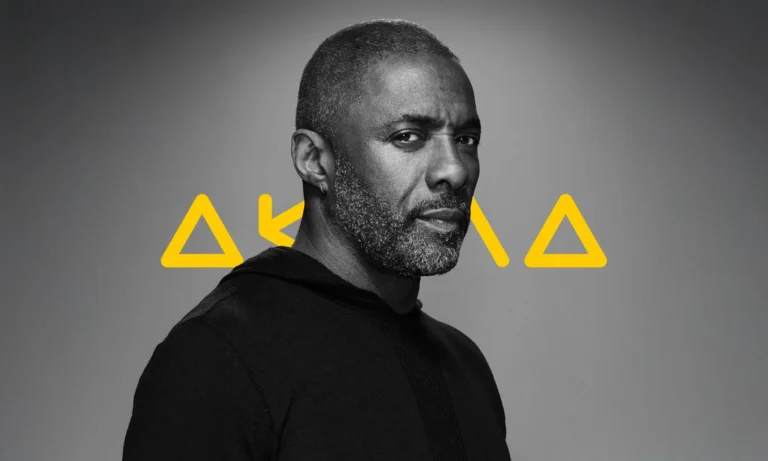
    Co-founder Idris Elba shared the driving vision behind Akuna Daily at the TIME100 Impact Dinner as the platform officially launched on Africa Day 2026.

    On the red carpet at the TIME100 Impact Dinner in New York, Idrissa Akuna Elba unveiled the philosophy powering a platform designed to rewrite Africa’s global story, on Africa’s own terms.

    When Idrissa Akuna Elba stepped onto the red carpet at the TIME100 Impact Dinner in New York City, he carried with him more than a philanthropic title.

    Co-founder Idris Elba shared the driving vision behind Akuna Daily with a quiet certainty that comes from years of building something genuinely transformative. Thus, this week, that vision went live for the world to see.

    Africa Day 2026 marked the official launch of Akuna Daily, a bold new news and media platform operating as the storytelling heart of the broader Akuna ecosystem.

    The platform is not a side project or a celebrity vanity venture. It is the editorial backbone of the Akuna Group. Elba’s pan-African creative and enterprise company, designed to elevate the voices, industries, and innovations that define the continent’s future.

    @samtashmedia

    Idris Elba Officially Launched Akuna Daily, a Storytelling Platform Built to Amplify Africa’s Creators, Innovators and Business Builders on the World Stage Speaking from the red carpet at the TIME100 Impact Dinner in New York, where he and wife Sabrina Dhowre Elba were named 2026 TIME100 Philanthropy honorees, Elba outlined a vision that goes far beyond publishing. Akuna Daily is the storytelling engine of an interconnected ecosystems

    ♬ original sound – Samtash – Samtash.com

    “The creative sector is about more than quick returns. It is about identity, ownership, and telling our own stories to the world.” — Idrissa Akuna Elba, Co-Founder, Akuna Group

    A Platform Built for Creators, Not Just Consumers

    At its core, Akuna Daily functions as a storytelling hub that works in direct tandem with the Akuna Wallet ecosystem.

    A blockchain-powered financial platform developed in partnership with the Stellar Development Foundation. The platform’s editorial mission is deliberately intertwined with that financial infrastructure: to gather and amplify the stories of diverse creators, artists, and innovators across the African continent.

    Notably, addressing the critical, everyday challenge of global payment access for freelancers and independent builders.

    For too long, talented creatives across Africa have faced the same invisible wall: producing world-class work without a reliable, borderless way to get paid for it.

    The Akuna Wallet, initially piloted in Ghana, provides a virtual US dollar account that allows creators to safely monetize their global output, bypass traditional banking barriers, and send funds peer-to-peer.

    Akuna Daily exists to tell those creators’ stories, and in doing so, to prove that the infrastructure works.

    From Aid-First to Agency-First

    At the TIME100 Impact Dinner, Elba and his wife, activist and businesswoman Sabrina Dhowre Elba.

    Herself a 2026 TIME100 Philanthropy honoree alongside her husband through their Elba Hope Foundation, laid out a vision that reframes the entire conversation about Africa’s place in the global economy.

    The “aid-first” chapter, they made clear, has closed. What rises in its place is a framework built on agency, infrastructure, and long-term participation.

    The Elba Hope Foundation’s work spanning food insecurity, sustainability, and youth advocacy feeds directly into this larger architectural vision.

    The couple’s message at the New York gathering was unambiguous: the world needs Africa more than Africa needs the world, and the structures to prove that are now being built.

    Hence, from Sherbro Island in Sierra Leone, where Elba holds citizenship of his father’s native country, to Zanzibar in Tanzania, where 80 hectares of land will house a state-of-the-art film studio, to Accra in Ghana, where a 22-acre creative hub sits beside the historic Osu Castle.

    Sabrina Dhowre Elba

    “This is the definitive moment for the diaspora and the next generation of builders to move from passive observation to active investment.” — Sabrina Dhowre Elba, Co-Founder, Elba Hope Foundation

    Pan-African Infrastructure, Not Just Media

    Understanding Akuna Daily requires understanding the full Akuna ecosystem. A network that spans media, finance, real estate, and creative production.

    The Akuna Group’s footprint is deliberately pan-African in scope. Beyond Ghana and Tanzania, the group’s ambitions extend across the continent’s growing innovation corridors.

    The reach into East African markets, including Kenya’s vibrant tech and creative sector. Thus, positions Akuna Daily as a publication that speaks to the full breadth of Africa’s modern identity rather than any single regional narrative.

    The platform also sits within Elba’s broader vision for the “African Odeon” — an initiative aimed at expanding and modernizing cinema access, distribution, and monetization for local creators across sub-Saharan Africa.

    Together, these interconnected ventures form a creative economy architecture: studios to produce content, a wallet to monetize it, and a media platform to amplify the people making it all possible.

    A Story Belonging to Africa, Told on Africa’s Terms

    What makes the Akuna Daily launch particularly resonant is its timing. Dropping on Africa Day, the annual celebration of the founding of the African Union.

    Thus, the platform lands as a declaration. The narrative of Africa is being rewritten in real time, and Akuna Daily positions itself as both a witness and an active participant in that transformation.

    For the diaspora watching from London, Nairobi, Accra, Dar es Salaam, or beyond, the launch represents something deeper than a new publication.

    It is an invitation from co-founder Idris Elba, from Sabrina Dhowre Elba, and from every creator whose story the platform will tell.

    Notably, to recognize that the continent’s strategic importance to the global creative and economic order is not approaching. It is already here.

    Akuna Daily is live. The story continues.

  • Pope Leo Sends a Warning About the Growing Risks of AI

    Pope Leo Sends a Warning About the Growing Risks of AI

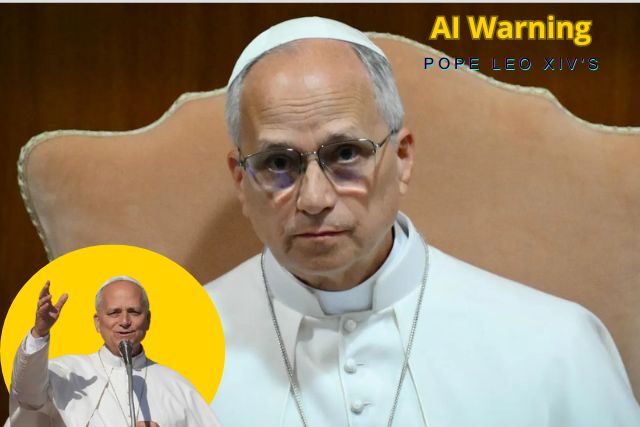
    Pope Leo XIV’s first encyclical, Magnifica Humanitas, warns that artificial intelligence needs to be disarmed from autonomous weapons to mass surveillance

    In one of the most anticipated papal documents of the modern era, Pope Leo XIV sends a warning about the growing risks of AI. Especially, that cuts straight to the heart of humanity’s most urgent technological crossroads.

    Released on May 25, 2026, the pontiff’s first major encyclical, Magnifica Humanitas, delivers a sobering yet constructive call to action. Artificial intelligence must be governed, guided, and yes, “disarmed.”

    “Artificial intelligence needs to be disarmed,” Pope Leo declared, acknowledging the weight of that word. “The word is strong, I know, but deliberately chosen because this moment needs words capable of attracting attention, awakening consciences, and indicating paths forward for humanity.”

    It is a statement that has already reverberated across boardrooms, parliaments, and universities worldwide.

    A Tower of Babel for the Digital Age

    Drawing on the enduring power of biblical imagery, Pope Leo compared the unchecked expansion of AI to the ancient Tower of Babel. Humanity’s cautionary tale of ambition outpacing wisdom.

    His message is clear: technology built without ethical foundation risks fragmenting rather than uniting the human family.

    Yet the encyclical is far from a rejection of progress. Rather, it is a moral roadmap. An invitation to build artificial intelligence that genuinely serves human dignity rather than eroding it.

    Five Critical Threats Pope Leo Identified

    The pontiff outlined five areas where AI poses profound risks to the common good:

    1. Autonomous Warfare

    Pope Leo raised urgent alarm over weapons systems that are becoming practically beyond human reach to govern.

    He declared the traditional “just war” doctrine outdated in an era where lethal decisions can be delegated to algorithms, calling for the technology to be demilitarized.

    2. Mass Surveillance and Social Control

    He condemned the unchecked harvesting of personal data, warning of invisible forms of digital colonialism. Notably, where profiling and behavioral manipulation replace genuine freedom.

    “I hear very troubling accounts of algorithms that can block access to healthcare, employment, and security on the basis of data tainted by prejudice and injustice,” he said.

    3. Job Displacement and Worker Dignity

    The encyclical speaks directly to the millions of workers facing automation-driven unemployment, cautioning against sacrificing livelihoods on the altar of corporate profit.

    4. Deepening Global Inequality

    Power over AI is concentrated in a handful of wealthy nations and monopolistic corporations.

    Pope Leo drew a striking parallel between this concentration of technological power and historical patterns of exploitation, including modern forms of structural inequality.

    5. The Erosion of Truth

    Perhaps most urgently for contemporary society, the Pope voiced deep concern over generative AI’s capacity to produce convincing disinformation. Thus, manufacturing false realities that blur the line between truth and simulation.

    A Constructive Vision, Let’s Not Fear AI

    Significantly, Pope Leo’s encyclical is not a manifesto of fear. “Let’s not fear artificial intelligence,” he urged, “but constantly keep the question of the human in play. We cannot be careless with our most powerful technical instruments.”

    This is a vision grounded in hope. One that calls on governments, technology companies, civil society, and international bodies to establish binding ethical frameworks and robust oversight mechanisms that ensure AI remains a tool of human flourishing.

    Pope Leo XIV’s AI Warning

    “Artificial intelligence already touches many areas of our lives and affects decisions that shape human coexistence,” the Pope noted. “It is also dramatically changing how war is waged.”

    Why This Moment Matters

    Pope Leo XIV’s encyclical arrives at a pivotal juncture. Governments worldwide are scrambling to regulate AI. Tech giants are racing to deploy increasingly powerful systems.

    And ordinary citizens are navigating a world reshaped at a pace that policy and ethics have struggled to match.

    The Vatican’s intervention represents one of the most morally authoritative voices in the world stepping into that gap, not with condemnation, but with conscience.

    For the Catholic Church’s 1.4 billion members and billions more who respect the moral weight of the papacy, Magnifica Humanitas is more than a theological document.

    It is a challenge to everyone shaping the AI future: build technology worthy of the humanity it is meant to serve.

  • The Boring Company Solving City Traffic with Hyperloop Transit

    The Boring Company Solving City Traffic with Hyperloop Transit

    The Boring Company aims to solve urban traffic and build Hyperloop high-speed transit between city centers.

    From the Las Vegas tunnels to a future of city-to-city high-speed transit, Elon Musk’s tunneling venture is redefining how the world thinks about underground transportation.

    When Elon Musk first floated the idea of digging tunnels to cure urban gridlock, most people dismissed it as another eccentric thought experiment.

    A decade later, The Boring Company (TBC) stands as one of the most consequential infrastructure disruptors of the modern era.

    Especially, with operational tunnels carrying passengers in Las Vegas, an ambitious 13-mile underground loop under construction in Nashville, and the long-range ambition of building a Hyperloop network connecting city centers across continents.

    Why tunnels and why now?

    The rationale behind The Boring Company’s founding mission is rooted in straightforward geometry. Cities have grown skyward for over a century, stacking offices, residences, and retail into dense vertical towers.

    Yet the roads and transit systems that connect those towers remain almost entirely two-dimensional, locked to the surface.

    That fundamental mismatch is the engine of modern traffic congestion, and The Boring Company’s answer is to take transportation into a third dimension underground.

    Musk has described the logic plainly: just as cities went three-dimensional with skyscrapers, transport networks must do the same by going three-dimensional with tunnels.

    A fully layered underground network, the argument goes, could scale to accommodate virtually any traffic volume while freeing surface streets for pedestrians, cyclists, and green space.

    “This is an obvious way to reduce traffic to zero by going 3D with your transport system.”

    — Elon Musk, on The Boring Company’s founding logic

    The Prufrock machine continuous underground factory

    The engineering breakthrough that makes this vision plausible is Prufrock, TBC’s flagship tunnel boring machine.

    Traditional boring machines alternate between two phases, digging forward and then stopping to install concrete tunnel lining. Then, in a stop-start rhythm that severely limits throughput.

    Prufrock eliminates that limitation entirely by performing both operations simultaneously, never pausing its forward progress.

    At the machine’s front end, a rotating cutter head powered by four heavy-duty electric motors, carves through earth with enormous torque.

    Excavated material feeds through a muck chamber onto a mile-long conveyor belt that carries debris to the surface.

    Behind the cutter head, a remotely controlled liner truck delivers 4,000-pound precast concrete segments; a robotic crane and erector arm then place each segment precisely into the tunnel wall while the machine continues advancing.

    A global operations control center allows engineers to monitor and manage machines from Las Vegas to Dubai in real time.

    The result is a shift in scale from miles per year to miles per week. A transformation that TBC says is essential to making tunnel infrastructure economically viable for widespread urban deployment.

    Las Vegas Loop proof of concept at scale

    The Vegas Loop is The Boring Company’s most visible achievement to date. Connecting the Las Vegas Convention Center to hotels, casinos, and entertainment venues along the Strip.

    The network transports passengers in autonomous Tesla vehicles through a system of underground tunnels, dramatically cutting trip times that would otherwise require navigating the city’s notoriously congested surface streets.

    The company has now completed a total of eight miles of tunneling, with the Vegas Loop representing the world’s first operational commercial deployment of this transport model.

    Plans to extend the Vegas Loop to Harry Reid International Airport and eventually to connect virtually every major destination on and off the Strip.

    Hence, would make it one of the most comprehensive privately operated urban transit systems in American history.

    Nashville and beyond the national expansion

    Beyond Nevada, TBC has signed a construction contract to build a 13-mile underground loop linking Nashville’s international airport to the heart of downtown.

    The project promises to reduce what can be a grueling surface commute to approximately 10 minutes in dedicated Tesla pods.

    A journey that currently takes up to 45 minutes during peak hours. Tennessee’s state government has backed the project as a transformative piece of the region’s long-term infrastructure strategy.

    The company has also fielded inquiries from municipalities across the United States and internationally, signaling that the boring-as-a-service model is gaining serious traction with public-sector decision-makers who see tunneling as a complement to, rather than a replacement for, conventional mass transit.

    The Hyperloop, the long game

    If the urban loop projects represent The Boring Company’s near-term ambitions, the Hyperloop represents its most audacious long-range goal.

    Originally conceived by Musk in a 2013 white paper, the Hyperloop concept involves propelling passenger pods through low-pressure tubes at speeds exceeding 600 miles per hour.

    Thus, connecting city centers that are hours apart by car or plane in a fraction of the time.

    The Boring Company’s tunneling expertise positions it as a natural builder of the underground or at-grade infrastructure that a Hyperloop network would require.

    While full city-to-city Hyperloop deployment remains a long-horizon objective. TBC’s iterative progress from research tunnels to the Vegas Loop to Nashville, traces a credible engineering path toward that eventual reality.

    A new industry is emerging

    What The Boring Company has demonstrated, perhaps most importantly, is that tunnel construction need not be the exclusive domain of slow-moving government agencies or legacy engineering conglomerates.

    By coupling rapid iteration, vertical integration with Tesla’s autonomous vehicle platform, and a software-driven operations model, TBC has introduced competitive pressure to an industry that has seen little fundamental innovation in decades.

    Musk has publicly encouraged rivals to enter the tunneling sector, noting that The Boring Company remains almost uniquely serious about the opportunity.

    That challenge and the scale of the urban congestion problem it seeks to address. Notably, suggests the real story of underground transportation may only just be beginning.

  • Omanyala Blazes to Victory in Xiamen With a Stunning 9.94-Second Sprint

    Omanyala Blazes to Victory in Xiamen With a Stunning 9.94-Second Sprint

    Ferdinand Omanyala storms to victory at the 2026 Xiamen Diamond League, clocking a season’s best 9.94s to win the men’s 100m in China.

    Kenya’s African record holder dominates the men’s 100m at the 2026 Xiamen Diamond League, recording his fifth sub-10-second run of the season.

    Ferdinand Omanyala finally stormed to a spectacular victory in the men’s 100m race at the 2026 Xiamen Diamond League in China.

    He clocked a blistering season’s best time of 9.94 seconds on Saturday, May 23. The Kenyan sprint king left a world-class field in his wake, delivering yet another commanding performance.

    Thus, reaffirms his status as the fastest man on the African continent and one of the most formidable short-distance sprinters on the global stage.

    Running with explosive power and flawless execution from start to finish, the 30-year-old from Hamisi, who stands 1.75 metres tall and carries an athletic frame of 82 kilograms.

    He crossed the line ahead of South Africa’s Gift Leotlela, who clocked 10.00 seconds for second place, and American Trayvon Bromell, who finished third in 10.03 seconds.

    Omanyala never looked in doubt, surging clear through the second half of the race with a trademark burst of top-end speed that drew roars from the Xiamen crowd.

    “5th sub-10!!! Above everything else… God!!!” Ferdinand Omanyala, reacting to his Xiamen victory on social media.

    Race Results Men’s 100m, Xiamen Diamond League

    1st — Ferdinand Omanyala (🇰🇪 Kenya) — 9.94s (Season’s Best)

    2nd — Gift Leotlela (🇿🇦 South Africa) — 10.00s

    3rd — Trayvon Bromell (🇺🇸 USA) — 10.03s

    A Record-Breaking Career on the Rise

    Omanyala’s sporting career is one of Africa’s most extraordinary athletic stories. Born on January 2, 1996, he discovered his gift for sprinting while studying chemistry at the University of Nairobi, where his raw pace first caught the attention of coaches and scouts.

    What followed was a rapid and remarkable ascent through the global ranks of professional sprinting.

    His personal best of 9.77 seconds, clocked on September 18, 2021, in Nairobi. That remains the African record and ranks him among the ten fastest men in the history of the 100-metre event.

    He further cemented his continental dominance by winning back-to-back African Championships titles and claiming the men’s 100m gold at the 2022 Commonwealth Games.

    A two-time Olympian, Omanyala has consistently answered every challenge put before him on the global stage.

    The Xiamen Diamond League triumph adds another landmark chapter to that career, most notably as his fifth sub-10-second performance of the 2026 season alone.

    Hence, a remarkable mark of consistency that few sprinters anywhere in the world can match. World Athletics noted on its official platforms that Omanyala’s domination of the 100m this year places him firmly in the conversation for the sport’s most coveted honours in the months ahead.

    Racing Toward Greatness and a Healthy Payday

    Beyond the glory of the finish line, Omanyala’s Xiamen victory carries significant financial reward. As a Diamond League winner, he is set to pocket a prize exceeding Ksh 2 million.

    A fitting acknowledgement of a performance that required him to beat some of the fastest athletes assembled on the circuit this season.

    Representing Kenya at every step of his career dressed by Adidas and powered by USN Kenya. Omanyala has become more than a world-class athlete.

    He is a national icon whose victories inspire a generation of young Kenyan sprinters. Messages of congratulation poured in from across the country following the Xiamen result, with leaders, fellow sportspeople, and fans united in celebrating what many are calling the performance of his season so far.

    With the Diamond League season still in full swing and major global championships on the horizon, Ferdinand Omanyala is running faster, more confidently, and with greater intent than ever before.

    For anyone wondering whether the African record holder can go even quicker, Xiamen provided a very clear and compelling answer: yes, he can.

  • Aliko Dangote Ethiopia $4 Billion Fertilizer Plant Investment Reshaping Africa

    Aliko Dangote Ethiopia $4 Billion Fertilizer Plant Investment Reshaping Africa

    Africa’s richest man, Aliko Dangote, has raised his Ethiopia investment to $4 billion. Discover how the Aliko Dangote Ethiopia fertilizer plant

    Africa’s most ambitious industrial investment story is unfolding in the Horn of Africa. It carries the unmistakable fingerprint of the continent’s most celebrated industrialist.

    The Aliko Dangote Ethiopia partnership has evolved rapidly from a landmark signing ceremony, into one of the most consequential agribusiness plays in modern African history.

    Notably, with fresh commitments pushing the total investment beyond $4 billion.

    From $2.5 Billion to $4 Billion Deal That Keeps Growing

    When Aliko Dangote partners with Ethiopia for a $2.5 billion fertilizer plant, the world took note.

    The October 2024 groundbreaking in the Somali region of Ethiopia, marked the beginning of what was already described as a transformative project.

    A facility designed to produce 3 million metric tons of urea annually, enough to address a critical gap in East African agricultural supply chains.

    But that figure has since grown considerably. The Aliko Dangote Ethiopia investment has now crossed $4 billion, reflecting expanded capacity plans and new infrastructure commitments made during Dangote’s recent high-level meetings with Prime Minister Abiy Ahmed.

    The billionaire’s group is investing in a dedicated 120-megawatt captive power plant, eliminating dependence on Ethiopia’s national grid and ensuring uninterrupted production operations.

    Some 5,000 housing units for workers are expected to be completed within four months, with aggressive civil construction already underway.

    The Aliko Dangote Ethiopia Fertilizer Plant Scale and Ambition

    The scope of the Aliko Dangote Ethiopia fertilizer plant is staggering. Beyond the flagship urea facility, the project now includes a polypropylene packaging plant, manufacturing bags for the fertilizer itself.

    Also, an NPK blending plant expected to produce at least 2 million metric tons of compound fertilizer annually. Combined, these facilities represent a vertically integrated agricultural inputs hub capable of reshaping how the entire continent sources and distributes fertilizer.

    The delivery timeline has been compressed. Despite the expanded scope, production is now targeted to begin within 30 months. A reduction of five to ten months from earlier projections.

    Dangote attributed the acceleration to the seriousness of Ethiopia’s governmental commitment, and the logistical groundwork already laid since the groundbreaking.

    Looking further ahead, expansion plans target a production scale of 12 million metric tons of urea per year. A figure that would position this facility as the single largest urea producer in the world.

    The Aliko Dangote Ethiopia Fertilizer Deal in Strategic Context

    The timing of the Aliko Dangote Ethiopia fertilizer deal is deliberate. Africa experienced severe disruptions in fertilizer supply following the Russia-Ukraine war, which destabilized global commodity markets and exposed the continent’s dangerous dependence on imported agricultural inputs.

    Dangote has been explicit: this investment is Africa’s industrial response to geopolitical shocks that repeatedly compromise food security.

    Ethiopia, with its large agricultural base and growing population, stands to benefit most directly. Prime Minister Abiy Ahmed has framed the project within Ethiopia’s broader strategic vision.

    Thus, not just as a domestic supply solution, but as a platform for exporting fertilizer to neighboring countries across East Africa. Food sovereignty, in this framework, becomes a form of regional diplomacy.

    Who Is Aliko Dangote?

    Aliko Dangote IFC Headquarters
    Aliko Dangote IFC Headquarters

    For those asking, is Dangote the richest man in Africa? The answer has been yes for more than a decade. Is Dangote still the richest man in Africa? As of 2025, he consistently ranks as the wealthiest person on the continent, with a net worth exceeding $20 billion.

    Built on an industrial empire spanning cement, sugar, salt, and now petrochemicals and fertilizers. Is Dangote the richest in Africa? By most credible indices, including Forbes, yes, and his Ethiopia venture only reinforces that stature.

    Aliko Dangote in Kenya and Across the Continent

    The Ethiopia chapter is part of a continent-wide strategy. Aliko Dangote Kenya connections are developing in parallel, with the group exploring fuel supply and fertilizer distribution arrangements in East Africa’s largest economy.

    Dangote’s group has stated ambitions to establish fertilizer blending plants in at least 20 African countries. A Pan-African agricultural infrastructure network with Ethiopia as its centrepiece.

    A Continent Watching

    Ethiopia is now the second-largest destination for Dangote Group’s Africa-wide investment portfolio after Nigeria. Accounting for nearly 9% of the group’s total continental investment between now and 2030. That figure is expected to climb.

    For Africa, this is more than a fertilizer plant. It is proof of concept, that intra-African industrial capital, deployed with vision and governmental partnership, can build the infrastructure that foreign dependency never provided.

  • Jensen Huang on The Future of Computing, AI & What’s Next

    Jensen Huang on The Future of Computing, AI & What’s Next

    At Dell Technologies World 2026, NVIDIA’s CEO laid out a sweeping vision for the agentic era.

    AI has crossed from novelty into utility, and computing demand is growing at a pace the industry has never seen.

    When Jensen Huang takes the stage, the technology industry listens. At Dell Tech World 2026, the NVIDIA founder and CEO delivered one of his most consequential public addresses yet.

    A detailed, unambiguous declaration that artificial intelligence has finally arrived as a genuinely useful force in enterprise computing. And that the infrastructure race to support it is only accelerating.

    “We’ve now arrived at the era of useful AI. Until now it’s been novel, interesting, incredibly exciting but really, at the enterprise level, the actual use was minimal. Now it’s taken off.”

    Those words carry particular weight coming from Huang, whose views on AI have consistently shaped investor sentiment, enterprise strategy, and national technology policy.

    The NVIDIA CEO has spent years building toward this moment, and by his own account, the results are now showing up everywhere.

    From generative to agentic fundamental leap

    Huang traced the arc of AI’s evolution with characteristic clarity. Two years ago, the conversation centred on generative AI, systems capable of producing content.

    That era gave way to reasoning, then planning, and finally to fully agentic systems: autonomous AI workers that use tools, evaluate results, iterate, and complete complex multi-step tasks without continuous human direction.

    The computational implications are staggering. Where a simple query once required modest processing power, agentic systems may run autonomously for days or weeks.

    Huang cited software programming tasks that NVIDIA’s own agents now complete in a week. Work that would have taken an entire human team a month.

    As a result, compute requirements per task have grown by a factor of 100 to 1,000, while the number of people and organisations deploying agents has simultaneously surged. The combined effect on demand, he noted, has been nothing short of parabolic.

    Huang outlined how the modern AI stack functions in practice: a massive frontier language model.

    Potentially holding one trillion parameters operates as the central brain, while a CPU-based harness running a governed sandbox orchestrates the agent’s moment-to-moment work.

    Local models handle sensitive tasks on-premises; cloud-scale systems handle the heavy lifting. This hybrid architecture, he argued, is the only approach that delivers both performance and data sovereignty for enterprise customers.

    The Five-Layer Cake Huang’s blueprint for AI infrastructure

    For those tracking Jensen Huang’s AI layers framework, Dell Tech World offered a vivid illustration of how each level connects.

    Energy and chips form the foundation; infrastructure, models, and applications rise above them. NVIDIA’s own Vera CPU designed specifically for the token-generation economics of the AI era rather than the core-rental economics of traditional cloud computing.

    Hence, exemplifies how each layer is being purpose-built for this new paradigm.

    Vera, Huang explained, achieves three times the memory bandwidth of the world’s fastest existing CPU and delivers the highest single-threaded performance available today.

    Those are not incremental improvements. When agents query databases thousands of times per task, CPU bottlenecks directly limit the speed of AI output, and therefore the productivity gains AI is supposed to deliver.

    “One really good engineer today is working with an agent. A really great engineer in the future is going to be orchestrating a whole bunch of agents orchestrating sub-agents to do work.”

    A partnership decades in the making

    The conversation between Huang and Dell CEO Michael Dell was punctuated by genuine warmth, the two have worked together for 31 years.

    Standing beside a towering GB300-based PowerRack server that Huang graciously autographed on stage, the pair compared it to the desk-side workstation nearby: the same architecture, but 100 times the scale, capable of running a one-trillion-parameter AI model as a single self-contained system.

    A year ago, such a machine would have been described as a cloud data centre. Today it ships as a product.

    The milestone moment illustrated the pace of change that Huang has been describing in his public communications and keynotes: what took months now takes weeks; what took weeks now takes days. Tasks that once filled an afternoon are now expected instantly.

    A reality check grounded in results

    Sceptics looking for a Jensen Huang AI reality check will find it embedded in the specifics he shared. This is not a vision of AI productivity gains years away.

    NVIDIA’s own engineering teams are already deploying agents across software development, DevOps, CI/CD pipelines, and QA testing at scale.

    Enterprise customers including Lilly, Samsung, and Honeywell. They are restructuring workflows and committing to agentic deployments in earnest. The shift from pilot to production is underway.

    Consistent with his remarks at Davos earlier this year, Huang framed AI not merely as a productivity tool but as essential national infrastructure. As foundational as roads or electrical grids.

    His argument: because AI dramatically lowers the barrier to problem-solving and wealth creation, every country and every company has a strategic imperative to build its own AI ecosystem, trained on its own data.

    The personal dimension

    And those ambitions are now very large indeed. “How high is up?” Huang asked the Dell Tech World audience, before answering with a grin: “Pretty high.”

    Given that Jensen Huang’s net worth now reflects a company whose market capitalisation has surpassed most nations’ GDP, the confidence is arguably earned.

    The age of useful AI has arrived. The architecture of computing is being reinvented in real time. And Jensen Huang, by every available measure, intends to be at the centre of what comes next.

  • Kenyan Professor George Njoroge Wins Sh446M Cancer Research Award

    Kenyan Professor George Njoroge Wins Sh446M Cancer Research Award

    Kenyan Researcher Professor George Njoroge Wins Sh446 Million Award for Advancing Early Detection of Oesophageal Cancer

    In a landmark recognition of scientific excellence bridging Africa and the United Kingdom. Kenyan researcher Professor George Njoroge has won a Sh446 million global award alongside UK scientist Professor Robert Bristow, for advancing early detection of oesophageal cancer.

    A disease that claims thousands of Kenyan lives every year.

    Kenya’s standing in global medical research has received a powerful boost. Professor George Njoroge, a co-lead researcher at Kenyatta University Teaching, Referral and Research Hospital (KUTRRH), has been honoured with the 2026 Greater Manchester Cancer Award.

    Together with a UK-based team headed by Professor Robert Bristow from the University of Manchester and The Christie NHS Foundation Trust.

    The funding, awarded by the UK’s National Institute for Health and Care Research (NIHR). It will support a collaborative project between KUTRRH, the University of Manchester, and The Christie NHS Foundation Trust to strengthen early cancer screening and improve patient outcomes in Kenya.

    A Disease That Cannot Wait

    The urgency behind this recognition is stark. In Kenya, the leading cancers are breast, cervical, oesophageal and prostate.

    Oesophageal cancer, though the third most common cancer, has the highest mortality rate among all cancers, causing about 4,400 deaths annually.

    The core problem has always been timing. Although surgery, chemotherapy, and radiotherapy can improve outcomes, the disease remains highly lethal due to delayed diagnosis and treatment.

    It has a case fatality rate of 99.3 percent due to late recognition of symptoms by both patients and healthcare workers.

    Professor Njoroge has been direct about what that statistic means in human terms.

    “The unique collaboration between Kenya and the United Kingdom in this oesophageal cancer study will go a long way in establishing ways that would tilt the balance,” he said, adding that the research aims to detect oesophageal cancer at the potentially curative stages one and two, rather than the late stages three and four.

    A development he described as “a game changer in diagnosis and management of that disease.”

    A Pioneering Model of Care

    Through a co-created hub-and-spoke model, the team combined community engagement, rapid pathology services, and new genomic capacity to tackle a cancer that is often diagnosed too late, significantly improving chances of timely treatment.

    The model has already demonstrated real results on the ground. “When placed in Kenya, we were able to increase screening access, detect cancers earlier and really develop community trust with patients,” said Professor Bristow.

    Professor Njoroge credited the success of the initiative to the support of KUTRRH leadership, including current CEO Zeinab Gura and former board chairperson Olive Mugenda.

    A Career Built on Breakthrough Science

    This award is only the latest chapter in a career that has consistently redefined what African scientists can achieve on the world stage.

    Professor Njoroge is internationally recognised for discovering breakthrough drugs and becoming the first African to secure more than 100 United States patents. That milestone alone places him in rare scientific company globally.

    In 1988, Njoroge joined the Schering-Plough Research Institute, focusing on the treatment of viral diseases and cancer, where he held positions including Senior Principal Scientist, Associate Director, and Director of Medicinal Chemistry.

    It was during this period that he led what would become one of his defining contributions to medicine. The discovery of Victrelis, the first-in-class oral HCV protease inhibitor for hepatitis C, approved in May 2011.

    The American Chemical Society later inducted him into its Hall of Fame as a 2012 Hero of Chemistry.

    Beyond antivirals, his fingerprints are on cancer pharmacology too. He spearheaded the discovery of the anti-cancer compound lonafarnib, later approved in 2020 under the name Zokinvy for the treatment of progeria, a rare and devastating premature ageing disease in children.

    He also holds an honorary professorship of medical education at the University of Manchester, making his current collaboration with that institution a reunion rooted in deep mutual respect.

    Scaling Up and Looking Forward

    The implications of this research extend well beyond oesophageal cancer. Researchers hope the findings will help shape Ministry of Health policies and support the expansion of early detection programmes for other cancers across Kenya.

    “We think the findings that we’ve gotten will be very useful for scaling up diagnosis of oesophageal cancer and through the Ministry of Health in Kenya, as well as the National Cancer Institute; we’re going to scale it up and do even other types of cancer,” said Professor Njoroge.

    His vision stretches further still. He says his long-term dream is to establish a biotechnology company in Africa that nurtures young scientists and drives groundbreaking medical research on the continent.

    For a man who travelled from Kenya to build a career at the frontier of global medicine. Holding positions at Schering-Plough, Merck, and Eli Lilly, the journey has always pointed homeward.

    Today, through the Sh446 million award and the lives it stands to save, Professor George Njoroge is delivering on that promise in the most meaningful way possible.

  • Kenyan Scientist Redefining Battery Research in Germany

    Kenyan Scientist Redefining Battery Research in Germany

    Dr. Charles Ogolla from Kenya is using atomic-level microscopy at the University of Siegen to develop longer-lasting, more efficient batteries for a greener future.

    In a high-tech laboratory in Siegen, Germany, where temperatures drop to near-absolute zero and microscopes peer into the atomic architecture of matter, Dr. Charles Ogolla is conducting research that could reshape how the world stores energy. The 36-year-old Kenyan scientist is a lead researcher at the University of Siegen’s Centre for Nano Analytics, Nanochemistry and Cyber-Physical Sensor Technologies. An institution backed by more than 100 million US dollars in state funding and equipped with some of the most sophisticated scientific infrastructure in Europe.

    Growing up in Kisumu, Kenya, Ogolla was sharply aware of the financial pressures his family faced. Yet those constraints only sharpened his resolve. “I had my dreams and I really pursued them heavily,” he has said. “I knew that education would pay off one day.” That conviction carried him across continents, and in 2016 he arrived in the western German state of North Rhine-Westphalia to join a university that would soon become his scientific home.

    “If there is one quote I find quite inspiring, it is to learn to be comfortable in uncomfortable situations. Learning to be comfortable in uncomfortable situations can really push you to levels you never dreamed of.” — Dr. Charles Ogolla, University of Siegen

    Seeing the invisible with research at the nanoscale

    Dr. Ogolla’s work centres on improving energy storage by examining how minute, microscopic modifications can produce significant gains in battery performance. Using highly specialised cryo-electron microscopes, he and his colleagues observe the atomic structures inside battery materials. Notably, imaging at a scale almost unimaginable to the naked eye. These cryogenic conditions allow the team to study how chemical systems behave at the nanoscale without disturbing their natural state, yielding insights that conventional experiments simply cannot provide.

    His framing of the research is deliberately accessible. Imagine needing two batteries to power a household torch, he suggests. If advances in materials science could achieve the same output from just one, the benefits would ripple outward: lower consumer costs, reduced manufacturing demand, and less pressure on the raw materials supply chain. It is an elegantly simple vision built on extraordinarily complex science.

    Reducing reliance on critical minerals

    The implications of Ogolla’s research extend well beyond the laboratory. Many of the batteries powering everyday devices from smartphones to electric vehicles, rely on lithium and cobalt, minerals extracted predominantly in countries such as the Democratic Republic of Congo. The human and environmental cost of that extraction has drawn growing international scrutiny. Dr. Ogolla is clear about his work’s potential contribution: more efficient battery systems would reduce the quantities of these essential elements required per unit of energy stored, directly easing the pressure on mining operations and the communities they affect.

    “My contribution to getting efficient battery systems would then reduce the need for essential elements such as lithium and cobalt, reducing the pressure and the mining needs.”

    — Dr. Charles Ogolla

    A historic distinction and a call to invest

    In a milestone that underscores the calibre of his work, Dr. Ogolla recently defended his doctoral thesis with the highest possible academic distinction, Summa Cum Laude. He is the first researcher at the Siegen centre to receive that honour. A remarkable achievement in any scientific context and a powerful signal to the broader African research community about what is possible when talent meets opportunity.

    Yet Ogolla is candid about the conditions that make such outcomes possible. “Support, in my view, is infrastructure,” he says, gesturing to the advanced equipment surrounding him. “It’s not only academia, governments need to come in and support research heavily.” His message is not one of complaint but of strategic clarity: African nations with ambitions to compete in the green energy transition must invest in the tools and institutions that allow their scientists to do frontier-level work.

    Language, too, proved transformative. After arriving in Germany, Ogolla spent a full year dedicated to mastering German before resuming his academic work. “It opened quite a lot of doors,” he reflects. “Where I needed support, I could really express myself properly.” That willingness to embrace discomfort linguistic, cultural, scientific is perhaps the most consistent theme in his story.

    Africa’s stake in the green energy race

    Improved energy storage technologies are foundational to the global shift toward renewable energy. Without better batteries, solar and wind power remain intermittent. Powerful when conditions allow, but unable to reliably serve as base-load alternatives to fossil fuels. Dr. Ogolla’s work sits squarely at this intersection of materials science and energy policy, making his laboratory in Siegen a genuinely consequential place.

    As a father and a scientist who has travelled from western Kenya to one of Europe’s foremost nanoscience facilities, Ogolla carries his journey with evident purpose. His trajectory is proof, he believes, that African scientists are not waiting in the wings of the green energy race. They are already running it. The challenge now is to ensure the infrastructure, funding, and institutional support exist to bring many more alongside him.


    Dr. Charles Ogolla is a PhD researcher at the University of Siegen’s Centre for Nano Analytics, Nanochemistry and Cyber-Physical Sensor Technologies, in Siegen, Germany.

  • Annual World Championship in Shoe Shining 2026 (With Winner Shoemaker)

    Annual World Championship in Shoe Shining 2026 (With Winner Shoemaker)

    Japan Dominates the 8th Annual World Championship in Shoe Shining, as London’s Super Trunk Show Celebrates the Pinnacle of Footwear Craft

    London, May 9, 2026 — The London Super Trunk Show at 12 Regent Street once again played host to two of the most prestigious events in the world of fine footwear: the 8th Annual World Championship in Shoe Shining and the World Championships of Shoemaking.


    London’s elegantly curated Super Trunk Show has long been the heartbeat of global shoe culture, and the 2026 edition proved no different. On a bright Saturday in May, the finest shoe shiners and shoemakers from across the world converged. On the 12 Regent Street, London, to compete in events that blend athletic focus, artistic precision, and time-honoured craft. Sponsored by Saphir Médaille d’Or and Bridlen Shoes, this year’s championship delivered unforgettable moments and world-class results.

    And They’re Off The 8th Annual World Championship in Shoe Shining

    The atmosphere inside the venue crackled with anticipation as three elite competitors took their stations for the 8th Annual World Championship in Shoe Shining. Each finalist had exactly 20 minutes to transform a factory-fresh, plain cap-toe Oxford in medium brown calf leather into a flawless, mirror-bright showpiece. Notably, a task that demands deep product knowledge, exceptional technique, and nerves of steel.

    Taking the gold was Atsuhiro Yoshidomi of Japan, competing and representing Boston Re’olds. Dressed in a sharp light grey suit, Yoshidomi delivered a shine of breathtaking quality. Outshining his rivals with a combination of speed, control, and an almost meditative calm under pressure. His victory is a testament to both personal dedication and the extraordinary level of training within Japan’s shoe care community.

    Claiming second place was Benjamin Valler of France, whose refined European technique produced a deep, rich lustre that drew admiration from competitors and spectators alike. Representing the best of the French school of shoe care. Valler demonstrated that podium-level shining is as much about feel and rhythm as it is about product selection.

    Third place went to Naoki Ueda of Japan, whose performance further underscored Japan’s remarkable dominance across the shoeshine disciplines. Ueda’s attention to every millimetre of the leather surface earned him a well-deserved place on the podium. Hence, considerable praise from judges and fellow competitors.

    A great job was done by all involved. The results reflect the extraordinary dedication each competitor brings to a craft that is experiencing a true global renaissance. Beautiful shines all around.

    Shoemaking at Its Highest Level The World Championships of Shoemaking 2026

    Running alongside the shining competition, the World Championships of Shoemaking 2026 presented an equally breathtaking showcase of handcraft excellence. Competitors were tasked with producing a chelsea boot, a deceptively complex model. Judged on construction quality, design originality, and the precision of finishing across every element of the shoe.

    Taking the top prize and the title of World Champion in Shoemaking 2026 was Ken Kataoka of Japan, whose winning entry stunned both judges and the assembled audience. Kataoka submitted a Victorian-inspired chelsea boot of outstanding originality: a hand-stacked protruding heel that gave the silhouette an assertive, architectural presence; intricate lace-like detailing worked into the gore panel; and precision finishing carried across the entire boot without a single lapse in quality. The result is a piece that belongs equally in a museum of decorative arts and on the foot of a serious shoe connoisseur.

    Second place was awarded to Twinkima.G of China, whose entry demonstrated immaculate construction and an assured design sensibility. Third place went to another highly accomplished entrant, with all three top boots reflecting a level of quality that the shoemaking world rarely sees in competition.

    This is shoemaking at its highest level. The top three boots from the 2026 World Championships of Shoemaking each show just how far the craft can be pushed when passion, patience, and mastery converge under one roof.

    A Celebration of a Living Craft

    Together, the World Championship in Shoe Shining and the World Championships of Shoemaking represent something larger than any single competition result. They are a declaration that bespoke and artisan footwear culture is thriving. Attracting new talent, drawing international audiences, and inspiring a new generation of craftspeople and shoe enthusiasts worldwide.

    The London Super Trunk Show, organised by Shoegazing, The Shoe Snob, and Kirby Allison, continues to serve as the most important annual gathering in the world of quality footwear. With another unforgettable edition now in the books, all eyes will soon turn to what the 2027 championship season will bring.

  • Kenya Fuel Prices Spark Nationwide Matatu Strike and What Must Change

    Kenya Fuel Prices Spark Nationwide Matatu Strike and What Must Change

    Kenya’s matatu strike hits Nairobi roads as fuel prices soar to KSh 214/litre. See where Kenya ranks in Africa’s top 15 highest fuel prices and what must change.

    Nairobi, May 18, 2026 Commuters across Kenya woke up to empty roads on Monday, as matatu operators launched a nationwide transport strike in protest over soaring fuel prices. Hence, leaving hundreds of thousands stranded along major arteries including the Thika Superhighway, Kangemi, Ongata Rongai, and Kitengela. The strike, coordinated by the Transport Sector Alliance, has brought Nairobi and several county towns to a near-standstill. Thus, underlining the urgent economic pressure that rising fuel prices are placing on operators, households, and the wider Kenyan economy.

    Where Kenya Stands on Africa’s Fuel Price Map

    Kenya is not alone in its struggle. Across Africa, fuel prices have surged sharply in 2026, driven by the ongoing Iran conflict and disruptions to oil supply through the Strait of Hormuz. As one of the world’s most critical energy transit routes. The ripple effects have been immediate and severe for fuel-importing nations across the continent.

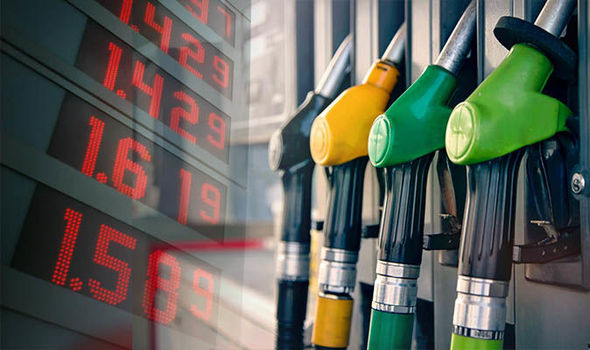
    In East Africa, the pressure is especially acute. According to the latest GlobalPetrolPrices data, Tanzania is paying approximately $1.59 per litre for petrol, while Rwanda has climbed to $2.01 per litre. The third-highest price in Africa. Across the continent, Malawi holds the unenviable top position at a staggering $3.83 per litre, more than 200 percent above the global average. Then followed by Zimbabwe at $2.08 and the Central African Republic at $1.88.

    Africa’s Fuel Price Map

    In Kenya, the Energy and Petroleum Regulatory Authority (EPRA) announced new pump prices for the May 15 to June 14, 2026 cycle. In Nairobi, Super Petrol now retails at KSh 214.25 per litre, Diesel at KSh 242.92 per litre, and Kerosene remains unchanged at KSh 152.78 per litre. Super Petrol rose by KSh 16.65 while Diesel surged by KSh 46.29, one of the steepest single-cycle diesel increases in recent memory. Kenya imports all its refined petroleum products, meaning every fluctuation in global oil markets translates directly to the pump.

    Diesel Prices Map

    The Matatu Strike and Its Ripple Effects

    The matatu strike, which took effect on Monday morning, is a direct response to these spiralling costs. Operators argue that the fuel price hikes have made running public service vehicles economically unviable without a corresponding adjustment in fares. Thus, a move that would itself deepen the cost-of-living burden on ordinary Kenyans who rely on matatus as their primary mode of transport.

    Cabinet Secretary John Mbadi responded firmly, stating the strike was “completely uncalled for,” adding that fuel prices would be even higher without government interventions. EPRA confirmed that the government has deployed approximately KSh 5 billion from the Petroleum Development Levy (PDL) Fund to subsidise diesel and kerosene prices in the current cycle. As a cushion that has demonstrably kept pump prices below what unregulated market rates would produce.

    The disruption, however, is real. Workers have been unable to reach jobs. Supply chains face delays. Schools, businesses, and essential services are operating under significant strain. All on a Monday, the most economically active day of the working week.

    A Path Forward: What Can Be Done

    The matatu strike exposes a deeper structural challenge, but there are actionable solutions. First, Kenya can accelerate investment in compressed natural gas (CNG) and electric public transport, reducing the sector’s vulnerability to imported crude oil prices. Nairobi already has pilot CNG matatu routes, and scaling these meaningfully would insulate operators from global oil shocks.

    Second, strengthening the PDL subsidy framework with a transparent, rules-based mechanism, rather than reactive ad hoc interventions. This would give operators greater pricing predictability. Operators can plan and sustain services when they can forecast costs.

    Third, regional cooperation matters. East African governments; Kenya, Tanzania, Rwanda, and Uganda can coordinate bulk crude purchasing agreements and shared refining infrastructure to reduce per-country import costs. Hence, lowering the exposure of East Africa’s fuel prices to international market volatility.

    The road ahead requires honest dialogue between government, transport operators, and commuters. High fuel prices are a global reality right now, but Kenya’s response to them smart subsidies, cleaner fuel alternatives, and regional energy partnerships. This will define whether its economy absorbs the shock or is paralysed by it.

  • Boris Cherny Claude Code Creator Runs Hundreds of AI Agents on Phone

    Boris Cherny Claude Code Creator Runs Hundreds of AI Agents on Phone

    Boris Cherny, the creator of Claude Code, revealed his full AI coding setup at Sequoia running 100+ agents, 150 PRs a day, all from his iPhone.

    The engineer behind the world’s most powerful AI coding tool just pulled back the curtain on how he actually uses it, and the answer is more radical than most developers expect.

    Boris Cherny is not a household name outside of software engineering circles, but inside them, he is building something that is quietly rewriting the rules of how code gets written. Cherny is the creator of Claude Code, the agentic coding tool developed by Anthropic that has rapidly become one of the most talked-about products in the AI industry. At a recent Sequoia AI session, Cherny sat down for a candid 15-minute conversation that offered the clearest window yet into his personal workflow. His philosophy on software development, and his bold predictions for the future of building technology.

    The headline figure is striking: 100% of Boris Cherny’s code is written by Claude Code. Not most of it. Not the boilerplate. All of it. And he is running somewhere in the range of a few hundred agents at any given moment, with thousands more doing deeper overnight work while he sleeps.

    From Accidental Invention to Industry-Defining Product

    Claude Code was not born from a grand strategic plan. Boris Cherny joined Anthropic in late 2024 as part of an internal incubator called Anthropic Labs, a small innovation team that also produced the Model Context Protocol (MCP) and the Claude desktop app. The mandate was simple: build the thing you believe should exist.

    At the time, the state of the art in AI-assisted coding was tab completion. A developer opened their IDE, pressed a key, and completed one line at a time. Cherny and his team believed the underlying model capability had already outgrown that approach. The question was not whether an agent could write entire programs. It was whether the product could be built in time to meet the model where it was heading.

    “We were building for the next model,” Cherny explained at the Sequoia session. “We knew it wouldn’t have product-market fit for six months.”

    That patience paid off. Claude Code’s exponential growth trajectory began with the release of Opus 4 in May 2025, and has continued to accelerate with every subsequent model release through 4.5, 4.6, and now 4.7.

    Inside the Setup of Loops, Agents, and a Phone

    Perhaps the most revelatory part of Boris Cherny’s Sequoia appearance was his description of his actual daily workflow, one that most engineers would find almost unrecognizable.

    Cherny manages most of his work from his iPhone, running five to ten Claude Code sessions simultaneously, each containing multiple active agents. On a particularly productive day last week, he merged 150 pull requests in a single day. He describes that as a personal record, achieved largely as an experiment to see how far the system could be pushed.

    The feature he is most enthusiastic about right now is called the loop, accessed via a /loop command. Which uses a cron-style job scheduler to keep agents running on repeat tasks indefinitely. Cherny currently maintains dozens of active loops handling tasks including:

    • Monitoring and fixing continuous integration failures
    • Auto-rebasing pull requests
    • Scraping and clustering product feedback from social media every 30 minutes
    • Babysitting open pull requests through the review cycle

    Anthropic has since extended this capability with a server-side feature called Routines, which keeps loops running even after a laptop is closed or a session ends.

    A Generalist Future and the End of Silos

    Beyond his own setup, Boris Cherny offered a pointed take on where software teams are heading. His view is that the traditional model of narrow technical specialists is giving way to something broader and more cross-disciplinary.

    On the Claude Code team itself, every member writes code. Also including the product manager, engineering manager, designers, data scientists, and user researchers. The barriers between disciplines, Cherny argues, are dissolving because the cost of writing software is collapsing.

    This shift, he believes, will be most consequential at the startup level. As AI makes software development dramatically cheaper and faster, small founding teams will be able to build and compete. Especially, at a scale that previously required large organizations. The advantage will go to teams that adopt AI-native workflows from day one. Notably, rather than incumbents who must retrain existing workforces and navigate organizational resistance.

    The Broader Signal

    Boris Cherny’s biography reads like a quiet accumulation of technical depth, from writing a guide to BASIC programming for TI-83 calculators in middle school. To authoring a widely used textbook on TypeScript. Especially, to now overseeing the tool that many believe represents the leading edge of human-AI collaboration in software engineering.

    What makes his Sequoia session worth watching is not just the product roadmap it implies. It is the lived demonstration that the future he is describing is already operational. Running right now, from an iPhone, a few hundred agents at a time.

  • Aliko Dangote Targets Tanzania With Refinery and Major Investments

    Aliko Dangote Targets Tanzania With Refinery and Major Investments

    Dangote Eyes Tanzania for $20 Billion Refinery, Fertiliser Plant and Port Development in Major Investment Push

    Africa’s richest man signals deep commitment to Tanzania’s economic future as he pledges a wave of transformative projects spanning energy, agriculture, and infrastructure.

    Aliko Dangote, the Nigerian billionaire and founder of Dangote Group, has unveiled an ambitious multi-sector investment blueprint for Tanzania, covering a massive oil refinery, a fertiliser production facility, and a major port development at Bagamoyo. The announcements came during a high-level engagement with the Tanzanian government, signalling one of the most significant private sector investment commitments the East African nation has received in recent years.

    A Refinery Built for the Region, Not Just the Country

    At the heart of Dangote’s Tanzania plans is a proposed 650,000-barrel-per-day oil refinery. A facility of the same scale and philosophy as his landmark Dangote Refinery in Lagos, Nigeria, currently one of the largest single-train refineries in the world. Crucially, Dangote stressed that the project is designed with a pan-African ownership model in mind.

    “The governments of East Africa will be part owners of this refinery,” Dangote said. “It doesn’t matter where the location is. And Tanzania, we have offered Tanzania to also be a part owner of this refinery.”

    Technical teams from the region have been tasked with identifying the optimal location for the facility, with the primary criterion being access to diverse crude oil sources rather than proximity to any single oil field. This mirrors the strategic logic behind the Nigerian refinery, which was deliberately sited to draw from multiple crude streams. Dangote expressed confidence that, by the grace of God, the refinery could begin taking shape within the year.

    Fertiliser Access, A Game-Changer for African Farmers

    Beyond energy, Dangote identified fertiliser supply as a pressing structural challenge across the continent. African farmers have long suffered from delayed or out-of-season fertiliser deliveries, undermining crop yields and food security. His proposed solution for Tanzania is a urea production facility complemented by the blending of potash and phosphate to produce NPK compound fertiliser. Thus, ensuring year-round availability for farmers.

    “We want farmers to always have accessibility to fertilisers,” Dangote said, adding that the NPK blending plant could be operational within a year of groundbreaking. The initiative has the potential to dramatically reduce Tanzania’s dependence on fertiliser imports and stabilise input costs for the country’s agricultural sector.

    Port and Industrial Zone at Bagamoyo

    Rounding out the immediate pipeline is a proposed port and industrial zone development at Bagamoyo, a strategic coastal location north of Dar es Salaam with longstanding potential as a major logistics hub. Dangote indicated that his technical team would begin on-site work the following week, underscoring the urgency and seriousness of the commitment.

    Aliko Dangote IFC Headquarters
    Aliko Dangote IFC Headquarters
    https://samtash.com/opening-africa-conversation-aliko-dangote/: Aliko Dangote Targets Tanzania With Refinery and Major Investments

    A Happy, Expanding Investor

    Dangote’s current footprint in Tanzania is already substantial. The Group’s cement operations at Mtwara have grown to near-full capacity, prompting plans for expansion. The company has also recently introduced close to 600 compressed natural gas (CNG) trucks, transitioning its logistics fleet from diesel. Hence, a move that aligns with global decarbonisation trends and reduces operational fuel costs.

    “We are a very happy investor here,” Dangote said. “We invested heavily in Mtwara and right now we’re almost out of capacity. We need to improve and increase.”

    Why Tanzania? Stability, Leadership, and Demographics

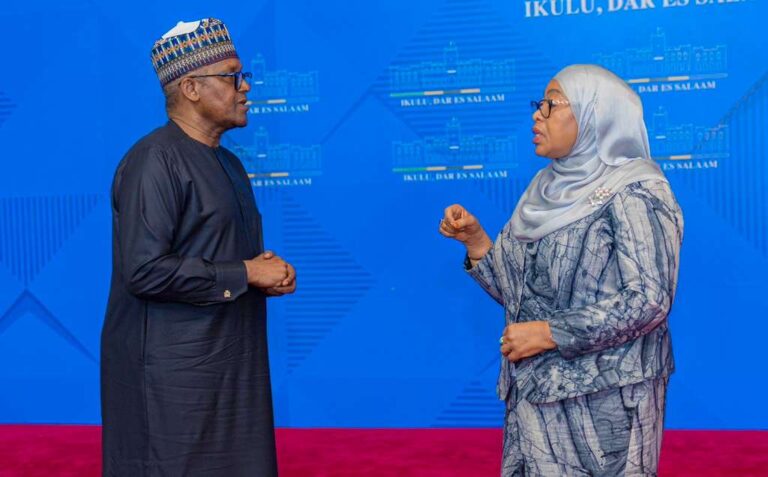
    Dangote was unequivocal about what draws serious investors to Tanzania: policy consistency, currency stability, and decisive leadership. He praised President Samia Suluhu Hassan for her responsiveness and follow-through, noting that challenges faced by his group were resolved promptly once raised at the highest level.

    “Tanzania is like a scratch card which you only see the number when you scratch it,” he said. A metaphor for a country whose full economic potential is yet to be fully revealed.

    For Tanzania’s youth, Dangote offered a direct message of encouragement, drawing on his own journey from buying four truckloads of cement daily to building a conglomerate targeting a place among the world’s 120 largest companies. “There is nothing that is impossible,” he said. “The future is very bright.”


    Dangote Group’s expansion plans in Tanzania represent a convergence of energy sovereignty, food security, and infrastructure development. Pillars that could fundamentally reshape East Africa’s economic architecture in the decade ahead.

  • Trump and Xi Jinping Reset U.S.-China Relations With Elon Musk and America’s Top CEOs

    Trump and Xi Jinping Reset U.S.-China Relations With Elon Musk and America’s Top CEOs

    President Donald Trump and Xi Jinping Reset U.S.-China Relations in Historic Beijing Summit With Elon Musk and America’s Top CEOs

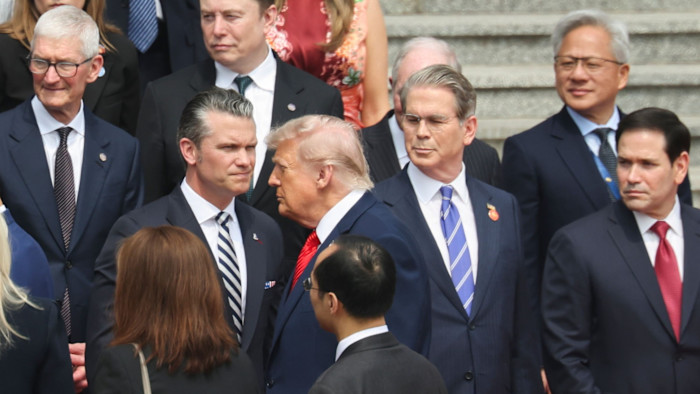
    Beijing, China — May 14, 2026 | In one of the most consequential diplomatic gatherings of the decade, U.S. President Donald Trump touched down in Beijing for a high-stakes two-day state visit with Chinese President Xi Jinping, bringing with him a formidable delegation of 17 of America’s most powerful business leaders. The summit, held at the iconic Great Hall of the People, signals a pivotal moment in U.S.-China relations. One that could reshape global trade, technology cooperation, and geopolitical stability for years to come.

    A Power Delegation Like No Other

    Donald Trump and Xi Jinping

    The roster of executives accompanying Trump reads like a who’s who of American industry. Elon Musk, CEO of Tesla and SpaceX, stood prominently among the delegation, marking his return to the president’s inner circle on the world stage. Apple CEO Tim Cook, Nvidia’s Jensen Huang, BlackRock Chairman Larry Fink, Visa CEO Ryan McInerney, Qualcomm CEO Cristiano Amon, Blackstone’s Stephen Schwarzman, and diplomat Dina Powell were also among those making the trip. Notably, Jensen Huang joined the delegation after receiving a personal phone call invitation from President Trump himself. Thus, a testament to how central artificial intelligence and semiconductor policy are to these negotiations.

    Xi Jinping Opens China’s Doors

    President Xi Jinping rolled out an elaborate welcome for the American delegation, hosting a lavish state banquet at the Great Hall of the People. In his address to the assembled business leaders including Musk, Cook, and Huang. Xi conveyed that China remains committed to opening wider to international business and investment. The message was warmly received by executives who praised the critical importance of the Chinese market to their global operations.

    Xi also introduced what observers described as a new diplomatic framework, expressing agreement with Trump on building a “constructive relationship of strategic stability” — a formulation designed to provide long-term guidance for bilateral ties extending well beyond the current administration.

    Elon Musk, The Summit’s Standout Figure

    Elon Musk with son X Æ A-Xii 

    Among all the executives present, Elon Musk generated considerable attention both inside the summit halls and across social media. The Tesla and SpaceX CEO attended the state banquet and was seen mingling with Chinese business leaders and posing for photographs. In a particularly memorable moment, Musk brought his six-year-old son X Æ A-Xii to the Great Hall of the People. Notably, a personal touch that humanized one of the world’s most closely watched diplomatic gatherings.

    Trade, Technology, and Geopolitics on the Agenda

    The substantive agenda was as ambitious as the guest list. Discussions covered artificial intelligence governance, semiconductor export controls, tariff reductions, and large-scale commercial procurement agreements. Boeing is reportedly closing in on a multi-billion dollar aircraft deal with Chinese partners, a transaction that could meaningfully offset retaliatory import pressures. Meanwhile, Nvidia’s Jensen Huang has been advocating for relaxed AI hardware export restrictions, arguing that overly tight controls risk accelerating China’s push toward domestic chip self-sufficiency.

    On the geopolitical front, Xi issued a measured but firm caution regarding Taiwan, warning that mishandling the issue could create unnecessary friction between the two nations. Trump, for his part, described the day’s talks as having gone “great” and expressed optimism about a “fantastic future together” for U.S.-China relations. He also confirmed that Xi pledged not to provide weapons support in ongoing regional conflicts. Hence, a significant diplomatic development.

    A Summit That Could Define a Generation

    With both leaders striking a cordial and forward-looking tone, longtime U.S. diplomats characterized the meeting as a genuinely encouraging sign. The presence of America’s most influential corporate executives alongside the president underscores a clear strategy: diplomacy backed by the full weight of American economic power. Whether this summit marks the beginning of a durable détente or a temporary thaw remains to be seen, but the world is watching Beijing very closely.

  • The Nairobi Declaration at Africa Forward Summit 2026 Explained (With PDF)

    The Nairobi Declaration at Africa Forward Summit 2026 Explained (With PDF)

    THE NAIROBI DECLARATION, A FRAMEWORK FOR SHARED GROWTH AND INNOVATION Africa Forward Summit 2026 · Nairobi, Kenya · 12 May 2026

    On 12 May 2026, history was written in Nairobi. African heads of state, government representatives, and the French Republic formally adopted the Nairobi Declaration at the Africa Forward Summit. A sweeping, eleven-pillar framework titled “Africa-France Partnership for Growth and Innovation.” Convened for the first time ever on English-speaking African soil, the Summit brought together more than 30 African leaders alongside business executives, international financial institutions, and civil society figures. All converging on Kenya’s capital to chart a bold new course for the continent.

    The declaration, adopted under the theme Africa Forward, is grounded in the principles of mutual respect, shared responsibility, and co-development. It does not treat Africa as a beneficiary of external generosity. It frames the continent as a co-architect of global economic leadership, innovation, and sustainable prosperity.

    Eleven Pillars, One Vision

    The Nairobi Declaration is structured around eleven thematic pillars, each representing a domain where African nations and France have committed to concrete, measurable cooperation. Far from diplomatic platitudes, the declaration sets out detailed commitments. Notably, from reforming global financial institutions to building African language AI models, from securing maritime corridors to unlocking concessional finance for the continent’s most vulnerable economies.

    The Nairobi Declaration

    Read: The Nairobi Declaration PDF

    The eleven pillars are: Peace, Security and Strategic Autonomy; Sustainable and Value-Added Agriculture; Resilient Health Systems; Green Industrialisation and Energy Transition; the Blue Economy; Digital Transformation and Artificial Intelligence; International Financial Architecture Reform; People, Skills and Innovation; Infrastructure, Trade and Regional Integration; Mobilising Resources for Transformation; and A Shared Vision for Transformation.

    Peace and Security Africa’s Own Architecture

    The declaration opens with a firm commitment to African-led peace and security solutions. The signatory nations have pledged to strengthen the African Union’s Peace and Security Architecture, support the full operationalisation of UN Security Council Resolution 2719, and build collective capacity to address terrorism, cyber threats, transnational crime, and illicit financial flows. The Co-Chairs’ Declaration from the Peace and Security session is equally unequivocal: it calls on permanent members of the Security Council to refrain from using the veto when mass atrocities are being committed, and demands a comprehensive reform of the Council to grant Africa equitable representation. Hence, in line with the Ezulwini Consensus and the Sirte Declaration.

    Critically, the declaration rejects the privatisation of security by external operators whose interests diverge from those of African peoples. A pointed reference to the proliferation of foreign mercenary forces on the continent. African ownership of peace processes is non-negotiable under this framework.

    Agriculture and Health Sovereignty on the Frontlines

    Two of the declaration’s most consequential pillars address the immediate daily realities of African populations: food security and health. On agriculture, the parties commit to agro-industrialisation, value chain development, digital precision farming tools, and the empowerment of women, youth, and smallholders through finance and land tenure reform. The African Continental Free Trade Area (AfCFTA) is positioned as the primary vehicle for transforming raw commodity exports into a driver of industrialisation and economic sovereignty.

    On health, the declaration advances a vision of health sovereignty. Building Africa’s own capacity to produce vaccines, medicines, diagnostics, and medical technologies through the frameworks championed by Africa CDC, the African Medicines Agency, and the AfCFTA. The African Pooled Procurement Mechanism is specifically endorsed as a strategic instrument to leverage collective purchasing power and expand affordable access to life-saving health products across the continent.

    Green Industrialisation, Energy as a Development Right

    Reliable, affordable, and sustainable energy is described in the Nairobi Declaration as essential, not aspirational. The parties commit to promoting green industrialisation through renewable energy, green hydrogen, hydropower, geothermal, and nuclear power. Africa’s critical minerals long extracted with minimal local benefits, are explicitly recognised as a sovereign asset, with commitments to respect national control over natural resources and promote local beneficiation, value addition, and sustainable processing.

    The declaration aligns with the Africa Green Industrialisation Initiative (AGII) and Accelerated Partnerships for Renewables in Africa (APRA), and calls for a just energy transition that reflects Africa’s differentiated responsibilities under the Paris Agreement.

    The Blue Economy, the Oceans as Strategic Frontier

    In a declaration notable for its breadth, the Blue Economy pillar stands out for its strategic depth. The ocean is framed as critical for food security, biodiversity, trade corridors, maritime energy transition, and climate stability. The parties commit to non-militarised joint action against piracy, illegal fishing, and trafficking; to the timely adoption of the IMO Net Zero Framework; and to investment in low-carbon maritime solutions and blue carbon ecosystem conservation. African maritime sovereignty and national ownership of maritime data and infrastructure are expressly affirmed.

    Digital Transformation and AI as Africa’s Third Path

    Perhaps the most forward-looking pillar in the Nairobi Declaration concerns digital transformation and artificial intelligence. Nairobi, already one of Africa’s premier technology hubs. Proved a fitting backdrop for commitments that explicitly invoke what the declaration calls “a third path for Africa”: one grounded in strategic autonomy, reduced dependence on concentrated technological power, and transparent, rights-respecting technologies.

    The parties commit to developing African language models, local datasets, and open-weight AI systems, while mobilising investment in regional data centres, broadband connectivity, and clean energy for digital infrastructure. The declaration draws on the AU Continental AI Strategy, the UN Global Digital Compact, and the Paris AI Action Summit of 2025. It also addresses the protection of African creative intellectual property in the digital economy. A recognition that innovation and culture are inseparable.

    Financial Architecture Reform Africa’s Voice in Global Governance

    The declaration is direct in its challenge to an international financial architecture it describes as inadequate for contemporary realities. The parties commit to realigning IMF quota shares in favour of underrepresented countries, securing Africa’s enhanced representation on the IMF Executive Board. Notably, including the 25th Chair created in November 2024 for Sub-Saharan Africa, and strengthening implementation of the Common Framework between the G20 and Paris Club for debt restructuring.

    A separate joint statement from the Summit’s lunch session, signed alongside representatives of the IMF, World Bank Group, African Development Bank, the EBRD, and the European Investment Bank, calls on major economies to recognise their shared responsibility in reducing global macroeconomic imbalances. It specifically identifies structural overcapacities and distortive non-market policies as forces that depress African commodity prices, undermine nascent industries, and discourage foreign direct investment. Thus, calls on France to convey these concerns to the G7 Summit in Évian in June 2026.

    A Historic Host, a Historic Moment

    Africa Head of States, President Emmanuel Macron and Dignitaries

    Kenya’s role as host carries its own significance. This is the first Africa-France Summit to be held in a country that was never colonised by France. A deliberate signal of the partnership’s evolution toward genuine equality. President William Ruto was lauded for his stewardship of the event, with French President Emmanuel Macron describing the Summit as “the beginning of a new era.”

    President Emmanuel Macron

    Botswana’s President Duma Boko, speaking exclusively to BBC Africa on the margins of the Summit, captured the mood succinctly: the gathering is an opportunity to push for freer movement of people and goods across the continent, and to position African nations strategically in their relations with global powers.

    https://web.facebook.com/share/v/1BRvVLgZgn

    Boko also delivered a message to Africa’s young people: they are not merely the leaders of tomorrow. They are the problem-solvers of today, called to the frontlines of their nations’ transformation. The numbers bear out the urgency: Africa must absorb more than 10 million young people entering the workforce every year, a demographic tide that, if well-directed, represents the continent’s most valuable asset.

    A Roadmap, Not a Resolution

    What distinguishes the Nairobi Declaration from previous Africa-France summits is its operational specificity. This is not a statement of intent, it is a structured roadmap, with explicit calls on ministers and competent authorities to identify, prioritise, and advance concrete cooperation under each pillar. The declaration calls upon governments, the private sector, development partners, and civil society to act in concert.

    The summit’s emphasis on mutual benefit, shared value creation, and co-investment, rather than traditional aid-based paradigms. Hence, marks a genuine shift in how Africa’s partnerships with external powers are framed and pursued. From advancing the New African Financial Architecture for Development championed by the African Development Bank Group, to unlocking up to $6.4 billion in annual guarantee issuance for African projects by 2030. Thus, the mechanisms are being built, not merely promised.

    The Nairobi Declaration affirms, in eleven pillars and thousands of words, a truth that Africa’s leaders have long held: the continent is not a problem to be solved by others. It is a partner, in production, in innovation, in shaping the rules of a global system that has too often been built without it. That partnership, on terms of mutual respect and sovereign equality, begins now.


    Adopted in Nairobi, Republic of Kenya · 12 May 2026

  • Africa’s Richest Man Aliko Dangote on Opening Africa Industrialisation & the $20B Refinery

    Africa’s Richest Man Aliko Dangote on Opening Africa Industrialisation & the $20B Refinery

    Aliko Dangote, Africa’s richest man and most ambitious industrialist, shares his vision for opening Africa at IFC 

    When Aliko Dangote speaks about Africa, boardrooms listen. As the continent’s wealthiest individual and the founder of Dangote Industries. A conglomerate spanning cement, petrochemicals, fertilizers, agriculture, and energy. Dangote is not merely diagnosing Africa’s challenges. He is spending tens of billions of dollars solving them. In a landmark conversation at the International Finance Corporation (IFC) headquarters, hosted by IFC President Makhtar Diop, Africa’s most celebrated industrialist laid out an ambitious, investment-driven blueprint for a continent on the cusp of transformation.

    The African Renaissance From Potential to Prosperity

    For decades, conversations about Africa have orbited the word “potential.” Dangote is determined to retire that word in favour of measurable, on-the-ground results. To accelerate that shift, he assembled a coalition of Africa’s most consequential business minds under the banner of the African Renaissance Group. A private-sector think-and-do tank with a singular mandate: convert continental opportunity into real economic growth.

    The group’s founding diagnosis was stark. Despite being home to some of the world’s richest natural resources, Africa’s own entrepreneurs face structural barriers that would be unthinkable elsewhere. Dangote himself requires 38 different visas to travel freely across the continent he is rebuilding. “How do I invest if I am not able to move around?” he asked pointedly. The group is advocating urgently for free movement of people, goods, and services. These changes Dangote describes as non-negotiable prerequisites for a prosperous Africa.

    “If I don’t invest my own money, I can never go to any conference and convince people that Africa is a good place to invest. But right now, I have a voice.”

    — Aliko Dangote, Founder, Dangote Industries

    The Refinery That Defied Expectations

    No single project encapsulates Dangote’s industrial philosophy quite like the Dangote Petroleum Refinery in Lagos. A facility that global trading companies and multinational corporations quietly hoped would never materialise. Nigeria, Africa’s largest oil producer, was at one point exporting 2.4 million barrels of crude per day while importing every drop of gasoline, jet fuel, and cooking gas its citizens consumed. The economic irony was as painful as it was costly.

    Dangote resolved to end that paradox. The refinery, built at a cost exceeding $20 billion, is now fully operational and processing crude at a stable rate of 650,000 barrels per day. A figure tested as high as 661,000 barrels. Remarkably, Dangote had never personally dealt in crude oil before undertaking the project. “I always avoided crude oil,” he confessed. “It is just because I have seen my country suffering.” Every nut, bolt, and piece of equipment was procured, shipped, and assembled under a vertically integrated engineering, procurement, and construction model that Dangote managed in-house. Thus, a feat of logistical ambition that few private actors anywhere in the world have matched.

    The refinery is slated for a public listing, and in a defining move toward continental wealth-building, Dangote intends to open it to African retail investors across the continent. Dividends will be calculated and paid in US dollars, with options for shareholders to receive payment in Naira, South African Rand, or other local currencies. Hence, a structure designed to make African capital work for African people.

    Aliko Dangote’s Ambitious Plans for Africa

    The refinery is one chapter in a much larger industrial story. Dangote Industries is simultaneously pursuing a portfolio of critical infrastructure investments calibrated to address Africa’s most acute economic deficiencies.

    Within approximately two and a half years, Dangote expects his group to become the world’s largest fertilizer company, with a production capacity of 12 million tons of urea annually. Potash and phosphate mining operations are being developed in the Democratic Republic of Congo and Brazil. An 18-meter draft deepwater port, one of the largest on the continent is under construction. A 20,000-megawatt power generation programme is in progress. LNG infrastructure is being developed. Each of these investments targets a structural gap that has historically made Africa dependent on imports and foreign capital.

    Water, Agriculture, and the Fight Against Poverty

    Running quietly beneath Dangote’s industrial headline projects is an equally consequential commitment to water infrastructure. His operations from cement plants to the refinery itself, have illuminated how foundational water access is to every form of economic activity. The Dangote refinery alone stores 440 million litres of treated water, cycling and recycling it through its processes.

    Nigeria is home to approximately 400 mini-dams, many of which are idle, silted, or in disrepair. Dangote is working with IFC and the World Bank Group to rehabilitate these assets. Functional dams enable year-round irrigation, which supports agriculture, generates livelihoods, and critically removes the conditions of hopelessness that fuel insecurity in the Sahel and across the wider continent. “Most of these conflicts we are having, especially in the Sahel, they will go away,” Dangote said. “Because why do you think that people want to go and risk their lives? It is because they have no jobs.”

    Agriculture, in Dangote’s framework, is the ultimate jobs engine. He projects that scaling his agricultural operations will grow his workforce from the current 51,800 employees to approximately 200,000. A transformation that would make Dangote Industries one of the largest private employers on the continent.

    A Legacy Built on African Capital for African People

    Dangote’s own story is the archetype he wishes to multiply. He began his career selling four truckloads of cement per day through an allocation from a family member. His first independent venture came in 1981 with a 5,000-ton sugar import license. Every subsequent expansion, cement, flour, pasta, petrochemicals was built on reinvested earnings. Dangote Industries has never paid an external dividend at the parent company level; every dollar of profit has been ploughed back into building the next enterprise.

    That discipline is now positioned to reward a continent. The planned IPO of the refinery, alongside an African investor vehicle being developed in partnership with Nigerian and Kenyan financial regulators, could inject billions of dollars of dividend income directly into the hands of African retail investors. A historically unprecedented transfer of industrial wealth to ordinary citizens of the continent.

    Aliko Dangote
    Aliko Dangote

    “Agriculture is not a poor man’s business anymore. That is what can actually take our people out of poverty.” — Aliko Dangote, Founder, Dangote Industries

    A Partnership to Scale

    The conversation between Dangote and IFC’s Makhtar Diop was as much a strategic alignment as it was an interview. IFC has been a financial partner to Dangote Industries since at least 2005, when it led a $478 million financing round. A seven-year loan that Dangote’s group repaid in 18 months. When Dangote subsequently called in his lenders to repay them, IFC insisted its capital be redirected into the fertilizer business rather than returned. A signal of institutional confidence in the continent’s industrial future that Dangote described as profoundly meaningful.

    World Bank Group President Ajay Banga, a personal friend of Dangote’s has added political momentum to this partnership. Together, these institutions represent the kind of public-private alignment that can move the needle at continental scale: patient capital, regulatory expertise, environmental and social governance standards, and the credibility to crowd in additional global investors.

  • Bitcoin Rebound Above $80,000 Pushes Binance SAFU Reserve to $1.2B

    Bitcoin Rebound Above $80,000 Pushes Binance SAFU Reserve to $1.2B

    Bitcoin’s rebound above $80,000 has pushed the Binance SAFU fund reserve to $1.2B. Learn what the growing Binance SAFU fund means for everyday users and the crypto market.

    The Binance SAFU reserve has climbed back to an impressive $1.2 billion in total value, buoyed by Bitcoin’s strong recovery above the $80,000 price level. A milestone that reinforces the exchange’s commitment to protecting its global user base.

    Binance’s Secure Asset Fund for Users, widely known as the Binance SAFU fund. It was established years ago as a dedicated emergency reserve, designed to compensate users should the platform ever face an extraordinary security event or systemic crisis. As of May 7, 2026, that fund has returned to a $1.2 billion valuation, underlining the strength of Binance’s financial safeguards at a time when the broader crypto market is regaining upward momentum.

    How the Binance SAFU Fund Reached $1.2B

    The resurgence of the Binance SAFU reserve is directly tied to a bold strategic decision made in February 2026, when Binance acquired 15,000 BTC at an average price of approximately $69,244 per Bitcoin, totalling roughly $1 billion in investment. At the time, markets were navigating a period of considerable volatility, and the purchase signalled a powerful vote of confidence in Bitcoin’s long-term fundamentals.

    Binance SAFU reserve

    That conviction has since been rewarded. According to data from CryptoQuant, the Binance SAFU fund wallet is now up approximately $228 million in unrealised gains, with Bitcoin’s recovery above $80,000 propelling the total reserve value to the $1.2 billion mark. For users holding assets on the platform, whether they are making a standard Binance to rands conversion, managing a Binance South Africa minimum deposit, or executing a Binance 2FA withdrawal. Thus, this reserve functions as an invisible but vital safety net.

    What the SAFU Fund Means for Everyday Users

    For the millions of individuals who use Binance RSA and interact with the platform daily. From those curious about the Binance minimum withdrawal ZAR limits to traders monitoring live markets. The SAFU fund represents something deeply important: accountability. Unlike many platforms that operate without a formalised emergency buffer, Binance has maintained a dedicated Binance cash reserve specifically ring-fenced for user protection.

    The fund’s recovery to $1.2 billion is also significant context for newer participants in the South African market. Whether a user is taking advantage of the Binance free R4000 introductory incentive, investigating the Binance R4000 deposit bonus, or simply learning what the SAFU words stand for, the underlying message remains consistent. Binance has built structural protections that go far beyond industry norms.

    Binance
    Binance

    A Strategic Outlook Backed by Conviction

    Binance’s decision to convert a substantial portion of its SAFU reserve into Bitcoin reflects a long-term strategic orientation rather than a reactive measure. By purchasing 15,000 BTC during a market correction, the exchange demonstrated disciplined positioning. Hence, acquiring assets at a relative discount and holding them through renewed market strength. That positioning has generated meaningful upside, with the $228 million appreciation now sitting within the fund.

    The Binance SAFU reserve reaching $1.2 billion is, above all, a user-centric achievement. It signals that as Bitcoin rallies and market confidence returns, the infrastructure protecting everyday traders and long-term holders only becomes more robust. For the global Binance community and particularly for users across Africa navigating a dynamic crypto landscape, that is a development well worth understanding.


    For informational purposes only. Not financial advice.