Category: World

  • Tosin Eniolorunda CEO Moniepoint Journey to Building a Unicorn in Africa

    Tosin Eniolorunda CEO Moniepoint Journey to Building a Unicorn in Africa

    Tosin Eniolorunda CEO Moniepoint on Journey on How He Built His Unicorn at the Platform Nigeria

    There are entrepreneurs who build companies, and then there are those who build the infrastructure on which entire economies run. Tosin Eniolorunda CEO Moniepoint belongs firmly in the second category. As the co-founder and Group Chief Executive Officer of Moniepoint Inc., Oluwatosin Michael Eniolorunda has done something rare: he built a billion-dollar fintech unicorn, entirely from Nigeria, for Nigeria, and increasingly for the world.

    Today, Moniepoint processes over 14 billion transactions annually, worth approximately ₦500 trillion in value. Eight out of every ten offline transactions in Nigeria flow through its infrastructure. That is not a statistic. That is a legacy.

    Tosin Eniolorunda Biography

    Understanding Tosin Eniolorunda requires understanding where he came from. Born in Lagos, Nigeria, in September 1985, Tosin Eniolorunda grew up in the bustling city of Ibadan, Oyo State. He is the first of three children born to Rotimi Eniolorunda, an engineering contractor, and Ajoke Eniolorunda, a schoolteacher. Parents who instilled in him the twin values of hard work and intellectual curiosity.

    His family roots trace to Ose Local Government Area in Ondo State, though it was Ibadan that shaped his early worldview: a city with a slower pace, where buses waited for passengers and community life was orderly. It was a stark contrast to Lagos, a contrast that would later fuel his hunger when he arrived in the commercial capital.

    Tosin Eniolorunda Education Background

    Tosin Eniolorunda’s education background is one built on technical foundations. He attended the University of Ibadan Staff School from 1990 to 1995, then proceeded to Command Day School, Odogbo, Ibadan, for his secondary education, graduating in 2001. While there, he was already demonstrating his orientation toward problem-solving as president of the Junior Engineers, Technicians and Scientists (JETS) Club. Notably, a detail that speaks to an engineering mind developing long before any formal career.

    In 2002, he gained admission to Obafemi Awolowo University (OAU), where he studied Mechanical Engineering, graduating with a bachelor’s degree in 2007. It was during his time at OAU that he began to teach himself software development, sensing that the future belonged not to hardware but to systems, software, and digital infrastructure. His instinct would prove prophetic.

    Standing on the Shoulders of Interswitch

    After graduating, Tosin Eniolorunda joined Interswitch in 2009 as a software engineer. His rationale was deliberate and strategic: he wanted to stand on the shoulders of a giant in order to see further. Over six years at Interswitch, he rose from software engineer to senior software manager and head of application development. In that role, he developed the first point-of-sale software powering the majority of POS terminals in Nigeria. The work that gave him an intimate understanding of Nigeria’s payment gaps, its infrastructure weaknesses, and the vast population excluded from formal financial services.

    It was also at Interswitch that he met his co-founder Felix Ike, and, as Tosin has noted with characteristic warmth in public appearances, his wife.

    Tosin Eniolorunda and Felix Ike Founding Moniepoint in 2015

    In 2015, Tosin Eniolorunda and Felix Ike left Interswitch to co-found TeamApt. A company initially focused on developing backend banking software for financial institutions. The name would later change, and so would the mission.

    Tosin bootstrapped the company using his own personal savings, determined to build something that addressed the fundamental unreliability of Nigeria’s payment systems. The company was profitable within two years without any external funding, a feat that speaks to the discipline and clarity of execution at the heart of the Moniepoint story. In 2019, TeamApt raised $5.5 million in Series A funding from Quantum Capital, and in 2021, it secured additional backing from Novastar Ventures.

    By 2022, the company rebranded to Moniepoint Inc., signalling a new chapter: no longer just a B2B banking software firm, but a full-service business bank and payments platform serving Nigeria’s massive informal economy.

    Built His Unicorn at Nigeria

    The moment that truly established Moniepoint’s place in Nigeria’s financial consciousness came during the 2023 cash crunch, when the Central Bank of Nigeria restricted the supply of physical currency. While traditional banks struggled, Moniepoint’s infrastructure is reliable, fast, and built specifically for the realities of an emerging market. Handled the surge in demand. Businesses that had never used a POS terminal were suddenly depending on Moniepoint to survive.

    That episode compressed years of potential adoption into weeks. Moniepoint didn’t just survive the crisis; it emerged from it as a household name.

    In October 2022, the company raised $110 million in Series B funding led by Index Ventures. Next in 2023, it achieved unicorn status following a $50 million raise that valued the company at over $1 billion. In October 2024, Development Partners International led a further round of over $200 million in Series C funding, with participation from Google’s Africa Investment Fund. As of 2025, Moniepoint employs approximately 5,000 people across 17 countries and serves roughly 6 million businesses and 10 million personal customers on its platform.

    The Financial Times has ranked Moniepoint as one of Africa’s fastest-growing companies for three consecutive years.

    Tosin Eniolorunda Age and Personal Life

    Tosin Eniolorunda was born on September 11, 1985, making him 39 years old as of 2025. He is married and has two children. Despite his public prominence, he is known for keeping his family life private, a deliberate choice that reflects his focused and disciplined character.

    He currently resides in the United Kingdom, though he maintains deep roots in Nigeria and travels frequently for Moniepoint’s operations. In interviews and public appearances, Eniolorunda often speaks about the challenge of building world-class organizations while managing internal complexity. Thus, a reflection of the same systems-thinking that has defined his career.

    Tosin Eniolorunda Net Worth

    Tosin Eniolorunda’s net worth is estimated to be between $30 million and $100 million, with estimates varying based on his equity stake in Moniepoint and the company’s evolving valuation. As the co-founder and CEO of a billion-dollar fintech platform that has raised over $200 million in equity from global investors and continues to scale aggressively. Hence, his financial standing is expected to grow significantly in step with Moniepoint’s trajectory.

    Tosin Eniolorunda Parents and Siblings

    Tosin Eniolorunda is the first of three children. His father, Rotimi Eniolorunda, worked as an engineering contractor, and his mother, Ajoke Eniolorunda, was a teacher. In various interviews, Eniolorunda has credited his upbringing. Notably, disciplined, education-focused, and rooted in Ibadan’s quieter rhythms, as the bedrock of his professional values. While he rarely speaks about his siblings publicly, his own philosophy around family, mentorship, and community is evident in the philanthropic work he has pursued alongside Moniepoint.

    Is Tosin Eniolorunda Married?

    Yes, Tosin Eniolorunda is married. He met his wife during his time at Interswitch, a personal detail he has shared in public addresses. Often drawing laughter from audiences when he notes, almost as an aside, that Interswitch gave him both a co-founder and a life partner. He and his wife have two children. He maintains a strong separation between his public role and private family life, a boundary he has consistently respected even as his public profile has grown.

    The Tosin Eniolorunda Foundation STEM

    Beyond Moniepoint, Tosin Eniolorunda has invested in building Nigeria’s next generation of innovators through the Tosin Eniolorunda Foundation. The foundation is focused on education, innovation, and technology development. Among its initiatives, it donated a multimillion-naira CAD-CAM laboratory to Obafemi Awolowo University, his own alma mater to strengthen STEM learning infrastructure. The foundation also runs the Moniepoint CEO Innovation Challenge, which provides grants and mentorship to outstanding students.

    These efforts reflect a consistent theme in Eniolorunda’s public philosophy: Nigeria’s greatest competitive advantage is its people, and that advantage must be cultivated intentionally.

    Leadership Philosophy of Execution Over Ideas

    In his own words, delivered to a room full of entrepreneurs and aspiring founders: “Ideas are free. Execution is everything.”

    Tosin Eniolorunda’s framework for building great organizations rests on seven pillars, goals, structure, people, incentives, context, systems, and governance. He speaks of these not as management theory but as diagnostic tools: when something goes wrong in an organization, he argues, the failure can almost always be traced back to one or more of these seven fundamentals.

    His management style is meritocratic, urgency-driven, and customer-obsessed. He frequently speaks about the concept of “financial happiness” as Moniepoint’s north star. The idea that access to reliable, affordable financial services should be a baseline experience, not a privilege.

    Recognition and Awards

    Tosin Eniolorunda’s contributions to Africa’s fintech sector have earned him sustained recognition. In 2021, he appeared on the cover of Forbes Africa magazine. That same year, he and co-founder Felix Ike were named Endeavor Entrepreneurs by global entrepreneurship network Endeavor. In 2022, New African magazine named him among the 100 Most Influential Africans. Moniepoint has received the Financial Inclusion Award, recognition from CB Insights as one of the world’s most promising fintech startups, and multiple accolades from the Financial Times for growth performance.

    A Nigerian Story Still Being Written

    The story of Tosin Eniolorunda CEO Moniepoint is not a story about fintech in the abstract. It is a story about a boy from Ibadan who arrived in Lagos for the first time in 2007, landed at Ojota Motor Park, saw the chaos of a city in motion, and decided he would be part of its future. It is a story about building reliable infrastructure in an unreliable environment, about hiring when no one believed, about staying the course when the easier path was to be comfortable.

    Mr. Tosin Michael Eniolorunda has built one of Africa’s most consequential technology companies, not by accident, but by design. Moniepoint today stands not merely as a fintech unicorn, but as proof that world-class companies can be conceived, funded, and scaled from Nigerian soil, by Nigerians, for Nigerians, and ultimately for the world.

  • SASSA Payment Dates for May 2026 Full Status Check Guide

    SASSA Payment Dates for May 2026 Full Status Check Guide

    Check the confirmed SASSA payment dates for May 2026. Find out when older persons, disability, and child support grants are paid

    For millions of South Africans, the beginning of each month brings one pressing question: when will my SASSA grant arrive? The South African Social Security Agency continues to be a vital pillar of support for the country’s most vulnerable citizens, and staying informed about the SASSA May 2026 payment dates is essential for proper financial planning. Whether you depend on the Old Age Grant, Disability Grant, Child Support Grant, or the SRD R370, this guide covers everything you need.

    SASSA May 2026 Payment Dates Confirmed

    SASSA has confirmed that social grant payments for May 2026 will begin on Tuesday 5 May for older persons, followed by disability grants on 6 May and children’s grants on 7 May, with beneficiaries whose accounts have been flagged for review receiving payment on 8 May.

    According to SASSA, the staggered system is guided by a clear operational framework. “The general principle for determining the grant payment dates for social grants is to ensure they are paid as early in the month as possible, staggered over three days,” the agency confirmed.

    SASSA has also noted that payments should not be made a day after a holiday, should not be made on the first of the month or a Monday, and should not fall over a weekend. In cases where a payment date coincides with a weekend or public holiday, disbursements automatically move to the next working day.

    Grant Amounts for May 2026

    The May 2026 payouts reflect the new grant amounts that came into effect on 1 April 2026, following the Budget Speech announcement.

    The Older Persons Grant, Disability Grant and Care Dependency Grant each rose by R80 to R2,400 per month, with an additional R20 top-up for older persons aged 75 and above. The Child Support Grant rose by R20 to R580 per month and the Foster Care Grant moved up to R1,250 per month.

    These increases represent the government’s commitment to ensuring that social grants remain responsive to the rising cost of living, offering meaningful financial relief to households across the country.

    SRD R370 Payment Dates for May 2026

    The SASSA SRD grant operates differently from the main social grants. The SRD R370 grant operates on an individual basis. Payment dates are issued after each application is verified, and these payments usually take place later in the month.

    For May 2026, SRD R370 grant payments will be processed between 24 May 2026 and 30 May 2026. Beneficiaries are encouraged to check their personal payment date on the official portal rather than relying on general estimates, as exact dates vary per individual.

    How to Do a SASSA Status Check for SRD R370

    Performing a SASSA status check is straightforward when you use the right channels. The official and most secure method is to visit srd.sassa.gov.za, the government’s dedicated SRD portal.

    To perform a SASSA status check online, open your browser and go to the official portal at srd.sassa.gov.za, click on “Check Your Status” or “Application Status,” enter your 13-digit South African ID number, and enter the mobile phone number you used when applying. Your status for each payment month will then be displayed.

    You can also use the direct URL srd.sassa.gov.za/sc19/status

    Commonly referred to as the SASSA status check SC19, to view your result instantly. This is the same portal whether you are checking the SASSA status check for SRD R370 or the older sassa status check for r350 payment, which was the grant’s previous amount before it was raised to R370.

    For those without data access, SASSA’s WhatsApp self-service channel is available 24/7. Save 082 046 8553 to your contacts, open WhatsApp, send “Hi,” and follow the menu prompts. You can also dial 1347737# from your cell phone using the USSD option to check status without internet access.

    Understanding Your SASSA Status Check Result

    Once you complete your 370 SASSA status check, you will receive one of several results. An Approved status means you are confirmed for that payment cycle and your payment will follow within the SRD window. A Pending status means SASSA is still verifying your application across multiple government databases including SARS, UIF, and Home Affairs. A Declined status means you were not approved for that particular month, but you have the right to appeal.

    To appeal, request a reconsideration within 90 days via srd.sassa.gov.za by clicking “Request Reconsideration” on your status page. If denied again, a formal appeal can be filed with the Independent Tribunal, it is free and does not require a lawyer.

    Keeping Your Details Up to Date

    One of the most common causes of payment delays is outdated or incorrect banking information. To update your banking details, log into the SRD portal and select “Update banking details.” The system sends an OTP to your registered phone. Only use a standard savings or cheque account in your own name, and the ID number linked to the account must match your SASSA profile exactly. After updating, bank verification takes 7 to 14 business days before it reflects on your dashboard.

    Beneficiaries who have not yet completed e-life certification are urged to do so before their May payment date. The agency uses biometric and digital life certification to confirm ongoing eligibility. Skipping the process can pause future payments until the system is updated.

    No Rush, Funds Are Safe in Your Account

    SASSA has urged beneficiaries not to crowd pay points on the first day, noting that funds remain safely in accounts and can be accessed at any time after they are released. Whether you use a SASSA Gold Card, a Postbank account, or a commercial bank, there is no need to rush. Thus, your money will be there when you need it.

    Contact SASSA If You Need Help

    If a payment does not reflect on the expected date, beneficiaries should first check the SASSA balance on their card or banking app, then contact the SASSA toll-free helpline on 0800 60 10 11 between 08:00 and 16:00 on weekdays.

    SASSA reiterates its commitment to paying social grants to eligible beneficiaries at the right time and appeals to all beneficiaries who may not have received their grants on the specified dates to visit their nearest SASSA local office for assistance.

    Stay informed, use only official platforms like srd.sassa.gov.za, and never pay anyone claiming to offer assistance with your grant! SASSA’s services are always free.

  • Vusi Thembekwayo at Platform Nigeria 2026 on Founder’s Mindset & African Unity

    Vusi Thembekwayo at Platform Nigeria 2026 on Founder’s Mindset & African Unity

    Vusi Thembekwayo took the Platform Nigeria 2026 stage with his Founder’s Mindset framework, the four pillars of scale, and his powerful call for African unity.

    In a room charged with ambition and expectation, South African venture capitalist and serial entrepreneur Vusi Thembekwayo took the Platform Nigeria 2026 stage with a message stripped of sentiment and built entirely on structure: the world is drowning in capital, and the shortage has never been good founders.

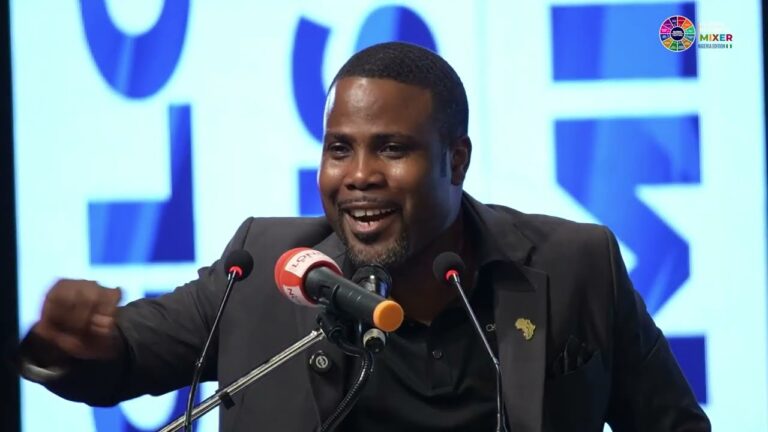
    Every edition of Platform Nigeria raises the stakes for what a business conference on the continent can look and feel like. But when Vusi Thembekwayo walks into a room, the atmosphere shifts. Africa’s most provocative business thinker, equal parts venture capitalist, author, and architect of scale. He arrived at Covenant Nation, Lagos, with slides, 30 minutes, and a stated intention to offend his audience into clarity. He delivered on all three.

    Thembekwayo is the founder of My Growth Fund Venture Partners, now celebrating its tenth year in operation, and the founder of the School of Scale, a continent-spanning accelerator programme with offices in South Africa, Ghana, Kenya, Zambia, and Jamaica, and a head office in Delaware. He has sold more than one million copies of his books, chairs the Watermark Africa Fund private equity firm based out of the Dubai International Financial Centre, and is in the process of closing a first raise for 154. Apan-African fund, named for one continent and 54 countries, targeting family businesses in generational transition. His podcast, Ideas That Matter, was named among Apple’s top four global business podcasts in 2024, making it the only African podcast to feature in that category.

    WHO IS VUSI THEMBEKWAYO?

    Vusi Thembekwayo is a Johannesburg-born entrepreneur who turned personal exits into institutional conviction. After selling his first business, he used his own capital to prove a venture thesis that larger institutional investors were slow to back. The idea that African founders, given the right capital, frameworks, and discipline, could build globally competitive enterprises. He was right, and My Growth Fund has spent a decade substantiating it.

    What Thembekwayo does, at its core, is translate the invisible architecture of high-performing businesses into language that founders can act on. He advises governments and multinational corporations, but his most consistent audience is the entrepreneur who has outgrown their instinct and not yet built the systems that instinct cannot replace. That gap, between a good idea and a scalable business, is the territory he has made his life’s work.

    At Platform Nigeria 2026, he framed this gap in a way that cut through the inspiration-heavy conference atmosphere with surgical precision. Not every business owner, he argued, is a founder. Not every entrepreneur is a founder. Founders are distinguished not by what they build, but by how intentionally they build it. And specifically, by whether they build it to outlast and outgrow themselves.

    “There is more money today than there are good ideas and good founders. If you are not attracting the capital, the capital is not the problem. You are.”

    Vusi Thembekwayo, Platform Nigeria 2026

    THE NUMBERS BEHIND THE MESSAGE

    Thembekwayo opened his data with a PitchBook analysis of global mergers and acquisitions activity tracking founder-led business transactions from 1985 to the present. By the year 2000, approximately 40,000 deals were transacted annually, roughly 200 businesses changing hands every single working day. By 2020, that figure had climbed to around 60,000 deals annually, and the trajectory continues upward.

    He pointed to an extraordinary monetary reality: the United States has printed approximately 50 percent of all USD currency it has ever produced, across its entire history since 1776. In just the last five years. The implication for African entrepreneurs is direct. Capital is not scarce. Capable founders who can absorb and deploy it efficiently are.

    He then mapped four anchor markets: Nigeria, Ghana, Kenya, and South Africa. And identified a combined economic opportunity of over one trillion US dollars. Nigeria, Africa’s most populous nation with over 50 percent of its population under the age of 18, presents what Thembekwayo described as a demographic dividend of extraordinary proportions: more than 100 million people not yet economically active. The question for African entrepreneurs is not whether the opportunity exists. It is whether they have the discipline to execute on it.

    THE FOUNDER’S MINDSET: A FRAMEWORK, NOT A FEELING

    Thembekwayo’s central thesis at Platform Nigeria 2026 was built around what he calls the Founder’s Mindset. A structured way of thinking about growth, accountability, and scale that separates founders from everyone else in the entrepreneurial ecosystem. He outlined four critical reasons why most African entrepreneurs fail to scale, each one a system failure rather than a talent failure.

    THE FOUR PILLARS OF SCALE

    Synthesised Operations

    Building processes so robust that the business functions whether or not the founder is physically present. Systems over personalities.

    Growth Drivers, Not Noise

    Every business has three core actions that, if executed consistently, double revenue. Everything else is distraction. Leaders must identify the signal and remove the noise.

    Instinct to Insight

    Early-stage businesses survive on a founder’s gut feel. Scalable businesses run on data. The transition from “what I feel” to “what I know” is where most businesses stall.

    Aligned Incentives

    People perform at the level their incentive structures demand. Founders who build teams without aligning compensation and recognition to business outcomes will manage mediocrity indefinitely.

    He illustrated aligned incentives through his own operation. Speaking at Platform Nigeria was his fourth keynote of that week, with six more scheduled across three continents in the days that followed. He had not seen the final version of his presentation until the night before. Yet the deck was complete, polished, and precisely calibrated to the audience. Notably, because he had spent years building a team whose incentives are directly linked to client satisfaction scores gathered after every engagement.

    His head of operations, head of protocol, head of marketing, and executive assistant had each attended the briefing call he could not join. Their notes were processed through an internal AI system to identify the most relevant ideas from his speaking portfolio. A design team spread across South Africa, India, Pakistan, and Sri Lanka produced the visual presentation. His quality control lead reviewed the output and delivered the final deck two nights before the event. That is not coincidence. That is architecture.

    THE FIVE LEVELS FROM PROFESSIONAL TO FOUNDER

    Perhaps the most instructive section of Thembekwayo’s address was his breakdown of the five evolutionary stages of entrepreneurship. He began with the Professional, a person with a specialised skill who executes the work themselves. This is where every entrepreneur begins, and there is no shame in it. The problem is staying there.

    The second level, the Self-Employed individual, begins delegating non-value-adding tasks while retaining ownership of the core work. The third level, the Business Owner, writes down the rules and codes that govern how the business operates. Not implementing them: writing them. Most entrepreneurs never do this. The fourth level, the Entrepreneur, implements and scales those rules, pushing through what Thembekwayo called “implementation fatigue” the exhaustion that sets in when reality resists the projections on an Excel spreadsheet.

    The fifth and final level is the Founder. Founders do not merely build businesses. They plant a vision and construct the human infrastructure to bring that vision to life without their constant presence. As Thembekwayo put it, the clearest historical model of this is the ministry of Jesus Christ: a three-year engagement, twelve trained people, one compelling idea, and an institution that has outlasted every empire, currency, and corporation in recorded history.

    “Leadership is a mirror. Your ability to lead people is a consequence of your ability to lead yourself. Until you lead you, you have no business trying to lead other people.”

    Vusi Thembekwayo, Platform Nigeria 2026

    ON SOUTH AFRICA AND AFRICAN UNITY

    Thembekwayo closed his address with a message that extended well beyond the mechanics of business. Speaking directly to the political tensions that have flared between South Africa and other African nations in recent months, he made three carefully considered statements.

    First, he pushed back against the narrative that South Africans, as a people, are xenophobic. He acknowledged that xenophobic individuals exist, as they do in every society. But argued that characterising 65 million people, living across 11 official languages in one of the world’s most diverse nations, as uniformly hostile to other Africans is both inaccurate and counterproductive. South Africa’s largest companies, he noted, have boardrooms, C-suites, and executive teams populated by leaders from across the continent.

    Second, he identified what he believes is an active agenda to divide African nations against one another. Feeding that agenda by amplifying conflict online, he argued, serves forces that benefit from African disunity. The antidote is direct conversation, ground-level understanding, and the deliberate choice to reach across divides rather than perform outrage for global audiences.

    Third, he drew a sobering lesson from African political history. Kwame Nkrumah, the man who led Ghana to become the first liberated nation on the continent in 1957, was removed by his own people. Patrice Lumumba, the Congolese independence leader, met the same fate. The pattern of Africans undermining Africans, Thembekwayo argued, is not new. But it has to stop.

    His hope, expressed with evident sincerity, is that platforms such as this one, convened by Pastor Poju Oyemade and the Covenant Nation community. Thus, can become the meeting ground where African leaders choose unity over theatre, and substance over spectacle.

    WHY VUSI THEMBEKWAYO AT PLATFORM NIGERIA MATTERS

    Thembekwayo’s presence at Platform Nigeria 2026 is significant for reasons that extend beyond the quality of any single address. He represents a generation of African business thinkers who are building the intellectual infrastructure of the continent’s economic future. Hence, not waiting for Western validation, not importing frameworks developed for different markets, but generating original thinking rooted in African realities and tested against African conditions.

    His School of Scale has trained entrepreneurs across five countries. As his venture capital work has proven that black African founders, given the right support structures, can build businesses that attract serious institutional capital. His podcast reaches a global audience. And his willingness to speak plainly about capital markets, about operational discipline, about continental politics. Thus, makes him one of the rare voices that business leaders across Africa actually listen to.

    The message he brought to Lagos was not comfortable, and it was not meant to be. It was a challenge dressed as a keynote: stop hoping for your legacy. Start building it. The capital is there. The opportunity is there. The only question that remains is whether you are founder enough to reach it.

  • Kenya’s Wawira Njiru Joins Trevor Noah for a Powerful Conversation on Africa

    Kenya’s Wawira Njiru Joins Trevor Noah for a Powerful Conversation on Africa

    Wawira Njiru and Trevor Noah! Two African Visionaries on Feeding Futures and Building Change from the Ground Up

    Wawira Njiru and Trevor Noah Foundation founder Trevor Noah for a candid conversation at the Skoll World Forum, Oxford. Two African Visionaries on scaling homegrown solutions, feeding Africa’s future, and why investing in young people remains the continent’s most powerful act of hope. Co-hosted by the Skoll Foundation and the Trevor Noah Foundation. The evening brought together two African visionaries whose work, from 625,000 daily school meals in Kenya to education programs transforming youth across South Africa.

    From 25 Children to 625,000 Meals a Day

    Wawira Njiru’s origin story is as grounding as it is extraordinary. Growing up outside Nairobi, Kenya, she began sharing her lunch with classmates who had none. That simple act of generosity eventually became Food4Education, an organization now serving 625,000 hot meals every single day across 15 Kenyan counties. Powered by Africa’s largest green kitchen network, 180 kitchens, nearly 100 trucks, over 150 motorbikes, and a team of 5,500 staff. Especially, the majority of whom are women.

    Wawira Njiru’s age and background gave her an unconventional path to this impact. After completing high school in Kenya, she relocated to Australia for university, working in elderly care and disability services for four years to fund her own education. Notably, a reality very different from the café barista jobs the study-abroad brochures had promised. Those years of service, she reflected, gave her an intimate understanding of human dignity, mortality, and the quiet power of caring for others without recognition.

    “Mortality became so real for me,” Wawira shared, noting how that experience now infuses every decision at Food4Education. “It gave me a lot of perspective about this one precious life and what you must spend it on.”

    The Mechanics of a Meal: Precision at Scale

    What makes Wawira Njiru’s work remarkable isn’t just its heart, it’s the operational genius behind it. Each meal is scientifically designed to deliver 20 to 40 percent of a child’s recommended daily allowance of macro and micronutrients, served in portions of 550 to 650 grams. All meals are plant-based, sourced locally across Kenya, Ethiopia, and Tanzania, and cooked overnight in central kitchens to reach schools by 7 a.m. in alignment with Ministry of Education lunch schedules.

    Food4Education tracks cost per meal monthly across every kitchen, uses mobile payment data to predict daily attendance, and measures food yield to minimize waste. At just 30 cents per meal, the program operates with a precision that rivals global logistics companies.

    The organization’s iconic “Tap to Eat” wristband, inspired by metro cards. Allows parents to top up their child’s meal account via mobile money, processing close to a million transactions per day. For Wawira, this was never just about convenience. It was about dignity. Parents contribute what they can; the government and philanthropic partners subsidize the rest. Children tap their wristbands and receive their meals not as beneficiaries, but as young people whose families are providing for them.

    Trevor Noah: Comedian, Philanthropist, Champion of African Youth

    Trevor Noah needs little introduction as a global entertainer, but his philanthropic identity is equally compelling. The Trevor Noah Foundation, established in 2018 in Johannesburg, operates on the conviction that education is the seed from which everything grows. Its flagship programs reach thousands of students and educators across South Africa, and in 2024. Trevor announced a venture philanthropy fund to back local education innovators, grounded in the principle that people closest to the problem are best positioned to solve it.

    Trevor Noah’s parents, particularly his mother, feature prominently in his personal philosophy. He credits much of his outlook, including his relationship with humor, resilience, and continuous growth. Thanks to her radical honesty and willingness to evolve. “Don’t be afraid of letting go of the idea you hold of yourself today,” he reflected during the conversation. “Find the next one.”

    On stage with Wawira, Trevor drew on his own experience of aiming small to grow big. Every goal in comedy, philanthropy, and personal development, he argued. Started with something achievable, one gig, one push-up, one milestone at a time.

    Homegrown Innovation as Africa’s Greatest Asset

    Both leaders converged on a shared conviction: Africa’s solutions must be built from within. Wawira Njiru’s Food4Education succeeds precisely because its entire ecosystem: cooks, suppliers, distributors, community members, is local. Suppliers are parents of the children being fed. Community members are invested in quality because they know whose plates those meals end up on.

    Trevor framed this beautifully: “Good business is not the extraction of wealth but the expansion of wealth.” What Food4Education has built isn’t just a feeding program, it’s a community economy, with concentric circles of impact radiating outward from every kitchen.

    With Africa projected to have 2.5 billion people by 2050, one in four people on earth. Both Wawira and Trevor agree: the continent doesn’t just need good ideas. It needs ideas that scale, led by local leaders who think boldly, build practically, and never stop asking the children if they liked the food.

  • Sabastian Sawe Marathon Record Rewrites History in London Marathon 2026

    Sabastian Sawe Marathon Record Rewrites History in London Marathon 2026

    Kenyan Runner Sabastian Sawe marathon record, Rewrote History at the 2026 London Marathon with a new Marathon Record

    Sabastian Sawe becomes the first person ever to break the 2-hour barrier in official race conditions, storming to a historic 1:59:30 at the London Marathon.

    On the morning of April 26, 2026, the streets of London became the stage for one of the most extraordinary athletic achievements in human history. Sabastian Kimaru Sawe, a 29-year-old Kenyan long-distance runner, crossed the finish line of the London Marathon in 1 hour, 59 minutes and 30 seconds. Becoming the first athlete in history to break the two-hour marathon barrier under official, competitive race conditions.

    A World Record That Redefines the Possible

    The Sabastian Sawe marathon record did not just win a race. It obliterated a benchmark that generations of scientists, coaches, and athletes had long considered the final frontier of human endurance. His time of 1:59:30 shattered the previous world record of 2:00:35, held by the late Kelvin Kiptum and set in Chicago in 2023, by a stunning margin of one minute and five seconds.

    To put that into context: Sawe did not inch past history, he sprinted through it.

    The 2026 London Marathon men’s race produced results that seemed ripped from the pages of science fiction. Behind Sawe, Ethiopia’s Yomif Kejelcha crossed the line in 1:59:41, also breaking the two-hour mark in what was his marathon debut. Uganda’s Jacob Kiplimo finished third in 2:00:28, followed by Amos Kipruto in 2:01:39. In a single race, three men ran times that rank among the fastest in the history of the sport.

    Who Is Sabastian Sawe?

    Sabastian Kimaru Sawe was born on March 16, 1996, in Kenya. Standing at an athletic build suited for distance running, he has built his career with patient, deliberate precision. Before his historic London triumph, Sawe held the World Half Marathon Championship title and had previously clocked a marathon personal best of 2:02:05 on his debut. Itself a world-class performance that placed him among the elite from the very beginning.

    His training is rooted in the Kenyan tradition of high-altitude endurance work, building an aerobic engine capable of sustaining a sub-2:50-per-kilometre pace across 42.195 kilometres of road racing. The Sabastian Sawe London Marathon record is not the product of chance. It is the culmination of years of disciplined training, calculated race management, and elite coaching.

    On race day, Sawe wore the Adidas Adizero Adios Pro Evo 3, the revolutionary carbon-plated racing shoe that also carried Yomif Kejelcha to his own sub-2-hour finish. A shoe technology that is now firmly part of the conversation around modern marathon performance.

    London Erupts, Kenya Celebrates

    The reaction was immediate and global. Kenyan President William Samoei Ruto praised Sawe in personal terms, writing that the performance “redraws the limits of human endurance” and calling the victory “a defining moment” that places Sawe “firmly among the greats of global athletics.” The President added that the run “reminded the world of the power of determination.”

    Track journalists and fans worldwide expressed disbelief. Sports reporter Chris Chavez described it as a moment of pure shock, noting that Kejelcha’s sub-2-hour debut alongside Sawe made the race one of the most remarkable in distance running history. The Track & Field Gazette called it “insane levels of running never seen before in London.”

    The London Marathon has long been one of the fastest courses in the world, and on this day it delivered its greatest chapter.

    The Legacy of the Sabastian Sawe Record

    The significance of Sabastian Sawe’s achievement extends far beyond the sport of athletics. For decades, the sub-2-hour marathon was discussed the way the four-minute mile once was. A theoretical ceiling that many believed the human body could never breach in competition. Eliud Kipchoge famously ran 1:59:40 in 2019, but under specially arranged conditions outside of official race rules. Sawe has now done it where it counts most: in open competition, against the world’s best, for the record books.

    His place in history is assured. The Sabastian Sawe marathon record will stand as a monument to what becomes possible when talent, preparation, and the perfect moment converge on a cold London morning.

    For Kenya, for athletics, and for every runner who has ever laced up a pair of shoes and dreamed of what the human body can do. April 26, 2026 is a date that will never be forgotten.

  • John Ternus Apple’s Next Leader set to Replace Tim Cook

    John Ternus Apple’s Next Leader set to Replace Tim Cook

    Let’s dive into John Ternus CEO, Everything You Need to Know About Apple’s Next Leader change in 15 years.

    Apple has confirmed its most consequential leadership change in 15 years. John Ternus, the company’s longtime Senior Vice President of Hardware Engineering, will officially become Apple’s Chief Executive Officer on September 1st, 2026, succeeding Tim Cook, who has steered the company since 2011. For Apple followers tracking the story on Reddit, LinkedIn, and beyond, the appointment marks the dawn of a new engineering-led era for the world’s most valuable technology company.

    Who Is John Ternus? Age, Background, and Early Career

    John Ternus is 50 years old, a mechanical engineer by training, and a University of Pennsylvania alumnus whose entire professional life has been shaped by Apple. He is, by any measure, an Apple lifer having joined the company after just one previous job, where he worked on virtual headsets. That early experience proved prescient, given Apple’s eventual push into spatial computing with the Vision Pro.

    When Ternus first walked through Apple’s doors, it was, by his own account, both exhilarating and humbling. Speaking at a Penn Engineering commencement ceremony in 2024, he recalled being surrounded by people who seemed smarter and more confident than him, and crediting his willingness to ask for help as foundational to everything that followed.

    From those early days under Steve Jobs, Ternus rose steadily through the ranks, eventually becoming SVP of Hardware Engineering in April 2021. He has held and expanded that role ever since, most recently taking on the position of executive sponsor of Apple’s design team in early 2026. Hence, representing both hardware and software design in executive meetings.

    John Ternus Product Legacy That Speaks for Itself

    Few people in Apple’s history have touched as many of its defining products as John Ternus. His hands-on engineering involvement spans every generation of iPod, the iPhone, iPad, Mac, Apple Watch, AirPods, and the Vision Pro. That breadth is extraordinary even by Apple’s internally demanding standards.

    Beyond execution, Ternus has consistently shown the instincts of a product visionary. He championed the creation of iPadOS as a distinct platform designed to leverage increasingly powerful iPad hardware. Also advocated for the Apple Pencil’s magnetic charging system. He pushed for LiDAR integration in the iPhone before most consumers understood what it was for. And perhaps most significantly, he was one of the key architects behind Apple Silicon. The in-house chip transition that displaced Intel and established Apple as a genuine leader in local AI processing.

    That last achievement, accomplished alongside chip chief Johny Srouji, now stands as one of the most strategically important moves in Apple’s recent history. Together, Ternus and Srouji built the silicon foundation that underpins Apple’s entire AI roadmap going forward.

    John Ternus’s Net Worth and Salary

    John Ternus’s net worth is not formally disclosed, as is standard for Apple executives outside of required SEC filings. However, as SVP of Hardware Engineering, one of the most senior and revenue-critical roles at Apple. John Ternus’ estimated net worth is approximately $75 million, according to Celebrity Net Worth. His total compensation package has historically included base salary, equity awards, and performance bonuses that place him firmly among the highest-paid technology executives in the world. Apple’s SVP-level packages have typically been valued in the range of tens of millions of dollars annually when stock awards are included. His elevation to CEO will almost certainly bring a substantial increase in both salary and long-term equity compensation, consistent with packages awarded to chief executives of companies of Apple’s scale and market capitalization.

    John Ternus’s Personal Life

    John Ternus is a notably private individual, and that quality extends to his personal life. He is publicly known to be gay and married to a husband, though he has not spoken extensively about his family in public forums. He does not maintain a prominent personal presence on LinkedIn or other social platforms, keeping his professional footprint largely within Apple’s own official channels and product events.

    On the questions of John Ternus’s religion and politics, he has made no public statements, and no affiliation has been reported. Like the majority of Apple’s senior leadership, he appears to regard those domains as entirely personal. What does come through clearly in his public appearances and internal reputation is a grounded, values-driven character. Someone who genuinely believes in Apple’s mission to enrich customers’ lives and contribute positively to the planet.

    John Ternus as CEO for Apple’s Future

    Each of Apple’s CEOs has brought a defining strength to the role. Steve Jobs brought obsessive design sensibility. Tim Cook brought operational and supply chain mastery that scaled Apple into the world’s most profitable technology company. John Ternus brings deep engineering expertise, an intimate understanding of Apple’s products from the silicon level up.

    That foundation matters enormously right now. Apple faces a pivotal moment in artificial intelligence, with investor expectations high and questions about competitive positioning persistent. Ternus has been calm and direct on the subject, stating plainly that he does not believe Apple is behind. His confidence is grounded in Apple Silicon’s proven ability to run AI models locally on device. A genuine architectural advantage that competitors using cloud-dependent approaches cannot easily replicate.

    Looking ahead, Ternus has reportedly been deeply involved in Apple’s smart home expansion, including a new smart display, home sensors, and a tabletop robot. He is also expected to drive development of AI-enhanced glasses, gesture-based AirPods, and Apple’s long-anticipated first folding iPhone. Notably, products that will define the company’s hardware ambitions for the decade to come.

    Crucially, Tim Cook is not leaving Apple entirely. His transition to Executive Chairman ensures that supply chain expertise and global relationship capital remain accessible as Ternus establishes himself in the role.

    At 50 years old, John Ternus is stepping into the CEO position at exactly the same age Cook did. If history is any guide, Apple’s next chapter may be its most technically ambitious yet.

  • Kevin Warsh’s net worth and Financial holdings Explained 2026

    Kevin Warsh’s net worth and Financial holdings Explained 2026

    Kevin Warsh Net Worth 2026 and Financial holdings as America’s Federal Reserve Frontrunner Explained.

    From Wall Street to the West Wing, Kevin Warsh has built a formidable financial profile, one that may make him the wealthiest Federal Reserve Chair in history.

    Estimated Net Worth $135M–$226M Disclosed financial assets, 2026

    Fed Governor Tenure 2006–2011 Youngest-ever appointee

    Jane Lauder Net Worth $1B+ Estée Lauder heiress & wife

    When Kevin Warsh stepped into the Federal Reserve in 2006 as its youngest-ever governor, few could have predicted that two decades later. Warsh would return to that institution as its potential chair, and quite possibly its wealthiest leader in history. His detailed financial disclosures in 2026, submitted ahead of his Kevin Warsh hearing before the Senate, revealed holdings ranging from a few hundred dollars to positions valued at $50 million or more.

    Kevin Warsh net worth 2026 is currently estimated at between $135 million and $226 million in disclosed personal assets, figures drawn directly from his Senate confirmation filings. That range, while striking on its own, represents only a fraction of his total household financial picture, once the assets of his wife, Jane Lauder, are factored in.

    A career built in Wall Street and Washington

    Warsh’s financial story begins in the corridors of Morgan Stanley, where he worked as a mergers and acquisitions banker early in his career. That role gave him an intimate knowledge of corporate dealmaking and financial markets, knowledge that would prove invaluable later. He was not yet a figure of significant personal wealth during this chapter, but he was building the intellectual capital and institutional contacts that would define his later career.

    His trajectory shifted decisively when he joined the administration of President George W. Bush, serving in the Office of the National Economic Council. That role placed him at the center of American economic policymaking and earned him the recognition that led to his historic Federal Reserve appointment at just 35 years old. As a Fed governor, Warsh served as a crucial aide to then-Chairman Ben Bernanke, particularly during the financial crisis of 2007–2008. His Wall Street contacts and deep understanding of the financial system made him an indispensable resource as the global economy teetered on the edge of collapse.

    “He submitted a detailed list of his and his wife’s financial holdings, ranging from things worth a couple hundred dollars to positions worth $50 million or more.”

    Kevin Warsh wife and family wealth

    Any serious accounting of Kevin Warsh net worth must include the family into which he married. Kevin Warsh wife is Jane Lauder, a granddaughter of Estée Lauder and a high-powered executive in her own right. Having served as the Global President of Clinique and in senior leadership at The Estée Lauder Companies. Kevin Warsh wife net worth is estimated to exceed $1 billion, placing the Warsh-Lauder household among the most affluent in American public life.

    Kevin Warsh family life has remained largely private despite his public role. The couple have children together, though Kevin Warsh children have been shielded from media attention throughout his career. Notably, a deliberate choice that reflects the family’s preference for privacy. Kevin Warsh parents raised him in a household that prized education and public service; those values have clearly carried through to his own professional and civic choices.

    Kevin Warsh religion has not been a prominent element of his public identity, though he has spoken broadly of values and civic responsibility. His approach to public life reflects a commitment to intellectual rigor and institutional integrity rather than ideological positioning.

    The Druckenmiller connection and post-Fed wealth

    After departing the Fed in 2011, Warsh whose given name is Kevin Maxwell Warsh. Thus, entered a remarkable second act in private finance. His most consequential professional relationship in this period was with legendary investor Stanley Druckenmiller. Through that association, Warsh is estimated to have accumulated at least $100 million, making it the single largest source of his personal wealth accumulation outside of his marriage to Jane Lauder.

    During this period, Warsh wore many hats. He became a prominent fellow at the conservative Hoover Institution at Stanford University, cementing his place in the policy-intellectual community. Warsh served on the board of UPS and joined the board of Coupang, the South Korean e-commerce giant sometimes called the “Amazon of Asia,” reflecting his global business reach. He also became a sought-after speaker and consultant, with an itinerary that took him across continents.

    Silicon Valley, AI, and the hearing before the Senate

    His financial disclosures ahead of the Kevin Warsh hearing also revealed a significant portfolio of stakes in startup companies, with particular concentration in technology and cryptocurrency ventures. Among his investments is a position in Polymarket, the prediction market platform. These Silicon Valley ties have directly shaped his public economic views: Warsh has argued forcefully that the Federal Reserve is underestimating artificial intelligence’s transformative potential. Hence, contending that AI will supercharge economic growth in a non-inflationary way. And that interest rates should reflect that optimism.

    During that Senate confirmation process, lawmakers including senators such as Tim Scott and Elizabeth Warren pressed Warsh on potential conflicts of interest arising from his investment relationships with figures like Peter Thiel, Marc Andreessen, and Alex Karp of Palantir. Warsh has acknowledged that any confirmation as Fed Chair would require full divestiture of conflicting holdings. A complex undertaking given the depth of his portfolio.

    Whether Kevin Warsh ultimately takes the Fed’s helm, his financial biography stands as one of the most consequential in the institution’s modern history. Few candidates have arrived at the table with more market knowledge, more personal capital, or a more intricate web of institutional relationships. Notably, all of which will define the debate around his potential leadership for months to come.

  • How to File a Tax Extension in 2026: Everything You Need to Know

    How to File a Tax Extension in 2026: Everything You Need to Know

    Looking for How to File a Tax Extension in 2026? A complete, step-by-step guide to filing a federal tax extension online free, fast, and stress-free.

    Tax season is one of the most universally shared annual experiences, and for millions of Americans, the April deadline arrives faster than expected. The good news? The IRS provides a straightforward, penalty-free option: filing a tax extension. Whether life got in the way, your documents are incomplete, or you simply need more time to get your finances in order… A tax extension gives you until October 15, 2026 to file your federal return, no questions asked.

    This guide walks you through exactly how to file a tax extension online for free, what the IRS extension form looks like, what happens if you miss the deadline, and how to avoid common penalties. Consider this your calm, authoritative companion through one of the most misunderstood corners of the U.S. tax system.

    What Is a Tax Extension?

    A tax filing extension is an IRS-approved request that extends your deadline to submit your federal income tax return from April 15 to October 15. It is important to understand from the outset that a tax extension is an extension to file, not an extension to pay. Any taxes you owe are still due by April 15, 2026. Filing the extension form simply gives you an additional six months to complete and submit the paperwork. A practical lifeline that millions of taxpayers use every year.

    The relevant IRS tax extension form is Form 4868, officially titled “Application for Automatic Extension of Time to File U.S. Individual Income Tax Return.” The word “automatic” is key: the IRS does not require you to explain why you need more time. Submit the form by the April deadline, and your extension is granted automatically.

    How to File a Tax Extension Online for Free Step by Step

    Filing a tax extension online is easier than most people expect. Here are the three most accessible, cost-free routes available to every U.S. taxpayer in 2026.

    Option 1: IRS Free File (irs.gov)

    The IRS Free File program at irs.gov allows any taxpayer to file Form 4868 electronically at no charge. Navigate to the Free File section, select a participating provider, and complete the short extension form online. This is the most direct route and carries the full authority of a submission made directly to the IRS. No income limit applies for extension filing through Free File.

    Option 2: TurboTax or TaxAct Online Platforms

    Both TurboTax and TaxAct offer the ability to file a tax extension online through their platforms, and both provide this service free of charge for extension filing purposes. After logging in or creating an account, look for the option to file Form 4868. These platforms guide you through the process with a clean user interface and confirm submission immediately. A popular choice for those who prefer a guided experience.

    Option 3: FreeTaxUSA

    FreeTaxUSA is another highly regarded free platform that allows taxpayers to file a tax extension online free of charge. It is a particularly strong option for users who want a no-frills, straightforward submission process without creating accounts on larger commercial tax platforms.

    How to File an IRS Extension: The Core Steps

    Regardless of which platform you choose, the process for how to file a tax extension follows the same essential steps:

    • Gather your basic information — name, address, Social Security Number, and an estimate of any taxes owed.
    • Estimate your total tax liability for 2025. This does not need to be exact, but a good-faith estimate is required.
    • Identify whether you owe any balance. If so, pay at least a portion — ideally the full amount — by April 15 to minimize interest and penalties.
    • Submit Form 4868 through your chosen platform before the April 15, 2026 deadline. Confirmation is typically immediate when filing electronically.
    • Complete and file your full tax return by October 15, 2026.

    What Happens If You File Taxes Late Without an Extension?

    This is one of the most important distinctions in personal finance. If you miss the April 15 deadline without filing an extension, the IRS imposes a failure-to-file penalty of 5% of unpaid taxes per month, up to a maximum of 25%. This is separate from, and in addition to the failure-to-pay penalty, which accrues at 0.5% per month on any unpaid balance.

    Filing an extension, even if you cannot pay in full right away, eliminates the failure-to-file penalty entirely. Interest will still accrue on any unpaid balance, but the far steeper late-filing fee is completely avoided. The takeaway is clear: if you are not ready to file by April 15, file for an extension. It is always the smarter financial decision.

    Is It Too Late to File a Tax Extension?

    The deadline to file a tax extension for the 2025 tax year (filed in 2026) is April 15, 2026. If you are reading this before that date, you still have time. Importantly, if April 15 falls on a weekend or federal holiday, the deadline shifts to the next business day. Hence, always confirm the exact date at irs.gov each year.

    Once the April 15 deadline passes, it is no longer possible to file a valid extension for that tax year. However, taxpayers in federally declared disaster areas may qualify for automatic deadline extensions, details are posted at irs.gov as disasters are declared.

    Penalty for Filing Taxes Late

    Understanding the penalty structure removes much of the anxiety around tax season. Here is a clear overview:

    • Failure-to-File Penalty: 5% of unpaid taxes per month, capped at 25% of the total unpaid amount.
    • Failure-to-Pay Penalty: 0.5% of unpaid taxes per month, also capped at 25%.
    • Interest: The IRS charges interest on unpaid balances, compounded daily, at the federal short-term rate plus 3%.
    • With a valid extension: The failure-to-file penalty is waived entirely. Only failure-to-pay penalties and interest apply if a balance remains.

    Does It Cost Money to File a Tax Extension?

    No. Filing an IRS tax extension is completely free. Form 4868 carries no filing fee. Using IRS Free File, FreeTaxUSA, or the extension option on platforms like TurboTax and TaxAct costs nothing for the extension submission itself. Any cost associated with these platforms typically applies only when you file your full return, and even then, free options exist for eligible taxpayers.

    Final Thoughts

    Filing a tax extension is not an admission of financial disarray. It is a responsible, widely used tool that the IRS built into the system precisely because life is complicated. Roughly 19 million Americans file extensions each year. The process takes minutes, costs nothing, and protects you from one of the most painful penalties the tax code can impose.

    Head to irs.gov, choose your preferred free platform, and submit Form 4868 before April 15, 2026. A few minutes of action now buys you six more months of breathing room, and the peace of mind that your taxes are firmly under control.


    This article is for informational purposes only and does not constitute tax, legal, or financial advice. Consult a qualified tax professional for guidance specific to your situation. All deadlines referenced are for the 2025 tax year (filed in 2026).

  • Kenya’s Joseph Nguthiru Turning Deadly Weed Into Packaging Future

    Kenya’s Joseph Nguthiru Turning Deadly Weed Into Packaging Future

    Joseph Nguthiru Kenya’s 27-Year-Old Climate Engineer Is Turning a Deadly Weed Into the Future of Packaging.

    “Ladies and gentlemen, this is the future of packaging.” These are not the words of a seasoned corporate executive or a veteran environmentalist with decades behind a podium. They belong to Joseph Nguthiru, a 27-year-old Kenyan climate-tech engineer. Who has quietly built one of the most compelling eco-innovation stories to emerge from Africa in recent years. Through his startup, HyaPak Kenya, Nguthiru is transforming water hyacinth. The world’s most invasive aquatic weed, into biodegradable packaging that looks, feels, and performs like plastic, without any of the environmental cost.

    Who Is Joseph Nguthiru?

    Joseph Nguthiru is a 27-year-old climate-tech engineer from Kenya who has turned one of the country’s most persistent environmental problems into a green business model. Growing up near Kenya’s lakeside communities, he witnessed firsthand how water hyacinth was suffocating waterways, strangling fishing livelihoods, and degrading ecosystems. Rather than viewing the weed as an insurmountable obstacle, Nguthiru saw an opportunity, one that would ultimately take him to the global stage.

    As founder and CEO of HyaPak, Nguthiru has built his company around a single, powerful idea: use one environmental problem to solve another. His company converts the invasive water hyacinth from Lake Naivasha into biodegradable packaging bags and seedling wrappers. Hence, replacing single-use plastic products while making agricultural lands healthier and offsetting CO₂ emissions.

    Joseph Nguthiru Age and Background

    Joseph Nguthiru’s age 27, makes his achievements all the more remarkable. He is a trained climate-tech engineer who chose to apply his skills not in a laboratory or a corporate tower. But in the fishing communities surrounding Lake Naivasha, where the crisis was most acute. His engineering background gave him the tools to identify a scientific solution, but it was his deep connection to his community that gave him the drive to pursue it.

    When Kenya banned single-use plastic bags, a policy widely praised for its environmental intent. The country was left without practical, affordable alternatives. Nguthiru identified this gap and set to work filling it with something grown right on Kenyan soil, or more precisely, on Kenyan water.

    HyaPak Kenya Eco-Friendly Innovation Reshaping Packaging

    HyaPak Kenya is not a concept or a pilot programme. It is a functioning, scaling business rooted in scientific rigour and community partnership. The HyaPak water hyacinth eco-friendly innovation works through a carefully engineered process: after the hyacinth is harvested and dried by local fishermen at Lake Naivasha, it is transported to HyaPak’s facility in Nairobi, where it is crushed into an extremely fine powder. Cellulose is then extracted from this powder and converted into a pulp material used for a range of packaging applications.

    The products that result are extraordinary in their mimicry of conventional plastic. They are flexible, durable, and functional. Yet they decompose naturally at the end of their lifecycle, releasing no harmful microplastics into the soil or water. One particularly innovative product is a biodegradable seedling wrapper that can be planted directly into the soil alongside the seedling. As it decomposes, it releases nutrients that actively accelerate plant growth. Another application involves food transport linings that keep produce fresh over long distances without refrigeration.

    This is the HyaPak water hyacinth eco-friendly innovation in practice: circular, community-driven, and built for scale.

    Green Jobs and Community Impact

    Beyond the product itself, what distinguishes HyaPak Kenya is its deliberate investment in the communities that bear the greatest cost of the water hyacinth crisis. Nguthiru has structured his supply chain so that local fishing communities are partners in the harvest. Thus, earning income from a weed that once robbed them of their livelihoods. According to Nguthiru, HyaPak has already created over 45 green jobs for these communities. People who are now paid to manage and harvest the very weed that once blocked their fishing routes, disrupted irrigation, and bred the mosquitoes responsible for malaria outbreaks.

    This model. Transforming environmental adversity into economic opportunity, is precisely why HyaPak Kenya has drawn global attention.

    The UNEP Young Champions of the Earth Award

    On September 23, 2025, the UN Environment Programme named Joseph Nguthiru one of three winners of the 2025 Young Champions of the Earth prize. Alongside India’s Jinali Mody and American innovator Noemi Florea. Noemi Florea, aged 24, is the founder of Cycleau, a compact greywater reuse system that retrofits under sinks, showers, and laundry units to convert wastewater into safe drinking water, using significantly less energy than conventional treatment methods.

    Each winner received US$20,000 in seed funding, mentorship, and communications support. Along with a global platform to showcase their solutions and scale their impact across communities and industries. But Nguthiru did not stop there. He went on to win an additional $100,000 grant from the Planet A pitch competition. A contest held alongside the UNEP ceremony that gave winners the chance to secure major business growth funding.

    Joseph Nguthiru Net Worth

    Joseph Nguthiru’s net worth is not a figure that has been publicly disclosed, and that is perhaps fitting. His is a mission-driven enterprise still in its growth phase, and the metrics that matter most to Nguthiru appear to be environmental and social rather than financial. What is clear is that the combination of UNEP seed funding, the $100,000 Planet A grant, international recognition, and a commercially viable product places HyaPak Kenya on a strong trajectory. As demand for sustainable packaging accelerates globally, the commercial upside for HyaPak is substantial.

    A Blueprint for Africa and the World

    Joseph Nguthiru’s story carries a message that resonates far beyond Kenya’s lakeshores. He has demonstrated that the most powerful environmental solutions are often the ones that emerge from the communities most affected by the problems. His advice to young people is direct:

    “Don’t be afraid to start small. Don’t be afraid to think big.”

    In a world drowning in single-use plastics and struggling to find scalable green alternatives, HyaPak Kenya and the young engineer behind it, offers something rare: a solution that is already working.

  • Kenya’s Rising WNBA Star Madina Okot Journey Profiled

    Kenya’s Rising WNBA Star Madina Okot Journey Profiled

    A dive Into Kenya’s Rising WNBA Prospect Madina Okot From Mumias to the WNBA, Remarkable Rise of Madina Okot

    In the small town of Mumias in western Kenya, a young girl who once played volleyball on dusty courts has become one of the most talked-about names in women’s basketball. Madina Okot’s journey to the 2026 WNBA Draft is not just a personal triumph. It is a watershed moment for Kenyan sport, African basketball, and every young athlete who dares to dream beyond borders.

    Who Is Madina Okot?

    Madina Okot Mullah was born on August 23, 2004, making her 21 years old. She grew up in Mumias, Kenya, and attended Kaya Tiwi Secondary School before her basketball talent earned her a pathway to the United States. Standing at an imposing 6 feet 6 inches (1.98 metres), her height and athleticism immediately drew attention from college scouts. She is a centre, a position where her size and instincts proved devastating at the collegiate level.

    Her story is especially compelling given that she did not begin as a basketball player. Coaches who first saw her describe her volleyball roots and the conversion process as both challenging and remarkable. Hence, a journey that, with hindsight, looks inevitable.

    College Career and Standout Stats

    Okot first made her mark at Mississippi State University, where she played all 34 games in her lone Bulldogs season. She averaged 11.3 points and led the team with 9.6 rebounds per game, also finishing at the top of the SEC in rebounding. Notably, a statement of dominance in one of America’s premier conferences.

    Madina Okot

    She then transferred to the University of South Carolina to play under legendary coach Dawn Staley and the powerhouse Gamecocks programme. The move elevated her profile significantly. In the 2025–26 NCAA season, Okot averaged 12.8 points, 10.6 rebounds, and 1.0 assist per game while shooting a remarkable 57.5% from the field. Her efficiency, physicality, and timing made her one of the most productive big women in the country. In South Carolina’s Elite Eight run, she contributed across every game, showcasing the kind of polished play that WNBA scouts had been tracking for months.

    The WNBA Draft and a Historic Moment

    On April 14, 2026, at The Shed in New York City, Madina Okot’s name was called as the 13th overall pick in the 2026 WNBA Draft, selected by the Atlanta Dream. The moment was electric. She became the first Kenyan player ever selected in the first round of the WNBA Draft. And she is set to become the first Kenyan to play an official WNBA game. Notably, a distinction that matters deeply to those who understand the sport’s history.

    While Josephine Owino had previously signed with the Connecticut Sun in 2009, she was waived before the season began and never appeared in an official match. Okot’s selection thus carries the full weight of history on her broad shoulders.

    The moment was not without its personal struggles. Reports have revealed that Okot faced repeated visa denials on her path to American collegiate basketball, obstacles that would have derailed many athletes. She persevered, and her resilience has since become part of the narrative that Kenyan sports fans are proudly celebrating.

    The Emotional Night at the Draft

    For anyone who watched the 2026 WNBA Draft coverage, the most moving moment came when Okot received a video message from her former Kenyan coach. Visibly emotional, she was reminded of how far she had come. From learning the basics of basketball in Kenya to being welcomed by a professional franchise in one of the world’s most competitive leagues. The clip went viral across social media, resonating with thousands of Kenyans at home and in the diaspora.

    Social media was equally ablaze. Kenya’s First Lady, mama Rachel Ruto, led tributes alongside Cabinet Secretary Owalo, and the hashtags celebrating Okot trended across multiple platforms. The WNBA’s own account posted a celebration in Swahili. Thus, a rare and meaningful gesture that reflected the global reach of her achievement.

    What Lies Ahead at the Atlanta Dream

    The Atlanta Dream selected Okot with intent. As a powerful centre with elite rebounding instincts, finishing ability near the rim, and a work ethic forged from years of overcoming barriers, she fills a genuine need on their roster. WNBA centres of her size and mobility do not come along often, and at just 21, her development ceiling is significant.

    She joins fellow South Carolina teammates who were also drafted that same evening, including Raven Johnson and Ta’Niya Latson. A reminder of the Gamecocks’ extraordinary pipeline of professional talent under Dawn Staley’s programme.

    A Symbol for a Generation

    Madina Okot’s story transcends basketball. She is a symbol of what Kenyan athletic talent can achieve when given opportunity and infrastructure. Her path through Zetech University in Kenya, then on to Mississippi State and South Carolina, is a blueprint that coaches, federations, and families across the continent are already studying.

    She has represented Kenya on both the 3×3 and 5-a-side national teams, meaning her commitment to wearing the green and red was never in question even as her professional star rose in America. That loyalty, combined with her historic WNBA selection, makes her not just Kenya’s greatest basketball export but one of Africa’s most inspiring sports stories of the decade.

    From Mumias to Atlanta. The journey is just beginning.

  • Style Trends in XXXXL Shirts for 2026 (Top Guide to Style, Fit, and Comfort)

    Style Trends in XXXXL Shirts for 2026 (Top Guide to Style, Fit, and Comfort)

    Let’s Dive into the Top Style Trends in XXXXL Shirts for 2026. The Complete Guide to Style, Fit, and Comfort

    The fashion industry in 2026 is becoming more inclusive, practical, and style-driven than ever before. One of the most notable shifts is the growing demand for extended sizing, particularly in the XXXXL shirt category. From casual wear to corporate attire, brands are embracing diversity by offering well-designed options for individuals who wear XXXL size shirts, XXL size shirts, and even larger fits like XXXXL size.

    This transformation is not just about size, it is about confidence, identity, and accessibility. Today’s XXXXL shirts are tailored to combine comfort, durability, and modern aesthetics, ensuring that every individual can dress sharply without compromise.

    Understanding XXXXL Shirt Sizes in 2026

    Before choosing the perfect fit, it’s important to understand what XXXXL size actually means. Traditionally, sizes like XXL, XXXL size, and XXXXL size represent a gradual increase in chest width, shoulder span, and shirt length.

    In 2026, sizing standards have improved significantly. Many manufacturers now provide detailed size XXXL charts and extended guides that explain measurements in centimeters and inches. A typical XXXXL size shirt is designed for broader body frames, offering extra room in the chest, waist, and sleeves without appearing oversized or baggy.

    This evolution addresses past concerns where larger sizes lacked proper structure. Today, whether you’re choosing a XXXL size t-shirt or a XXXXL cotton shirt, the emphasis is on proportion and fit rather than simply scaling up smaller designs.

    Why XXXXL Shirts Are Gaining Popularity

    The rise in demand for XXXXL shirts is driven by several factors. First, global awareness around body positivity and inclusivity has encouraged brands to expand their offerings. Second, consumers are prioritizing comfort and functionality, especially in everyday wear.

    Unlike earlier years, where extended sizes were limited and often unfashionable, 2026 brings a fresh perspective. Designers are now creating stylish options in XXXL shirt size and beyond, including:

    • Tailored office shirts
    • Casual oversized t-shirts
    • Athletic and performance wear
    • Statement graphic tees

    Additionally, the influence of streetwear culture has normalized oversized silhouettes, making XXXXL shirts appealing even to those who prefer a relaxed fit rather than a strictly size-based need.

    Fabric Choices: Comfort Meets Quality

    Fabric plays a crucial role in the appeal of XXXXL shirts. In 2026, consumers are more informed and selective about materials, favoring breathable, durable, and sustainable options.

    Some of the most popular fabrics include:

    • Cotton: Ideal for everyday wear, especially in XXXXL cotton shirts, offering softness and breathability
    • Polyester blends: Perfect for activewear due to moisture-wicking properties
    • Linen: A premium choice for warm climates, providing a lightweight and airy feel
    • Stretch fabrics: Enhance mobility and comfort, particularly in fitted XXXL size shirts

    High-quality materials ensure that larger sizes do not feel heavy or restrictive. Instead, they provide flexibility and ease of movement, making them suitable for both casual and professional settings.

    Top 10 Style Trends in XXXXL Shirts for 2026

    Fashion trends in 2026 show that XXXXL shirts are no longer limited to basic designs. Instead, they reflect the same creativity and variety seen in standard sizes.

    1. Oversized Streetwear

    Oversized fashion continues to dominate, with XXXXL t-shirt men styles becoming a staple in urban fashion. Bold prints, minimal logos, and neutral tones define this trend.

    2. Smart Casual Shirts

    For professional environments, structured XXXXL shirts with clean lines and subtle patterns are gaining popularity. These shirts are designed to maintain a polished look while offering comfort.

    3. Athletic and Performance Wear

    With the rise of fitness culture, XXXXL size jerseys and performance shirts are increasingly available. These are engineered for breathability and movement, catering to active lifestyles.

    4. Gender-Inclusive Designs

    Both men’s XXXXL size and women’s XXXXL size shirts are being designed with inclusivity in mind. Many brands now offer unisex options that focus on fit rather than gender-specific tailoring.

    5. Sustainable Fabric Choices

    Eco-conscious fashion is shaping the market, with more XXXXL shirts made from organic cotton and recycled materials.

    6. Minimalist Aesthetic

    Clean, simple designs with solid colors are trending, making XXXXL shirts versatile for multiple occasions.

    7. Bold Graphics and Prints

    Statement designs, including artistic prints and typography, are adding personality to XXXXL shirts.

    8. Layered Styling Options

    XXXXL shirts are increasingly styled as layering pieces, worn over t-shirts or under jackets for a modern look.

    9. Custom-Fit Innovations

    Brands are introducing semi-tailored XXXXL shirts that offer better structure while maintaining comfort.

    10. Versatile Everyday Wear

    From work to weekend outings, XXXXL shirts are being designed for all-day wear, combining function with fashion.

    Choosing the Right XXXXL Shirt

    Selecting the right XXXXL shirt involves more than just picking the largest size available. Here are key factors to consider:

    Fit and Cut

    Look for shirts that are proportionally designed. A good XXXXL shirt should fit comfortably across the shoulders without excessive fabric around the waist.

    Size Charts

    Always refer to a detailed XXXL size chart or equivalent guide. This helps ensure accuracy, especially when shopping online.

    Purpose

    Consider where you will wear the shirt. A XXXXL size t-shirt is perfect for casual outings, while a structured shirt is better suited for formal occasions.

    Fabric and Climate

    Choose materials that suit your environment. Lightweight fabrics are ideal for warmer climates, while thicker materials work better in cooler conditions.

    XXXXL Shirts vs XXL and XXXL Sizes

    Understanding the difference between XXL size, XXXL size, and XXXXL size is essential for achieving the perfect fit.

    • XXL size shirt: Suitable for larger builds but may feel slightly fitted
    • XXXL size shirt: Offers more room in the chest and waist
    • XXXXL size shirt: Provides maximum comfort and space, ideal for broader frames or those who prefer a relaxed fit

    This progression highlights the importance of choosing a size that matches both your body measurements and personal style preferences.

    The Future of Extended Size Fashion

    Looking ahead, the demand for XXXXL shirts is expected to grow even further. Innovations in textile technology, combined with data-driven sizing systems, will continue to improve fit accuracy.

    Retailers are also investing in customization, allowing customers to select specific measurements rather than relying solely on standard sizes like XXXL or XXXXL. This approach ensures a more personalized shopping experience and reduces the likelihood of returns.

    Moreover, sustainability is becoming a key focus. Brands are adopting eco-friendly materials and ethical production methods, ensuring that extended-size fashion aligns with global environmental goals.

    Conclusion

    Trends in XXXXL shirts in 2026 represent a significant step forward in fashion inclusivity, quality, and design. From improved sizing standards to modern styles and premium fabrics, these shirts offer a perfect balance of comfort and sophistication.

    Whether you are exploring XXXL size shirts, upgrading from XXL size, or embracing the versatility of XXXXL size, today’s options ensure that you never have to compromise on style. The message is clear: fashion is for everyone, and the right fit can make all the difference.

  • How to Download eFootball and Play Like a Champ in Kenya (2026 Guide)

    How to Download eFootball and Play Like a Champ in Kenya (2026 Guide)

    Let’s Dive into how to download eFootball 2026 in Kenya, install updates, create your account, and master gameplay with pro tips to play like a champion.

    Football gaming continues to evolve, and eFootball 2026 is leading the charge across mobile and console platforms. Developed by Konami, the game has transformed into a dynamic, free-to-play football simulation that attracts millions of players worldwide, including a rapidly growing community in Kenya.

    If you are looking to get started with eFootball download, understand the latest updates, and sharpen your skills to play like a champion, this guide walks you through everything you need to know in 2026.

    What Is eFootball 2026?

    eFootball 2026 is the latest version of the popular football simulation series by Konami. It builds on previous editions with improved gameplay mechanics, enhanced graphics, and frequent live updates that reflect real-world football action.

    Unlike older versions, the modern eFootball app is fully digital and continuously updated. This means players in Kenya can enjoy new features, player transfers, and events without needing to buy a new version each year.

    How to Download eFootball in Kenya

    Getting started with download eFootball is simple, whether you are using a smartphone, PC, or console.

    1. Download on Mobile (Android & iOS)

    For most Kenyan gamers, eFootball mobile is the easiest entry point.

    • Open the Google Play Store or Apple App Store
    • Search for eFootball app
    • Click install and wait for the download to complete
    • Ensure you have a stable internet connection (Wi-Fi recommended)

    The game is free, but it includes optional in-game purchases such as coins and player packs.

    2. Download on PC or Console

    If you prefer a bigger screen experience:

    • Visit Steam for PC users
    • Access PlayStation Store or Xbox Store for console players
    • Search for Konami eFootball
    • Download and install

    This version offers enhanced visuals and smoother gameplay, ideal for competitive players.

    Setting Up Your eFootball Account

    After installing, creating an eFootball account is essential for saving progress and accessing online features.

    • Register using your email or link a gaming account
    • Verify your account details
    • Sync your data to avoid losing progress

    A secure account allows you to participate in global events and compete with players across Africa and beyond.

    Understanding the Latest eFootball Updates

    One of the standout features in 2026 is the frequent eFootball update cycle. Players in Kenya are increasingly following update schedules, including:

    • eFootball update today time announcements
    • Maintenance windows and end times
    • New player releases and special events

    These updates often introduce gameplay improvements, bug fixes, and exciting features like new tournaments or themed campaigns.

    Staying updated ensures you remain competitive and take advantage of limited-time rewards.

    Key Features of eFootball 2026

    1. Realistic Gameplay

    The physics and player movements have improved significantly. Passing, shooting, and defending feel more natural, giving players better control.

    2. Dream Team Mode

    Build your squad using real players and legends. With smart strategy, even beginners can create competitive teams.

    3. Master League Progress

    The growing interest in master league eFootball 2026 highlights its importance. This mode allows you to manage a club, develop players, and compete over seasons.

    4. Special Player Lists

    Frequent releases of eFootball special player list content give players access to top-rated football stars with enhanced abilities.

    Tips to Play eFootball Like a Champion

    Downloading the game is just the first step. To truly excel, you need skill and strategy.

    Master the Basics

    • Practice passing and ball control
    • Learn defensive positioning
    • Avoid rushing attacks

    Strong fundamentals separate average players from top competitors.

    Build a Balanced Team

    Do not focus only on star players. A well-balanced squad with strong defense, midfield control, and attacking options performs better.

    Stay Updated

    Follow eFootball new update announcements. Updates often change gameplay mechanics, so adapting quickly gives you an advantage.

    Train Regularly

    Consistency matters. Daily practice helps you improve reaction time, decision-making, and tactical awareness.

    Learn from the Community

    Kenya’s gaming community is growing. Watching tutorials, matches, and discussions can help you discover new strategies and techniques.

    Common Challenges and How to Solve Them

    Slow Downloads

    Use Wi-Fi instead of mobile data for faster installation. Ensure your device has enough storage space.

    Login Issues

    If you face eFootball login problems:

    • Reset your password
    • Check server status during maintenance
    • Ensure your internet connection is stable

    Update Delays

    Sometimes updates take time to roll out. Be patient and check official announcements for accurate timing.

    Why eFootball Is Growing in Kenya

    The popularity of eFootball game in Kenya is driven by several factors:

    • Free-to-play accessibility
    • Mobile-friendly gameplay
    • Competitive online modes
    • Regular updates and live events

    With increasing internet access and smartphone usage, more young players are joining the eFootball ecosystem every day.

    Best Apps to Watch Live Football
    Best Apps to Watch Live Football

    Read Also: Best Apps to Watch Live Football

    Final Thoughts

    Learning how to download eFootball and mastering gameplay in 2026 opens the door to a thrilling football experience. Whether you are playing casually or aiming to compete at a higher level, the game offers endless opportunities to grow your skills.

    With consistent eFootball update improvements, engaging features like Master League, and a vibrant Kenyan gaming community, there has never been a better time to start.

    Download the game, build your dream team, and step onto the virtual pitch ready to play like a champion.

  • Trump Announces Iran Ceasefire as Strait of Hormuz Reopens, Oil to Drop

    Trump Announces Iran Ceasefire as Strait of Hormuz Reopens, Oil to Drop

    Trump, the Strait of Hormuz, and Fuel Prices in Kenya. What It Means for Global Stability

    Global news cycles have recently been dominated by developments involving Donald Trump, Iran, and the strategic waterway known as the Strait of Hormuz. These events are not just geopolitical headlines. They carry real implications for economies worldwide, including Kenya’s fuel prices and cost of living.

    Understanding the Strait of Hormuz

    To understand the current situation, it is important to first answer: what is the Strait of Hormuz? The Strait of Hormuz is a narrow but crucial shipping lane connecting the Persian Gulf to global markets. Nearly a fifth of the world’s oil passes through this route daily. Any disruption, whether due to conflict or political tension, can trigger immediate changes in global oil prices.

    For countries like Kenya, which rely heavily on imported petroleum products, stability in the Strait of Hormuz is essential. When oil supply is threatened, global prices rise, and this directly impacts local fuel costs.

    Trump’s Ceasefire Announcement and Iran Talks

    In recent strait of hormuz news, Donald Trump announced a temporary ceasefire involving the United States and Iran. According to his statement, discussions with Pakistan’s leadership led to a two-week suspension of military action.

    Trump emphasized that this ceasefire is conditional on Iran agreeing to the “complete, immediate, and safe opening of the Strait of Hormuz.” He also noted that the United States had already achieved its military objectives and was progressing toward a long-term peace agreement with Iran.

    This development has been widely covered in trump news and iran news, with analysts viewing it as a significant step toward de-escalation. The possibility of a ceasefire Iran agreement has reduced fears of prolonged conflict in the region.

    Why the Strait of Hormuz Matters to Oil Prices

    The relationship between the Strait of Hormuz and oil prices is direct and immediate. When there are concerns about the strait being closed or restricted, oil traders react quickly. This leads to price spikes in global markets.

    Recent strait of hormuz latest news indicated rising anxiety about potential disruptions. However, Trump’s call to open the Strait of Hormuz has eased some of these concerns. If Iran complies and the waterway remains open, oil supply chains will stabilize.

    This is critical because even rumors of a strait of hormuz closure can cause volatility. Markets respond not only to actual disruptions but also to perceived risks.

    Impact on Kenya’s Fuel Prices

    Kenya imports most of its fuel, making it highly sensitive to global oil price fluctuations. When oil prices increase globally, Kenyan consumers feel the effects through higher petrol, diesel, and kerosene prices.

    The oil price trend is therefore closely tied to developments in the Middle East. If tensions between the US and Iran escalate, leading to restricted shipping through the Strait of Hormuz, Kenya could see a sharp rise in fuel costs.

    On the other hand, positive developments such as the current ceasefire discussions and efforts to keep the strait open could stabilize or even lower fuel prices. This would be a welcome relief for Kenyan households and businesses already dealing with economic pressures.

    The Role of Global Powers

    The situation also involves other global players such as China and Russia, particularly in discussions around a potential UN Security Council resolution on the Strait of Hormuz. Reports of vetoes have added another layer of complexity to the situation.

    These geopolitical dynamics influence whether diplomatic solutions can be reached. A coordinated international effort increases the chances of maintaining peace and ensuring uninterrupted oil flow.

    Strait of Hormuz Traffic and Global Trade

    The Strait of Hormuz is not only vital for oil but also for broader global trade. Thousands of ships pass through it, carrying energy supplies to Asia, Europe, and beyond. Monitoring strait of hormuz traffic has become a key indicator for global economic stability.

    Any disruption would affect shipping timelines, insurance costs, and overall trade efficiency. This would eventually trickle down to consumer prices worldwide, including in Kenya.

    A Positive Outlook for Global Stability

    Despite the tensions, there are reasons for optimism. The current ceasefire initiative and ongoing negotiations signal a willingness among key players to pursue diplomacy over conflict.

    Trump’s statement highlighted progress toward a “definitive agreement concerning long-term peace with Iran.” If successful, this could mark a turning point in US-Iran relations and bring sustained stability to the region.

    For Kenya, such stability would mean more predictable fuel prices, improved economic planning, and reduced pressure on consumers.

    Conclusion

    The evolving situation involving Donald Trump, Iran, and the Strait of Hormuz underscores the interconnected nature of global economics. Developments in distant regions can have immediate effects on everyday life in Kenya.

    As strait of hormuz news today continues to unfold, the focus remains on whether the waterway stays open and whether diplomatic efforts succeed. For Kenyan consumers, the outcome will directly influence fuel prices and the broader cost of living.

    In a world shaped by global interdependence, peace and cooperation remain the most effective tools for ensuring economic stability and shared prosperity.

  • Top 13 XXXXL Shirts in India 2026 (Best Buy)

    Top 13 XXXXL Shirts in India 2026 (Best Buy)

    If you have been hunting for the perfect XXXXL shirt in India, you are not alone. People interest for XXXXL shirts 2026 has surged by over 1,200% in recent months, and men’s XXXXL size are up by 350%. The Indian plus-size fashion market is finally catching up with the demand, offering styles, fits, and fabrics that flattering larger frames deserve. This guide covers the top 13 XXXXL shirts to buy in India in 2026, along with proven styling tips that actually work for plus size men.

    Why XXXXL Shirts Are Trending in India in 2026

    The conversation around plus-size men’s fashion in India has shifted dramatically. Brands are expanding their size ranges, cotton XXXXL shirts are up 120% in searches, and 4XXXXL t-shirts online have crossed 100% growth in interest. Men are no longer settling for shapeless, poorly cut shirts just because they wear an XXXXL. Style is now a right, not a privilege reserved for smaller sizes.

    India’s climate also drives demand for breathable, well-fitted XXXXL shirts that work across casual, formal, and festive occasions. From Mumbai’s humid heat to Delhi’s dry winters, the right fabric and cut make all the difference.

    Top 13 XXXXL Shirts in India 2026

    1. Classic Cotton Oxford XXXXL Shirt

    A timeless pick. Cotton XXXXL shirts remain one of the most searched categories, and for good reason. Oxford weave offers structure without stiffness. Look for brands that offer shoulder seams that sit exactly at the shoulder point, not drooping down the arm. Peter England Plus and Van Heusen Plus both stock solid oxford options up to XXXXL in India.

    2. Linen Blend XXXXL Casual Shirt

    Linen blend shirts are ideal for India’s summer months. They are lightweight, breathable, and increasingly available in XXXXL sizes. A straight-hem linen shirt in neutral tones like ecru, sage, or sand looks effortlessly put together over dark trousers or chinos.

    3. XXXXL Printed Casual Shirt

    Contrary to old advice, plus size men can absolutely wear prints. The key is scale. Choose medium to large prints rather than tiny, repetitive patterns. Brands like Myntra’s plus label and AJIO’s extended sizes now carry XXXXL printed shirts with flattering vertical or diagonal motifs that elongate the torso.

    4. XXXXL Formal White Shirt

    A well-fitted white formal shirt in XXXXL is a wardrobe essential. Look for shirts with a slight taper at the waist and a longer back hem. This simple cut difference makes the shirt look tailored rather than boxy. Brands like Arrow and Louis Philippe now offer XXXXL formal shirts with stretch cotton blends for added comfort.

    5. XXXXL Denim Shirt

    Denim XXXXL shirts 2024 saw rising search interest, and that momentum has continued into 2026. A light to mid-wash denim shirt worn open over a white tee, paired with dark jeans or khakis, creates a relaxed, put-together look. Choose chambray denim for summer months as it is lighter than traditional denim.

    6. XXXXL Kurta-Style Fusion Shirt

    India’s fashion scene uniquely blends ethnic and western silhouettes. A longer, kurta-length XXXXL shirt with a subtle print or embroidery at the collar works beautifully for festive occasions. Fabrics in cotton silk or chanderi blends are readily available online on Meesho, Flipkart, and Myntra.

    7. XXXXL Polo Shirt

    The polo shirt remains a plus size staple because the ribbed collar and minimal design sit clean on larger frames. Choose polos in pique cotton with a longer hem that stays tucked. In 2026, deep jewel tones like burgundy, forest green, and navy are particularly flattering for XXXXL men.

    8. XXXXL Flannel Check Shirt

    For cooler months in northern India, a flannel check shirt in XXXXL is both warm and stylish. The classic check pattern has a grounding visual effect and layers well over a basic tee. Opt for larger scale checks in two-tone colour combinations rather than small, busy tartan patterns.

    9. XXXXL Mandarin Collar Shirt

    The mandarin or band collar shirt avoids the traditional collar spread, which can sometimes emphasize the neck and chest area. This style looks sleek, modern, and works for both casual brunches and smart casual office environments. Available in solid linens and cotton blends through platforms like Urbanic and Bewakoof Extended Sizes.

    10. XXXXL Half-Sleeve Cotton Shirt

    Half-sleeve shirts are practical and popular across India year-round. Choose a structured half-sleeve shirt with a straight hem and chest pocket in plain cotton or subtle textures. Avoid very short sleeves that end above the mid-bicep, as longer half-sleeves create a more balanced silhouette.

    11. XXXXL Size Jersey Shirt

    Search interest for XXXXL size men’s jerseys has climbed 500%, and jersey-style shirts are making the crossover from sportswear to everyday casual wear. Jersey shirts are stretchy, breathable, and forgiving on the fit, making them extremely practical for larger frames. Look for structured jersey shirts, not just athletic jerseys, for a dressed-up casual look.

    12. XXXXL Linen Shirt in Earthy Tones

    Plain linen shirts in earthy, muted tones such as terracotta, clay, olive, and caramel are having a major moment in 2026. These colours work beautifully across skin tones common in India and pair easily with beige, white, or dark trousers. A straight-cut XXXXL linen shirt tucked loosely at the front creates a relaxed smart look without effort.

    13. 4XXXXL Oversized Drop-Shoulder Shirt

    The drop-shoulder silhouette, borrowed from streetwear, has found a place in plus-size Indian fashion. For men who prefer an intentionally relaxed fit, a 4XXXXL drop-shoulder shirt in a washed or garment-dyed fabric offers a fashion-forward look. Pair with slim joggers or tapered trousers to balance the volume on top.

    Proven Styling Tips for Plus Size Men Wearing XXXXL Shirts

    Choose vertical lines over horizontal: Vertical stripes, placket details, and long button bands draw the eye up and down, creating the illusion of height and a leaner silhouette.

    Fit beats size every time: An XXXXL shirt that fits your shoulders and chest correctly, even if slightly loose at the waist, always looks better than a tighter smaller size. Do not avoid your actual size out of pride.

    Tuck strategically: A front tuck, where just the front of the shirt is tucked into trousers, creates a waist definition point without fully tucking. This looks modern and intentional.

    Dark colours on top, lighter on the bottom: While this is not a rule set in stone, darker shirts over lighter trousers create a visually balanced frame for most plus size body types.

    Fabric weight matters: Avoid stiff, heavy fabrics that add visual bulk. Lightweight cotton, linen, and jersey fabrics drape better on larger frames and photograph well.

    Keep accessories minimal: A clean watch, simple belt, and neat footwear complete a look without overwhelming it. XXXXL shirts already make a statement through their fabric and cut.

    Where to Buy XXXXL Shirts in India in 2026

    The good news is that XXXXL clothing availability in India has improved significantly. Online platforms lead the way, with Myntra, AJIO, Flipkart, and Amazon India all expanding their extended size ranges. For in-person shopping, Westside, Lifestyle, and Central department stores carry select XXXXL options. Dedicated plus-size Indian brands like Being Human Plus, Studio Nexx, and Bonkers Corner have also built strong XXXXL catalogues with fast delivery across India.

    Final Thoughts

    The demand for XXXXL shirts in India in 2026 is at an all-time high, and the fashion industry is responding. Whether you prefer cotton XXXXL shirts for everyday wear, denim shirts for casual weekends, or smart formal options for work, there are more choices than ever. Use the styling tips in this guide to make the most of what you wear, and remember that confidence is always the best accessory, regardless of size.

  • New Future of Work with Large Language Models AI Automation

    New Future of Work with Large Language Models AI Automation

    Let’s Dive into LLM AI’s Potential to Automate Work, Jobs majorly Affected and The Next Productivity Frontier

    The rise of large language models (LLMs) is transforming how work gets done across industries. From drafting reports to automating workflows, AI systems are rapidly moving from experimental tools to essential workplace infrastructure. Yet new research suggests that despite the excitement surrounding generative AI, we have only tapped a small fraction of its potential to automate work.

    A recent research analysis based on millions of real-world AI conversations reveals a striking gap between what LLMs could theoretically automate and what they are currently used for in professional settings. The visual chart above illustrates this clearly: the blue area represents the theoretical capability of AI to perform job tasks, while the red area shows the actual observed usage today. The difference between these two regions highlights one of the most important insights about the future of work with AI, adoption is still in its early stages.

    The Untapped Potential of LLM Automation

    Large language models such as those used in advanced AI assistants can already perform many tasks associated with knowledge work. These include summarizing information, writing documents, analyzing data, coding software, and managing communication.

    According to recent AI labor research, many occupations have a high theoretical AI coverage. For example:

    • Computer and mathematics roles could see over 90% of tasks supported by LLMs in theory.
    • Office and administrative work shows around 90% potential task automation.
    • Business and finance roles also demonstrate high exposure to AI-powered assistance.

    However, actual usage levels are far lower. In some sectors, only about 30% to 35% of tasks currently involve AI assistance, revealing a massive opportunity for productivity gains as adoption increases.

    This gap suggests that while the technology is capable, organizations are still learning how to integrate it effectively into daily workflows.

    AI Automation in the Workplace Today

    LLM-powered systems

    Examples of AI in workplace environments are becoming increasingly common. LLM-powered systems are already assisting professionals in several ways:

    • Software development: AI can generate code, review bugs, and suggest optimizations. Many programmers use AI assistants as collaborative coding partners.
    • Customer service: AI chatbots can handle common inquiries, generate responses, and support human agents.
    • Content creation: Marketing teams use generative AI to draft articles, summarize research, and develop campaign ideas.
    • Data processing: AI tools can analyze large datasets and produce insights in minutes instead of hours.

    Despite these examples, most organizations use AI primarily for augmentation rather than full automation. In other words, AI helps workers perform tasks faster rather than replacing them entirely.

    This collaborative approach aligns with the growing idea of AI as a productivity partner, rather than a pure replacement for human labor.

    Knowledge Workers Are the Most Exposed

    One surprising finding from recent labor market research is that the jobs most exposed to AI automation are not necessarily low-wage roles. Instead, they are often highly educated, higher-paid knowledge workers.

    Workers in fields involving writing, analysis, research, or digital communication are more likely to interact with AI tools. These include:

    • Programmers
    • Financial analysts
    • Legal professionals
    • Marketing specialists
    • Researchers and consultants

    In contrast, many physical jobs remain difficult for AI to automate. Roles such as cooks, mechanics, construction workers, and bartenders involve hands-on tasks that require physical interaction with the real world.

    This divide highlights a key principle shaping the future of work: AI excels at digital cognition but struggles with physical environments.

    The Rise of AI Agents and Workflow Automation

    The next major shift in workplace AI will likely come from AI agents capable of managing complex workflows. Instead of simply answering prompts, future systems will coordinate multiple tasks automatically.

    For example, an AI workflow agent might:

    • Gather information from internal databases
    • Draft a project proposal
    • Schedule meetings
    • Track progress and generate status updates

    This kind of end-to-end automation could dramatically increase productivity across industries.

    Organizations experimenting with AI workflow LLM systems are already discovering that routine administrative tasks can be handled autonomously, freeing employees to focus on strategic thinking and creative work.

    The Economic Potential of Generative AI

    Economic research from leading consulting firms suggests that generative AI could unlock trillions of dollars in productivity gains globally. Studies on the economic potential of generative AI describe it as the next major productivity frontier, similar to the impact of the internet or electricity.

    Generative AI has the ability to:

    • Reduce time spent on repetitive tasks
    • Accelerate research and decision-making
    • Enhance creativity and innovation
    • Improve operational efficiency

    When combined with automation platforms, LLMs can power intelligent systems that streamline entire business processes.

    However, these gains depend on how effectively organizations adopt and integrate AI into their operations.

    Early Labor Market Signals

    While the long-term effects of AI on employment are still uncertain, early indicators suggest subtle shifts in hiring patterns.

    Some studies have found that hiring for AI-exposed roles among younger workers has slowed slightly since the widespread adoption of generative AI tools. For instance, job entry rates for workers aged 22 to 25 in AI-exposed professions have reportedly declined by about 14%.

    This trend may reflect companies experimenting with AI tools before expanding their workforce in those areas.

    Importantly, there is no strong evidence of large-scale unemployment caused by AI so far. Instead, the technology appears to be gradually reshaping how work is organized.

    Superagency: Humans Working with AI

    A powerful concept emerging in discussions about AI and the future of work is “superagency.” This idea suggests that AI does not replace human capability but amplifies it.

    When workers combine their expertise with AI assistance, they can achieve outcomes that would be difficult to accomplish alone.

    Examples of superagency include:

    • Analysts using AI to rapidly evaluate large datasets.
    • Writers using AI to brainstorm ideas and refine drafts.
    • Entrepreneurs using AI tools to build entire digital businesses.

    In this model, humans remain central to decision-making, creativity, and emotional intelligence while AI handles repetitive cognitive tasks.

    Why Adoption Is Still Slow

    If AI is so powerful, why hasn’t it been deployed everywhere already?

    Several factors explain the gap between potential and real-world usage:

    1. Organizational inertia – Many companies take time to integrate new technologies into existing processes.
    2. Regulatory and legal considerations – Sensitive industries require human oversight and compliance checks.
    3. Trust and reliability concerns – Businesses must ensure AI outputs are accurate and safe.
    4. Workflow redesign – Automation often requires restructuring how teams operate.

    Over time, these barriers are likely to decrease as AI tools become more reliable and organizations gain experience using them.

    The Future of Work with LLM AI

    The future of work will not simply involve humans competing against AI systems. Instead, the most successful professionals will learn how to work alongside AI agents and automation platforms.

    Skills that will become increasingly valuable include:

    • Managing AI workflows
    • Interpreting AI-generated insights
    • Strategic decision-making
    • Creativity and innovation
    • Emotional intelligence and relationship building

    As AI takes over routine cognitive work, human strengths will shift toward areas that machines cannot easily replicate.

    Can AI Take My Job?
    Can AI Take My Job?

    A Technology That Lets Humans Stay Human

    One of the most fascinating aspects of modern AI is that it communicates in natural language. Unlike earlier software tools that required rigid commands, LLMs can understand messy, conversational instructions.

    This means people do not need to adapt to machines, the machines are adapting to human thinking.

    As AI capabilities continue to grow, the gap between theoretical automation and real-world usage will gradually close. When that happens, the workplace could undergo one of the largest productivity transformations in modern history.

    Rather than replacing human workers, LLM AI may ultimately enable people to focus more on what makes them uniquely human: creativity, empathy, collaboration, and imagination.

  • How to Recover LinkedIn Account and Secure Your Profile 2026

    How to Recover LinkedIn Account and Secure Your Profile 2026

    Here’s how to Prevent LinkedIn Hacked! And the Complete Guide to Protect and Recover Your LinkedIn Account

    LinkedIn has become one of the most important professional platforms in the world. Millions of professionals, businesses, recruiters, and entrepreneurs rely on it daily to build networks, promote services, and find career opportunities. However, the growing popularity of the platform has also made it a target for cybercriminals. Cases of linkedin hacked, linkedin hacked profile, and linkedin account hacked and password changed are increasingly reported by users globally.

    Understanding how hackers gain access and learning how to prevent linkedin hacked situations is essential for professionals who want to keep their personal data, connections, and reputation safe. This guide explains how LinkedIn accounts get compromised, how to prevent it, and what steps to take if your linkedin account hacked how to recover situation occurs.

    Why LinkedIn Accounts Get Hacked

    Cybercriminals often target LinkedIn accounts because they contain valuable personal and professional data. A compromised account can be used for scams, identity theft, phishing, or spreading malware.

    One common method involves phishing messages. Hackers send convincing messages pretending to represent legitimate companies or recruiters. A typical example may look like this:

    Hi
    I hope you are having a great week.
    I’m part of the team at Tata Communications, and we are gearing up for a major brand expansion across Europe and the Middle East.
    We are specifically looking for a partner capable of running advertising campaigns to collaborate with us on this journey.
    Your experience stood out to us, and we see a strong synergy between your skills and our upcoming projects.
    We’d love to invite you to discuss how we can work together.
    If you are open to exploring this, please fill out your information in the form below.
    We will then reach out to set up a Google Meet call at a time that suits you best.
    Form:
    Excited to potentially have you on board!
    Best regards,
    HR Team Tata Communications

    Messages like this usually contain malicious links or fake forms designed to steal login credentials. Once the victim submits their details, attackers immediately access the account, change passwords, and sometimes alter the registered email, resulting in situations like linkedin hacked and email changed.

    Common Signs Your LinkedIn Account Has Been Hacked

    Many users realize too late that their account has been compromised. Recognizing early warning signs can help reduce damage.

    Some of the most common indicators include:

    • Unauthorized password changes leading to linkedin account hacked and password changed
    • Profile changes or suspicious posts appearing on your linkedin hacked profile
    • Messages sent to your contacts without your knowledge
    • Login alerts from unfamiliar locations
    • A suddenly linkedin account hacked and restricted status due to suspicious activity

    In some cases, victims discover their linkedin account hacked and deleted, or they lose access entirely after attackers modify the registered email.

    How to Prevent LinkedIn Hacked Situations

    Prevention is always better than recovery. Taking strong security precautions significantly reduces the risk of your LinkedIn account being compromised.

    Use a Strong and Unique Password

    A weak password is one of the easiest ways hackers gain access. Avoid using simple combinations such as birthdays or common words. Instead, create a long password containing letters, numbers, and symbols.

    Never reuse passwords from other websites. If another platform experiences a breach, attackers may attempt to log in to LinkedIn using the same credentials.

    Enable Two-Factor Authentication

    Two-factor authentication adds an extra security layer to your LinkedIn account. Even if someone steals your password, they cannot access your account without the additional verification code sent to your device.

    This feature greatly helps users who want to prevent linkedin hacked attempts and protect their professional accounts.

    Be Careful with Suspicious Messages

    Many hacking incidents start with phishing attempts. Messages promising job offers, partnerships, or advertising deals may appear legitimate but often contain malicious links.

    If a message asks you to fill out a form, verify your account, or log in through an external link, proceed with caution. Instead of clicking links directly, visit LinkedIn’s official website manually.

    Learning how to prevent linkedin phishing attacks involves verifying sender profiles, checking for spelling mistakes, and avoiding unfamiliar links.

    Monitor Account Activity Regularly

    Regularly checking your login history can help identify suspicious access attempts. If you notice unknown locations or devices, immediately change your password and secure your account.

    Monitoring activity also helps address issues such as linkedin keeps getting restricted, which can happen when unusual logins are detected.

    What To Do If Your LinkedIn Account Is Hacked

    Despite precautions, some users still experience account compromise. Acting quickly can help recover control and limit damage.

    Recover Access to Your Account

    If you suspect linkedin account hacked how to recover, start by attempting a password reset through LinkedIn’s official login page. This may restore access if the hacker has not yet changed your email address.

    However, if your linkedin hacked and email changed, you may need to contact LinkedIn support for further assistance.

    Report the Compromised Account

    LinkedIn provides an official process to report compromised account situations. Submitting a request through the linkedin hacked account form alerts the LinkedIn security team.

    Users can access the support page often referenced as https www linkedin com help linkedin ask ts rha, which leads to the platform’s recovery assistance.

    Once the report is submitted, LinkedIn support investigates the issue and guides you through the linkedin hacked account recovery process.

    Contact LinkedIn Hacked Account Support

    If normal login recovery fails, contacting linkedin hacked account support is the next step. LinkedIn may request identity verification such as submitting an ID or confirming account ownership.

    This step is essential for people searching contact linkedin hacked account solutions or linkedin hacked help resources.

    Secure Your Account After Recovery

    Once access is restored, immediately secure your account to prevent another breach.

    Start by changing your password and enabling two-factor authentication. Review connected apps and remove any suspicious third-party integrations.

    Also check your message history and posts to ensure attackers did not send scams to your contacts.

    How Hackers Use Compromised LinkedIn Accounts

    A linkedin hacked account is often used for financial scams, phishing campaigns, or spreading malware. Because LinkedIn profiles usually appear trustworthy, attackers exploit this credibility to deceive others.

    Some hackers run fake recruitment campaigns, send fraudulent investment opportunities, or impersonate professionals. Others use the account to send malicious forms or files to contacts.

    There have also been cases discussed online under topics like linkedin hacked reddit, where victims describe hackers posing as corporate recruiters or international business partners.

    In certain situations, people report linkedin account hacked chinese networks that use automated scripts to send thousands of messages through compromised accounts.

    These attacks highlight why protecting your LinkedIn profile is critical for maintaining professional credibility.

    WhatsApp Web Not Working
    WhatsApp Web Not Working

    Final Thoughts

    LinkedIn is a powerful networking platform, but its popularity makes it an attractive target for cybercriminals. Incidents such as linkedin hacked, linkedin account hacked and password changed, and linkedin hacked email continue to affect professionals worldwide.

    Learning how to prevent linkedin hacked situations involves using strong passwords, enabling two-factor authentication, avoiding suspicious messages, and monitoring account activity regularly. These simple security practices significantly reduce the risk of compromise.

    If your linkedin account got hacked, acting quickly by resetting your password, submitting the linkedin hacked account recovery form, and contacting LinkedIn support can help restore access and protect your professional network.

    Staying vigilant and informed is the best defense. With the right security habits, professionals can continue using LinkedIn safely while protecting their digital identity and career reputation.

  • Infinix Note 60 Ultra Review Proven Design, Specs, Features, and Price Review

    Infinix Note 60 Ultra Review Proven Design, Specs, Features, and Price Review

    Infinix Note 60 Ultra Review with a 144Hz AMOLED display, 200MP camera, 7000mAh battery, fast charging, and powerful performance.

    The Infinix Note 60 Ultra is one of the most ambitious smartphones released by Infinix in the premium mid-range category. Known for delivering powerful devices at competitive prices, the company has pushed boundaries with this model by combining performance, design innovation, and advanced AI features.

    With flagship-level hardware, a massive battery, and a stylish design created in collaboration with Pininfarina, the Infinix Note 60 Ultra 5g aims to compete with much more expensive smartphones. From its AMOLED display to its advanced camera system and fast charging capabilities, the device offers a compelling package for users seeking performance and style without paying flagship prices.

    Premium Design and Pininfarina Collaboration

    One of the standout aspects of the Infinix Note 60 Ultra is its design. The phone features a sleek and futuristic aesthetic inspired by high-performance automobiles. The collaboration with Pininfarina, a design company famous for creating luxury sports cars, is clearly visible in the device’s carbon-fiber-inspired finish and refined detailing.

    The smartphone weighs about 202 grams and feels solid in the hand while still remaining comfortable to use. The textured back panel provides a premium grip, while the frame includes a customizable side button that can launch apps, activate AI tools, or perform other quick tasks.

    The phone also includes IP64 dust and splash resistance, which means it can withstand everyday exposure to water splashes and dust. While it is not designed for full water immersion, it offers enough protection for daily use.

    AMOLED Display With 144Hz Refresh Rate

    The Infinix Note 60 Ultra features a large 6.7-inch AMOLED display designed to deliver vivid colors and smooth visuals. The screen supports a 144Hz refresh rate, which significantly improves scrolling, gaming, and general navigation.

    Key display features include:

    • 6.7-inch AMOLED panel
    • 144Hz refresh rate for ultra-smooth performance
    • Peak brightness of up to 4500 nits
    • Resolution of 1280 × 2644 pixels
    • Nearly 90% screen-to-body ratio

    The high brightness level ensures excellent visibility outdoors, even under strong sunlight. The panel also supports HDR content, making videos and streaming content look vibrant and detailed.

    Overall, the display experience rivals that of many premium smartphones.

    Powerful Performance and Antutu Benchmark

    The Infinix Note 60 Ultra is powered by a high-performance MediaTek Dimensity chipset, optimized for gaming, multitasking, and AI processing. Combined with 12GB of RAM and 256GB of storage, the device handles demanding apps smoothly.

    Benchmark results place the phone in a competitive category similar to upper-midrange flagship processors. The Infinix Note 60 Ultra Antutu score reaches impressive levels for a device in this price segment, reflecting strong CPU and GPU performance.

    Gaming performance is particularly impressive. Popular titles like PUBG Mobile can run at extremely smooth frame rates, with the device supporting up to 120 frames per second in compatible games.

    The phone runs on Android 16 with XOS 16, and the company promises several years of software updates.

    AI Features and Smart Capabilities

    Artificial intelligence plays a major role in the user experience of the Infinix Note 60 Ultra. The device includes multiple AI-powered tools designed to enhance productivity, creativity, and personalization.

    Some notable AI features include:

    • AI theme generator for custom wallpapers
    • Integrated AI assistants for voice commands
    • Smart productivity tools
    • AI-powered photography enhancements

    The smartphone also supports satellite communication features that allow users to send messages or make emergency calls in areas with no cellular network, such as mountains or remote regions.

    Active Matrix Notification System

    A unique feature of the phone is the Active Matrix LED notification system located on the back. This customizable lighting system provides visual alerts for notifications, calls, and messages.

    Users can personalize the lighting patterns and brightness levels to create unique notification styles. This feature adds both functionality and a futuristic aesthetic to the device.

    The system can also display animations and interactive elements, making notifications more engaging.

    Advanced Camera System

    The camera system is one of the highlights of the Infinix Note 60 Ultra Review. The device is equipped with a powerful triple-camera setup designed to deliver high-quality photos and videos.

    Camera configuration includes:

    • 200MP main camera for ultra-detailed images
    • 50MP periscope telephoto lens with 3× optical zoom
    • 8MP ultrawide camera for landscape shots
    • 32MP front camera for selfies and video calls

    The periscope lens supports digital zoom up to 100×, allowing users to capture distant subjects with impressive clarity.

    Video recording is also strong, with support for 4K video recording at 60fps. The camera software includes multiple modes such as Night Mode, Portrait Mode, Street Photography Mode, and Pro Mode.

    Image quality is notable for its natural color reproduction and balanced exposure.

    JBL-Tuned Stereo Speakers

    For audio, the smartphone features stereo speakers tuned by JBL, delivering loud and clear sound for music, videos, and gaming.

    The speakers produce excellent clarity and volume, although the bass response is slightly limited compared to flagship devices. Despite this, the audio quality remains impressive for a phone in this category.

    The device also includes an IR blaster, allowing it to function as a remote control for TVs, projectors, and other home appliances.

    Battery and Charging Technology

    Battery life is another major advantage of the Infinix Note 60 Ultra 5g. The device packs a massive 7000mAh battery, which can easily last an entire day or even two days with moderate use.

    Charging features include:

    • 100W wired fast charging
    • 50W wireless charging
    • Reverse wireless charging

    The phone can reach 50% battery in around 18 minutes and achieve a full charge in less than an hour. The inclusion of both wired and wireless fast charging gives users flexibility and convenience.

    Health Sensors and Smart Monitoring

    Interestingly, the smartphone includes health monitoring features usually found in wearable devices. A side sensor allows users to measure:

    • Heart rate
    • Blood oxygen levels
    • Stress levels

    These measurements can be taken directly from the phone, providing quick insights into health and wellness.

    Infinix Note 60 Ultra Price and Availability

    The Infinix Note 60 Ultra price varies depending on the region and market availability. The smartphone is positioned as a premium mid-range device, offering flagship-like features at a significantly lower cost.

    Estimated prices include:

    • Infinix Note 60 Ultra price in Pakistan: around PKR 120,000 – 140,000
    • Infinix Note 60 Ultra price in Bangladesh: around BDT 55,000 – 65,000
    • Expected global pricing equivalent: about $450 – $550

    The device is expected to launch in several markets across Asia, Africa, and the Middle East.

    Comparison With Other Infinix Models

    The Infinix Note 60 Ultra sits at the top of the Note series lineup, offering upgrades over models like the Infinix Note 60 Pro and the Infinix Note 50.

    Compared with these models, the Ultra version introduces:

    • A significantly larger battery
    • A more advanced camera system
    • Higher refresh rate display
    • Faster charging technology
    • Additional AI features

    These improvements position the device as the flagship model within the Note lineup.

    TECNO CAMON 50 Ultra
    TECNO CAMON 50 Ultra

    Final Thoughts

    The Infinix Note 60 Ultra delivers an impressive blend of premium design, high performance, and innovative features. With a stunning AMOLED display, powerful processor, advanced camera system, and massive battery capacity, the phone offers a flagship-like experience at a more accessible price.

    The partnership with Pininfarina also adds a unique design identity that differentiates the device from typical mid-range smartphones. Combined with AI features, fast charging, and strong gaming performance, the Infinix Note 60 Ultra stands out as one of the most exciting smartphones in its category.

    For users looking for a powerful smartphone without paying flagship prices, the Infinix Note 60 Ultra represents a compelling and well-balanced option in today’s competitive smartphone market.

  • Zendaya Tom Holland Wedding Rumors, Engagement, Relationship & Marriage Story

    Zendaya Tom Holland Wedding Rumors, Engagement, Relationship & Marriage Story

    Zendaya Tom Holland wedding rumors spark global interest as fans question if the couple secretly married. Explore their relationship timeline, engagement, and wedding speculation.

    The relationship between Zendaya and Tom Holland has become one of Hollywood’s most talked-about love stories. From co-stars on a blockbuster superhero film to a real-life couple admired worldwide, the pair have built a relationship that fans closely follow. In recent months, online searches about the zendaya tom holland wedding, engagement rumors, and possible marriage have surged, especially after speculation about secret wedding photos and rings.

    While the couple are famously private about their personal lives, several public appearances, interviews, and social media moments have kept fans curious about whether Zendaya and Tom Holland have officially tied the knot.

    How Zendaya and Tom Holland First Met

    Zendaya and Tom Holland first met in 2016 during the filming of the Marvel blockbuster Spider-Man: Homecoming. In the film, Holland played Peter Parker while Zendaya portrayed MJ, Peter’s witty and intelligent love interest.

    At the time, both actors were rising stars in Hollywood. Zendaya had already gained recognition through television and music projects, while Tom Holland was gaining attention as the new face of Spider-Man in the Marvel Cinematic Universe.

    Their chemistry on screen quickly caught the attention of fans. However, for several years, the two maintained that they were simply good friends. Behind the scenes, they spent significant time together promoting the Spider-Man films and attending international premieres.

    When the Relationship Became Public

    Rumors of a romantic relationship circulated for years before confirmation came in 2021 when the two were photographed sharing a kiss in Los Angeles. The photos quickly spread online, confirming what fans had suspected for a long time: Zendaya and Tom Holland were dating.

    From that moment onward, their relationship became one of the most celebrated celebrity romances. The couple occasionally appeared together at events, though they still maintained a relatively low profile compared to other Hollywood couples.

    Zendaya and Tom Holland continued to star together in the Spider-Man film series, including Spider-Man: No Way Home, which became a global box office success.

    Engagement Rumors and the Diamond Ring

    In early 2025, speculation intensified after Zendaya appeared at the Golden Globe Awards wearing a striking diamond ring on her left hand. The appearance of the ring sparked discussions across social media and entertainment news outlets about whether Tom Holland had proposed.

    Although the couple never officially announced their engagement, many fans believed the ring symbolized a commitment between the two stars. The moment triggered worldwide searches about zendaya tom holland engagement, relationship timelines, and possible wedding plans.

    Their decision not to publicly confirm the engagement aligned with their reputation for keeping private matters away from the spotlight.

    The Wedding Rumors That Took Over the Internet

    In early 2026, rumors about a zendaya tom holland wedding began trending globally. Fans noticed that Zendaya appeared to have swapped her diamond engagement ring for a simple gold band on her left hand, which many interpreted as a traditional wedding ring.

    The speculation intensified when Zendaya’s longtime stylist, Law Roach, appeared in a red carpet interview and hinted that the wedding might have already happened. During the interview, he reportedly joked that the wedding had already taken place and that people had “missed it.”

    This statement triggered a massive wave of searches online, including phrases like did tom holland and zendaya get married, zendaya tom holland marriage, and tom holland and zendaya wedding photos.

    However, neither Zendaya nor Tom Holland publicly confirmed or denied the rumors.

    Social Media Reactions and Fan Theories

    As the speculation spread, fans began searching for clues across interviews, fashion appearances, and social media posts. Many believed the couple might have had a small, private ceremony away from media attention.

    Searches for zendaya and tom holland wedding photos and tom holland and zendaya wedding pictures surged globally. Some fans even circulated edited images online claiming to show their wedding.

    At the same time, other trending topics emerged as people analyzed celebrity news. One unusual trend involved Alexis Stone, a well-known transformation artist whose realistic celebrity impersonations sometimes confuse viewers online.

    Despite the viral rumors, no confirmed wedding images have been released.

    Why the Couple Keeps Their Relationship Private

    One reason the couple continues to attract so much attention is their decision to protect their privacy. Zendaya and Tom Holland have both spoken about the challenges of maintaining personal relationships while living in the public eye.

    Tom Holland once explained that their relationship is something they want to keep mostly for themselves. Zendaya has also expressed similar views, emphasizing the importance of having boundaries between their professional lives and personal happiness.

    This privacy has led to even more speculation because fans rarely receive direct confirmation about major milestones like engagement or marriage.

    Their Professional Success Together

    Even as their relationship grows, both actors continue to succeed individually in their careers.

    Zendaya has become one of Hollywood’s most respected young actresses, earning awards and critical praise for her performances in film and television. Meanwhile, Tom Holland remains widely recognized for his role as Spider-Man and continues to appear in major film projects.

    The couple are also expected to reunite in future Spider-Man films, keeping the excitement alive for fans who first fell in love with their on-screen chemistry.

    Height, Age, and Fun Facts About the Couple

    Fans often search for details about Zendaya and Tom Holland beyond their relationship status. One frequently discussed topic is their height difference. Zendaya is slightly taller than Tom Holland, something the pair have joked about during interviews.

    Zendaya was born in 1996, while Tom Holland was born the same year, making them the same age. Their shared experiences in the entertainment industry and similar life stages have helped them build a strong connection.

    The pair met as teenagers on a movie set and have now spent nearly a decade growing both their careers and their relationship.

    Are Zendaya and Tom Holland Married?

    The biggest question still trending online remains whether the couple has officially tied the knot.

    Despite intense speculation and rising searches for zendaya tom holland married and tom holland zendaya wedding, there is currently no confirmed public statement from the actors themselves confirming a wedding.

    The rumors largely stem from the appearance of a gold band on Zendaya’s finger and comments made by people close to her. Without confirmation from the couple, the possibility of a secret wedding remains speculation.

    Why the Zendaya Tom Holland Story Captivates Fans

    The fascination with Zendaya and Tom Holland comes from more than just celebrity curiosity. Their story represents a rare Hollywood romance that grew organically from friendship and shared work experiences.

    Fans watched their relationship develop from co-stars to partners, making the connection feel genuine and relatable. Their mutual respect, humor, and support for each other have helped them stand out in an industry where relationships often face intense scrutiny.

    Whether or not a wedding has already happened, the story of Zendaya and Tom Holland continues to capture global attention.

    Conclusion

    The global buzz around zendaya tom holland proves just how beloved the couple has become. From their first meeting on the set of a Spider-Man film to engagement rumors and possible wedding speculation, their relationship has kept fans intrigued for years.

    While rumors about a zendaya and tom holland wedding continue to circulate, the truth remains known only to the couple themselves. For now, fans will keep watching their red-carpet appearances, interviews, and film projects for any clues about the next chapter in their love story.