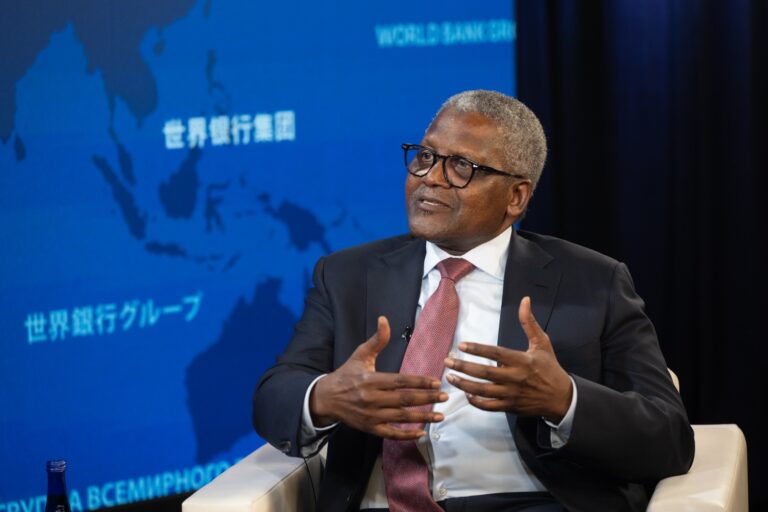
Aliko Dangote IFC Headquarters
Aliko Dangote, Africa’s richest man and most ambitious industrialist, shares his vision for opening Africa at IFC
When Aliko Dangote speaks about Africa, boardrooms listen. As the continent’s wealthiest individual and the founder of Dangote Industries. A conglomerate spanning cement, petrochemicals, fertilizers, agriculture, and energy. Dangote is not merely diagnosing Africa’s challenges. He is spending tens of billions of dollars solving them. In a landmark conversation at the International Finance Corporation (IFC) headquarters, hosted by IFC President Makhtar Diop, Africa’s most celebrated industrialist laid out an ambitious, investment-driven blueprint for a continent on the cusp of transformation.
The African Renaissance From Potential to Prosperity
For decades, conversations about Africa have orbited the word “potential.” Dangote is determined to retire that word in favour of measurable, on-the-ground results. To accelerate that shift, he assembled a coalition of Africa’s most consequential business minds under the banner of the African Renaissance Group. A private-sector think-and-do tank with a singular mandate: convert continental opportunity into real economic growth.
The group’s founding diagnosis was stark. Despite being home to some of the world’s richest natural resources, Africa’s own entrepreneurs face structural barriers that would be unthinkable elsewhere. Dangote himself requires 38 different visas to travel freely across the continent he is rebuilding. “How do I invest if I am not able to move around?” he asked pointedly. The group is advocating urgently for free movement of people, goods, and services. These changes Dangote describes as non-negotiable prerequisites for a prosperous Africa.
“If I don’t invest my own money, I can never go to any conference and convince people that Africa is a good place to invest. But right now, I have a voice.”
— Aliko Dangote, Founder, Dangote Industries
The Refinery That Defied Expectations
No single project encapsulates Dangote’s industrial philosophy quite like the Dangote Petroleum Refinery in Lagos. A facility that global trading companies and multinational corporations quietly hoped would never materialise. Nigeria, Africa’s largest oil producer, was at one point exporting 2.4 million barrels of crude per day while importing every drop of gasoline, jet fuel, and cooking gas its citizens consumed. The economic irony was as painful as it was costly.
Dangote resolved to end that paradox. The refinery, built at a cost exceeding $20 billion, is now fully operational and processing crude at a stable rate of 650,000 barrels per day. A figure tested as high as 661,000 barrels. Remarkably, Dangote had never personally dealt in crude oil before undertaking the project. “I always avoided crude oil,” he confessed. “It is just because I have seen my country suffering.” Every nut, bolt, and piece of equipment was procured, shipped, and assembled under a vertically integrated engineering, procurement, and construction model that Dangote managed in-house. Thus, a feat of logistical ambition that few private actors anywhere in the world have matched.
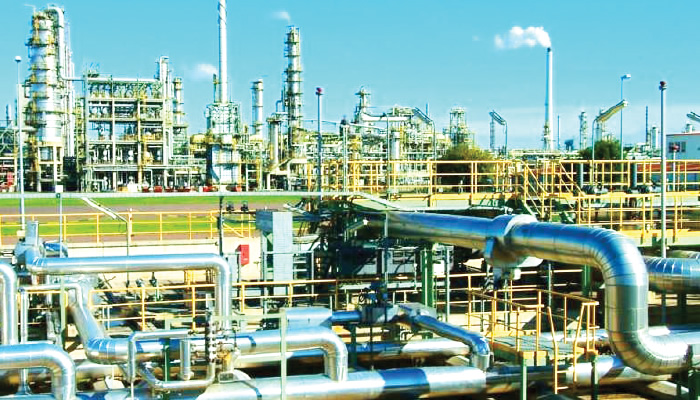
The refinery is slated for a public listing, and in a defining move toward continental wealth-building, Dangote intends to open it to African retail investors across the continent. Dividends will be calculated and paid in US dollars, with options for shareholders to receive payment in Naira, South African Rand, or other local currencies. Hence, a structure designed to make African capital work for African people.
Aliko Dangote’s Ambitious Plans for Africa
The refinery is one chapter in a much larger industrial story. Dangote Industries is simultaneously pursuing a portfolio of critical infrastructure investments calibrated to address Africa’s most acute economic deficiencies.
Within approximately two and a half years, Dangote expects his group to become the world’s largest fertilizer company, with a production capacity of 12 million tons of urea annually. Potash and phosphate mining operations are being developed in the Democratic Republic of Congo and Brazil. An 18-meter draft deepwater port, one of the largest on the continent is under construction. A 20,000-megawatt power generation programme is in progress. LNG infrastructure is being developed. Each of these investments targets a structural gap that has historically made Africa dependent on imports and foreign capital.
Water, Agriculture, and the Fight Against Poverty
Running quietly beneath Dangote’s industrial headline projects is an equally consequential commitment to water infrastructure. His operations from cement plants to the refinery itself, have illuminated how foundational water access is to every form of economic activity. The Dangote refinery alone stores 440 million litres of treated water, cycling and recycling it through its processes.
Nigeria is home to approximately 400 mini-dams, many of which are idle, silted, or in disrepair. Dangote is working with IFC and the World Bank Group to rehabilitate these assets. Functional dams enable year-round irrigation, which supports agriculture, generates livelihoods, and critically removes the conditions of hopelessness that fuel insecurity in the Sahel and across the wider continent. “Most of these conflicts we are having, especially in the Sahel, they will go away,” Dangote said. “Because why do you think that people want to go and risk their lives? It is because they have no jobs.”
Agriculture, in Dangote’s framework, is the ultimate jobs engine. He projects that scaling his agricultural operations will grow his workforce from the current 51,800 employees to approximately 200,000. A transformation that would make Dangote Industries one of the largest private employers on the continent.
A Legacy Built on African Capital for African People
Dangote’s own story is the archetype he wishes to multiply. He began his career selling four truckloads of cement per day through an allocation from a family member. His first independent venture came in 1981 with a 5,000-ton sugar import license. Every subsequent expansion, cement, flour, pasta, petrochemicals was built on reinvested earnings. Dangote Industries has never paid an external dividend at the parent company level; every dollar of profit has been ploughed back into building the next enterprise.
That discipline is now positioned to reward a continent. The planned IPO of the refinery, alongside an African investor vehicle being developed in partnership with Nigerian and Kenyan financial regulators, could inject billions of dollars of dividend income directly into the hands of African retail investors. A historically unprecedented transfer of industrial wealth to ordinary citizens of the continent.
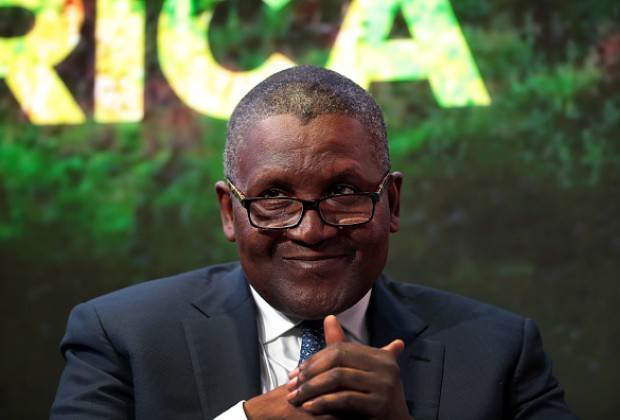
“Agriculture is not a poor man’s business anymore. That is what can actually take our people out of poverty.” — Aliko Dangote, Founder, Dangote Industries
A Partnership to Scale
The conversation between Dangote and IFC’s Makhtar Diop was as much a strategic alignment as it was an interview. IFC has been a financial partner to Dangote Industries since at least 2005, when it led a $478 million financing round. A seven-year loan that Dangote’s group repaid in 18 months. When Dangote subsequently called in his lenders to repay them, IFC insisted its capital be redirected into the fertilizer business rather than returned. A signal of institutional confidence in the continent’s industrial future that Dangote described as profoundly meaningful.
World Bank Group President Ajay Banga, a personal friend of Dangote’s has added political momentum to this partnership. Together, these institutions represent the kind of public-private alignment that can move the needle at continental scale: patient capital, regulatory expertise, environmental and social governance standards, and the credibility to crowd in additional global investors.