NVIDIA RTX Spark
NVIDIA RTX Spark is the first PC chip from NVIDIA RTX 5070 GPU, 128GB memory, 1 petaflop of local AI. The agentic PC era starts now. Here’s everything.
RTX Spark is NVIDIA’s first-ever PC chip, and it may be the most important reinvention of the personal computer since the smartphone era.
The Announcement
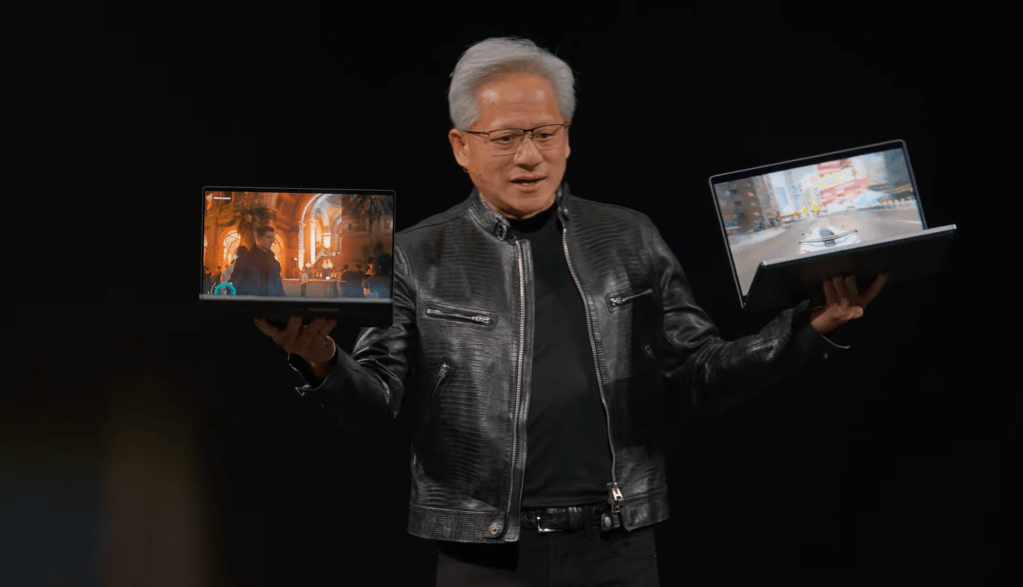
On Monday at Computex in Taipei, NVIDIA CEO Jensen Huang walked on stage and made a bold claim!
The reinvention of the PC is as significant as the reinvention of the phone into what we now know as the smartphone. Then he unveiled RTX Spark, NVIDIA’s first-ever chip designed specifically for Windows PCs and the room understood why.
The laptop, as a concept, hasn’t fundamentally changed since the mid-1990s. You open a lid, launch an app, and work inside it. Three decades of incremental improvements.
The faster processors, thinner bezels, longer battery life, but the core paradigm remained the same: the app was always in charge. RTX Spark is built to end that era.
“This is the new PC.” — Jensen Huang, NVIDIA CEO
What’s Inside
RTX Spark is a superchip. A single package fusing two chiplets: a Blackwell-architecture GPU with 6,144 CUDA cores (delivering performance comparable to an RTX 5070), and a 20-core Grace ARM-based CPU.
The chip supports up to 128GB of LPDDR5X unified memory shared between CPU and GPU, and delivers up to 1 petaflop of local AI compute.
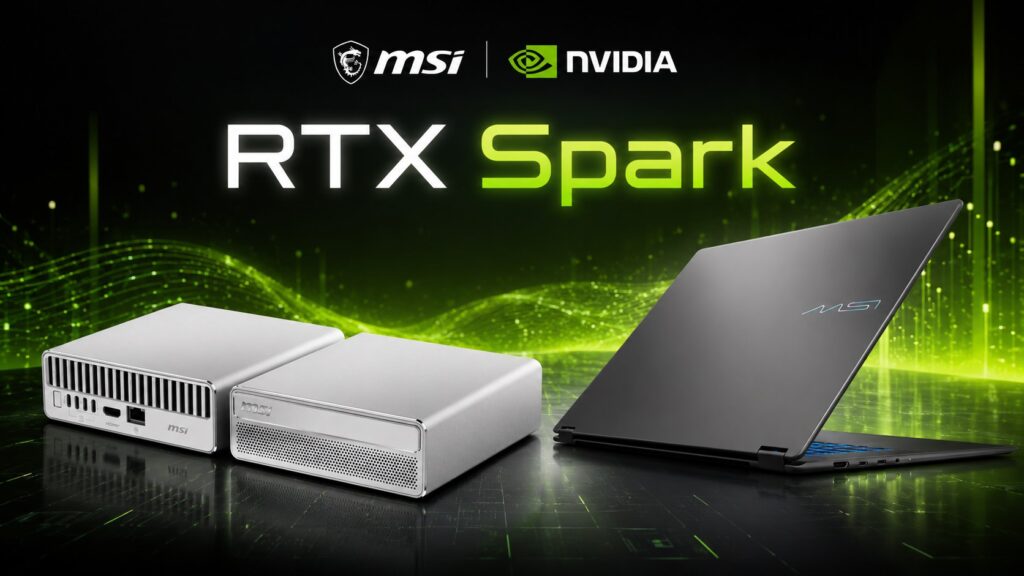
Memory configurations will range from 16GB to 128GB, with RTX Spark landing in both slim laptops and ultra-compact desktops when it ships this fall.
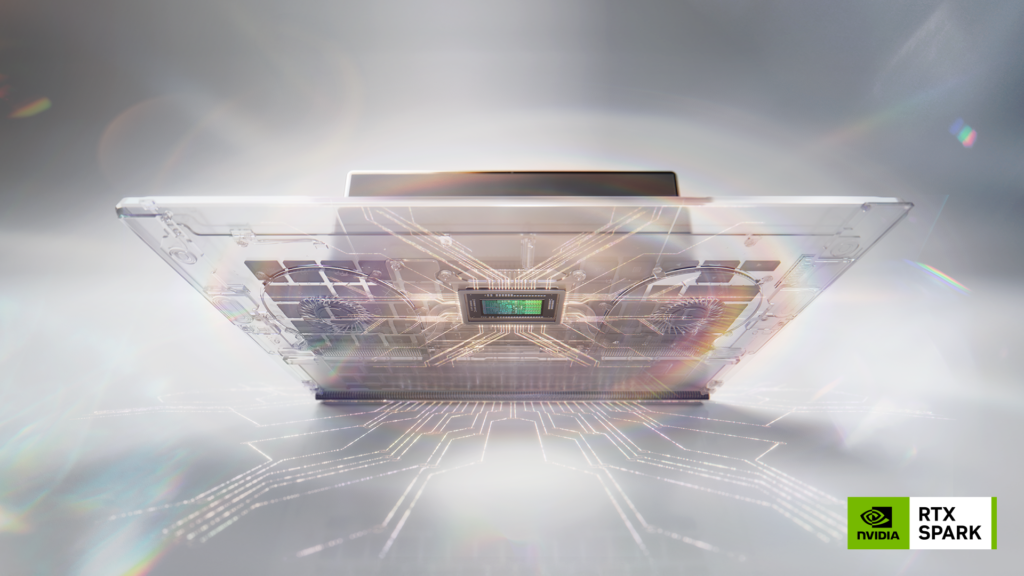
NVIDIA built this jointly with Microsoft and MediaTek after three years of collaboration. Windows has been modified at a system level to work with RTX Spark’s agentic capabilities.
Hence, meaning the operating system itself has been reimagined, not just a layer of software running on top of it.
The chip is ARM-based, following the same silicon direction as NVIDIA’s DGX Spark workstation, but targeted at everyday consumers and creators.
The Agent Lives on Your Machine
The defining feature of RTX Spark isn’t the gaming performance, though 100+ FPS at 1440p in modern titles like Forza Horizon 6 and Alan Wake 2 is genuinely impressive for a chip this slim.
The defining feature is that your AI agent runs locally, 24 hours a day, seven days a week, without sending a single byte to the cloud.
In a live demo at Computex, RTX Spark ran a personal AI agent that controlled the creative application Comfy UI autonomously.
Thus, handling prompts, adjusting hyperparameters, generating images from concept sketches, and extending them into video. All without the user touching the software directly.
The mouse and keyboard became optional. The 128GB of unified memory means large frontier models, including those exceeding 120 billion parameters, can run entirely on device. Your data stays private. Your agent stays on.
One analyst told Reuters that RTX Spark aims to transform the traditional app-centric PC into what they called a “truly useful agentic AI personal computer.” NVIDIA’s own framing is blunter: this is step one.
For Creators and Gamers Too
RTX Spark isn’t only a platform for AI agents. NVIDIA has worked with leading creative software makers to ensure day-one compatibility.
Blender is shipping with DLSS 4.5 ray reconstruction support, enabling creators to navigate scenes and see near-final render quality in real time.
The chip handles 12K video editing and can render 3D scenes exceeding 90GB thanks to its memory capacity. Gaming support covers DirectX, OpenGL, and Vulkan, including multiplayer titles with anti-cheat systems like Fortnite.
Thus, a meaningful hurdle for Windows on ARM that prior platforms struggled to clear.
What Comes Next
HP, ASUS, and Microsoft’s Surface line have already announced RTX Spark devices. The Surface Laptop Ultra is among the first confirmed designs.
Laptops and compact desktops powered by RTX Spark are expected to begin shipping in fall 2026, with a full range of memory configurations available at launch.
A deliberate contrast to the DGX Spark, which shipped in a single 128GB configuration at $4,700.
The competitive implications are significant. Qualcomm’s share fell 7% on the day of RTX Spark’s announcement as investors processed what an NVIDIA ARM chip, for Windows means for the AI PC landscape.
Intel and AMD have yet to respond. Apple, meanwhile, has been running a version of this playbook with Apple Silicon since 2020.
RTX Spark is NVIDIA’s answer to the question of what that looks like for Windows, with an explicit AI-first architecture layered on top.
The laptop hasn’t changed in 30 years. NVIDIA just changed it. And everyone else is about to try to catch up.