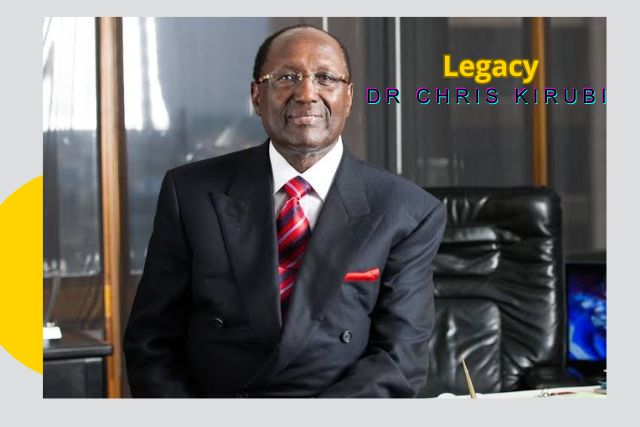
Dr Chris Kirubi legacy
Five years after his death, Dr. Chris Kirubi’s legacy endures through Haco Industries, Centum, Capital FM, and the children carrying his empire forward.
Five years have passed since Kenya lost one of its most consequential entrepreneurs, yet the story of Dr. Chris Kirubi refuses to end.
Across boardrooms, radio studios, and the corridors of Haco Industries, his influence continues to shape the decisions of those he mentored, the institutions he built, and the generation of Kenyans he relentlessly challenged to dream bigger.
The man who turned neglected properties into a multi-sector empire remains, in spirit and in deed, very much present.
From Murang’a Peasant to Kenya’s Most Recognizable Billionaire
Christopher John Kirubi was born on 20 August 1941 in Murang’a, Kenya, into poverty. Orphaned early, he rose through sheer self-determination to become one of Africa’s wealthiest individuals.
That trajectory from an ordinary peasant boy to a man worth hundreds of millions. Hence, became the defining narrative of his public life, one he never tired of sharing with young Kenyans.
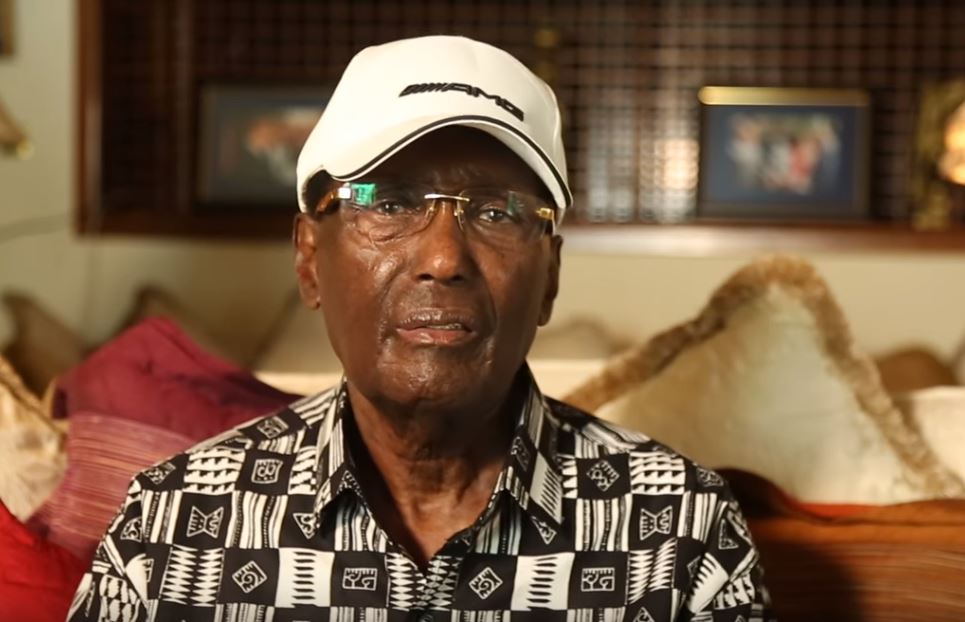
Dr. Chris Kirubi’s tribe was the Kikuyu, from Central Kenya, and he wore his humble origins as a badge of honour rather than a source of shame. His education reflected the same ambition that defined his business career.
He studied at INSEAD in France, Handels University in Sweden, and Harvard Business School in the United States, and was later awarded an honorary PhD in Entrepreneurship from SMA University in Switzerland.
The Companies That Built an Empire
Kirubi’s first formal job after high school was with Shell as a sales representative. He moved through the pharmaceutical industry, the automotive sector, and government before launching his entrepreneurial journey.
Property was his opening gambit, he purchased neglected buildings in Nairobi, renovated them, and sold them at a profit. Ultimately acquiring the iconic International House in the city’s central business district.
From there, Chris Kirubi’s companies expanded rapidly across sectors. He chaired Haco Industries Kenya Limited, Kiruna International Limited, International House Limited, Nairobi Bottlers Limited, Sandvik East Africa Limited, and 98.4 Capital FM.
He was also the largest single investor in Centum Investment Company, whose stock is listed on both the Nairobi Stock Exchange and the Uganda Securities Exchange.
Under his strategic guidance, Centum executed massive infrastructure and real estate projects, most notably the Two Rivers Mall. As the largest retail and entertainment complex in East Africa at the time of its completion.
Haco Industries, which Kirubi acquired in the 1990s, was transformed into a leading regional manufacturer of personal care and household products.
Chris Kirubi’s Net Worth and the Estate He Left Behind
At his peak, Kirubi’s empire was valued at approximately $300 million. When he died in June 2021, the scale of what he had built became clearer than ever.
Court documents valued his estate at KSh40 billion ($350 million). His daughter Mary-Ann and son Robert Kirubi inherited 80% of that fortune, including stakes in Haco Industries, Centum Investment Company, KCB Group, Bendor Estate Limited, and other assets. The remaining 20% passed to his siblings.
The Kirubi family estate now estimated at around $100 million in active portfolio value, continues to compound through Kenya’s productive economy.
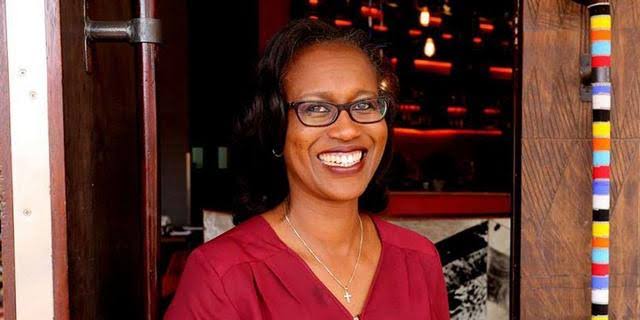
Mary-Ann Musangi, who had already been running Haco for two years before her father’s death, has since taken the company into new territory.
Haco Industries is now exploring either an IPO on the Nairobi Securities Exchange or a strategic investor partnership, while simultaneously expanding into West Africa. Ghana already in motion and Nigeria and Senegal identified as the next markets.
Chris Kirubi’s Children and the Next Generation
Dr. Chris Kirubi’s children, his daughter Mary-Ann Musangi and his son Robert Kirubi are the principal stewards of his legacy. A third daughter, Fiona Farha Kirubi, has also been identified in family records. His wife, Fiona Kirubi, was married to him from 1965 until their divorce in 1991.
Chris Kirubi did not remarry. Mary-Ann Musangi has emerged as the most publicly visible of his children, with senior figures in Kenya’s corporate world describing her as a worthy successor to her father’s entrepreneurial rigour.

DJ CK The Artist Who Spoke to a Generation
What distinguished Dr. Kirubi from Kenya’s other billionaires was his deliberate choice to remain accessible. As chairman of Capital Group Limited, he was not merely a boardroom executive.
He was “DJ CK,” a persona that allowed him to connect directly with millions of young Kenyans through the airwaves of Capital FM.
Through his radio shows, public speaking engagements, and prolific social media presence, Kirubi democratized business knowledge, translating complex economic theories into actionable advice for aspiring entrepreneurs.
His “Ask Kirubi” column and his social media interactions became a masterclass in accessible mentorship. Capital FM reached over 3 million daily listeners, influencing economic narratives across the country. Chris Kirubi as an artist of communication, of brand-building, of human connection. Thus, may be the dimension of his legacy least fully appreciated.
Dr. Chris Kirubi Message to Young Kenyans
Beyond boardrooms and balance sheets, Dr. Chris Kirubi carried a message that cut closer to the ground literally. In one of his most candid public addresses, he turned his attention entirely to agriculture, delivering a challenge that remains as urgent today as when he first spoke it.
“There is nothing that can create more jobs than agriculture for the young, upcoming people in Kenya,” he said. “All young people need to look at farming as a source of wealth.”
For Kirubi, the problem was never the land, Kenya has it in abundance. The problem was perception. Too many young Kenyans had been conditioned to view farming as a fallback, a sign of failure, something to escape rather than build upon.
He pushed back hard against that thinking. He envisioned a generation returning to the farm not out of desperation, but out of strategy. Equipped with technical skills, modern methods, and a clear-eyed understanding that properly executed agriculture is one of the most reliable wealth-creation engines on the continent.
He was equally blunt about education. “We need to create more technical schools in getting people to go back to the farm, but not to go back to the farm to become poorer than they were.
They should go back to the farm to make money.” His concern was that universities were producing graduates armed with certificates but short on practical, applicable skills.
In his view, a young Kenyan who deeply understood farming. Its systems, its markets, its value chains, would contribute more to national development than one holding a degree that the economy had no room to absorb.
It was a provocative position from a man who had himself studied at Harvard and INSEAD. But that was precisely the point. Kirubi was not anti-education. He was anti-irrelevance.
He wanted young Kenyans trained for the opportunities that actually existed in Kenya, and agriculture, he insisted, represented one of the largest untapped ones.
His own 600-acre Bendor Farm in Murang’a County was not a retirement retreat. It was a demonstration of the principle he preached. That land, managed with discipline and vision, produces returns that rival any listed stock.
Five years on, his words land with renewed weight. As Kenya’s youth unemployment remains a defining policy challenge, the agricultural pathway Kirubi championed. Technical, commercial, and unapologetically ambitious, deserves a far more serious hearing than it has received.
Chris Kirubi’s Cars, His Farm, and the Life He Lived
Beyond business, Kirubi was known for an appreciation of the finer things. His collection of luxury vehicles was a regular talking point in Nairobi’s social circles, a visible signal of what disciplined ambition could produce.
He was buried at his Bendor Farm in Murang’a County in central Kenya, a sprawling 600-acre property that stood as a testament to his agricultural interests alongside his urban empire.
What Killed Chris Kirubi and What His Death Could Not Kill
Chris Kirubi died on 14 June 2021, aged 80. The family confirmed he died of cancer, colon cancer diagnosed in 2017, for which he sought specialised treatment in the United States.
He had managed the illness for four years before his passing, continuing to mentor, engage, and inspire even through his final stretch.
His legacy is not merely preserved in the towering structures of Two Rivers or the balance sheets of Haco Industries. In the fierce, unapologetic ambition of the millions of young Africans he inspired to dream beyond their circumstances.
Five years on, no estate settlement or succession plan can package that. It lives in boardrooms, on radio waves, in the ambitions of a young entrepreneur in Nakuru who once heard him speak and decided to begin.
Dr. Chris Kirubi is not alive, but his work, deliberately, inescapably, very much is.