Pres. Ruto signs Kenya's Sovereign Wealth Fund Bill
Ruto signs Kenya’s Sovereign Wealth Fund Bill into law, creating the Urithi Fund and a Norway-style model to save resource wealth for future generations.
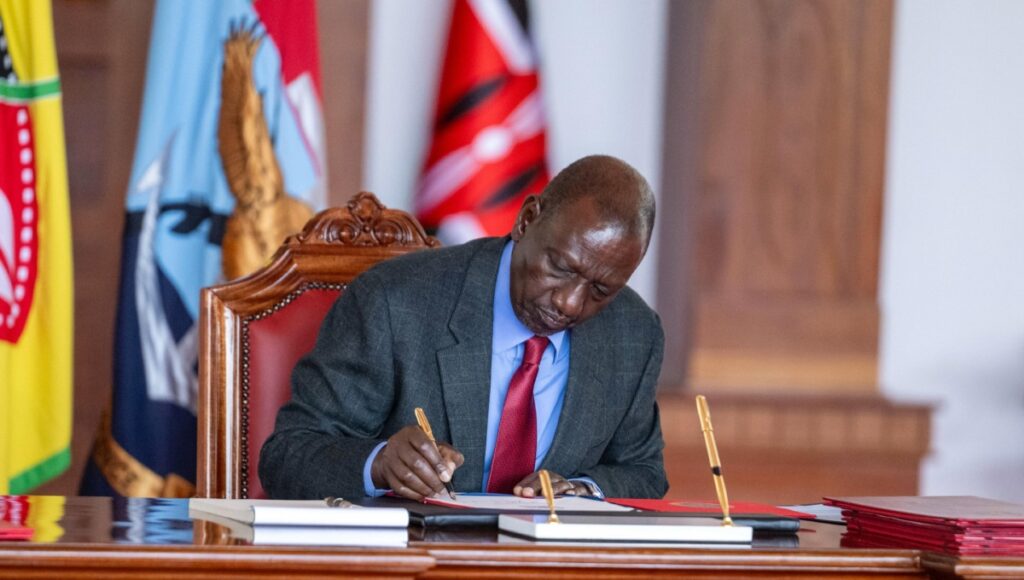
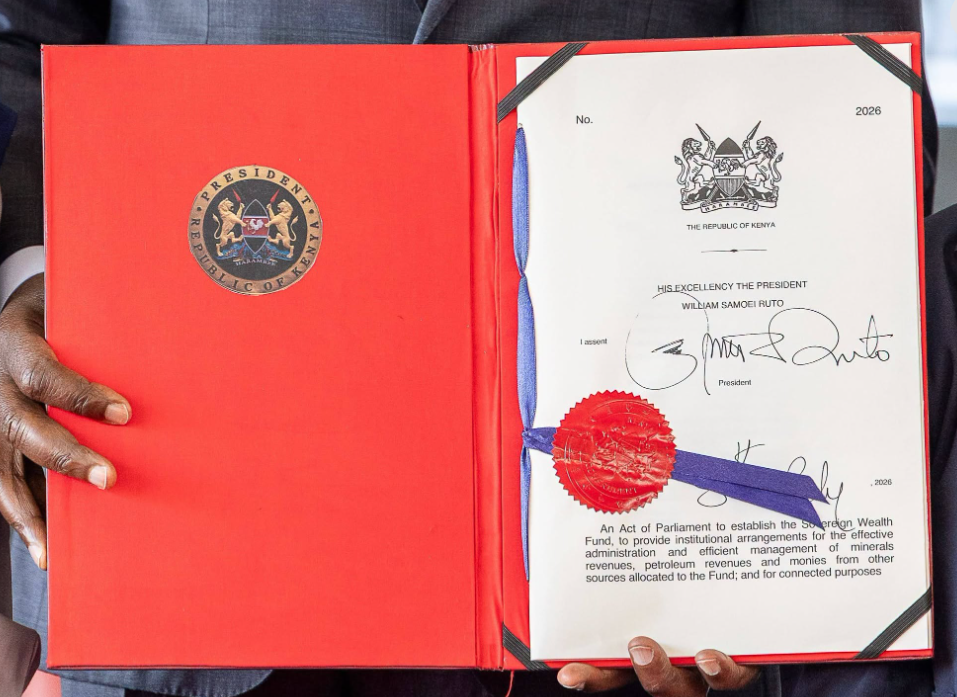
President William Ruto has signed the Sovereign Wealth Fund Bill, 2026, into law. The move gives Kenya a formal vehicle to save and grow national wealth.
It marks one of the most significant economic reforms of his administration.
What Is a Sovereign Wealth Fund?
A sovereign wealth fund is a state-owned investment vehicle. Governments use it to manage surplus national wealth, often from natural resources or public asset sales.
The sovereign wealth fund meaning centers on one idea: saving today’s windfalls for tomorrow’s citizens. Instead of spending resource revenue immediately, a country channels it into diversified investments.
These can include bonds, equities, real estate, and infrastructure projects.
So what is a sovereign wealth fund built to achieve? Three goals stand out. It stabilizes the economy during shocks. It funds strategic development.
And it preserves wealth across generations. Kenya’s new law captures all three.
Inside Kenya’s Sovereign Wealth Fund Bill
The signing ceremony took place at State House, Nairobi, on Wednesday, July 8, 2026. Deputy President Kithure Kindiki, Treasury Cabinet Secretary John Mbadi, and National Assembly Speaker Moses Wetang’ula were among the officials present.
Business leaders, including Equity Group’s James Mwangi and KCB’s Paul Russo, also attended.
President Ruto described the law as a turning point for the country. He said Kenya is enshrining an institution that will let national prosperity endure for generations. The Sovereign Wealth Fund Bill establishes three distinct windows.
The Stabilisation Fund will cushion the economy against external shocks, such as global commodity swings.
The Strategic Investment Window will finance commercially viable national development projects and create jobs. The Urithi Fund, meaning “legacy” in Swahili, will preserve wealth specifically for future generations.
Under the new law, 30 percent of revenue from petroleum and mineral resources flows directly into the Urithi Fund. The remaining share supports economic stabilisation and strategic investment.
This structure ensures that no single generation consumes the full benefit of Kenya’s natural resource wealth.
Built on Strong Governance
The Act includes firm safeguards. It bars government borrowing against the fund and prohibits using it as loan collateral.
It also restricts investment in high-risk instruments such as speculative derivatives.
A dedicated board will oversee the fund, chaired by a presidential appointee and including the Treasury and mining Cabinet Secretaries alongside four independently recruited finance professionals.
Parliamentary oversight, transparent public reporting, and independent auditing round out the accountability framework.
As President Ruto put it, every shilling must be accounted for, and every investment must be measured by the legacy it leaves behind.
Why the Timing Matters
Kenya is preparing for commercial oil production in the Lokichar Basin in Turkana. A recent nationwide mineral survey has also confirmed substantial deposits of strategic and industrial minerals across the country.
These discoveries make a structured savings mechanism timely. Without one, resource revenue risks being spent quickly rather than invested for lasting benefit.
The fund becomes Kenya’s second major financial institution created under the government’s economic transformation agenda, following the National Infrastructure Fund established in March 2026.
Together, the two institutions form a broader strategy: one builds national assets, the other preserves and grows the wealth those assets generate.
Learning From Norway
Kenya’s model draws heavily on the Norway sovereign wealth fund, widely regarded as the global benchmark.
The Norwegian sovereign wealth fund, formally the Government Pension Fund Global, has spent decades reinvesting oil and gas revenue into a diversified international portfolio.
It stands today as the largest fund of its kind in the world.
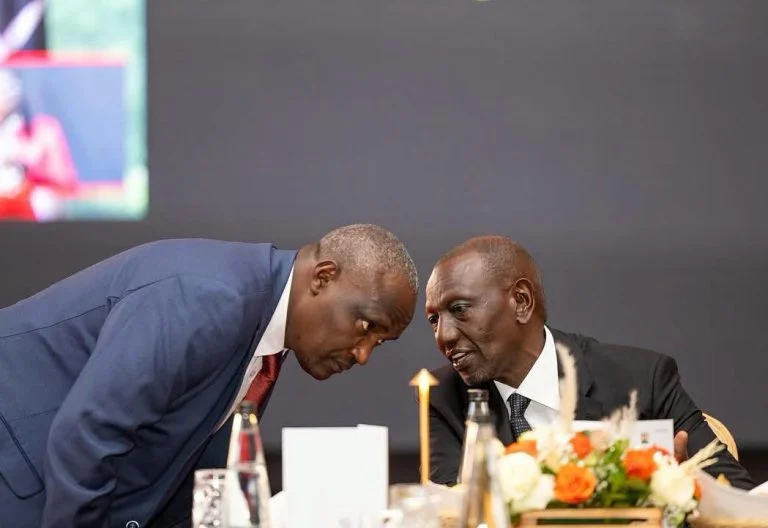
Treasury Cabinet Secretary John Mbadi acknowledged this influence directly, noting that Kenya has borrowed extensively from Norway’s approach.
The most important shared principle is straightforward: a fixed share of resource revenue must go toward future generations, insulated from short-term political pressure.
A Positive Signal for Investors and Citizens
Kenya’s macroeconomic indicators support the timing of this reform. Foreign exchange reserves have nearly tripled since 2022, moving from roughly two and a half months of import cover to about seven months today. Foreign direct investment inflows have also more than doubled over the same period.
For everyday Kenyans, the Sovereign Wealth Fund represents more than legislation. It signals a shift toward disciplined, long-term economic planning.
Resource wealth, once vulnerable to short-term consumption, now has a legal home designed to benefit generations who have yet to be born.
As Kenya joins the ranks of nations with formal sovereign wealth funds, the country positions itself alongside established models like Norway, Botswana, and the UAE.
The Urithi Fund’s promise is simple but powerful: every barrel extracted, every mineral mined, becomes an asset that never runs dry.